
What is free trade?
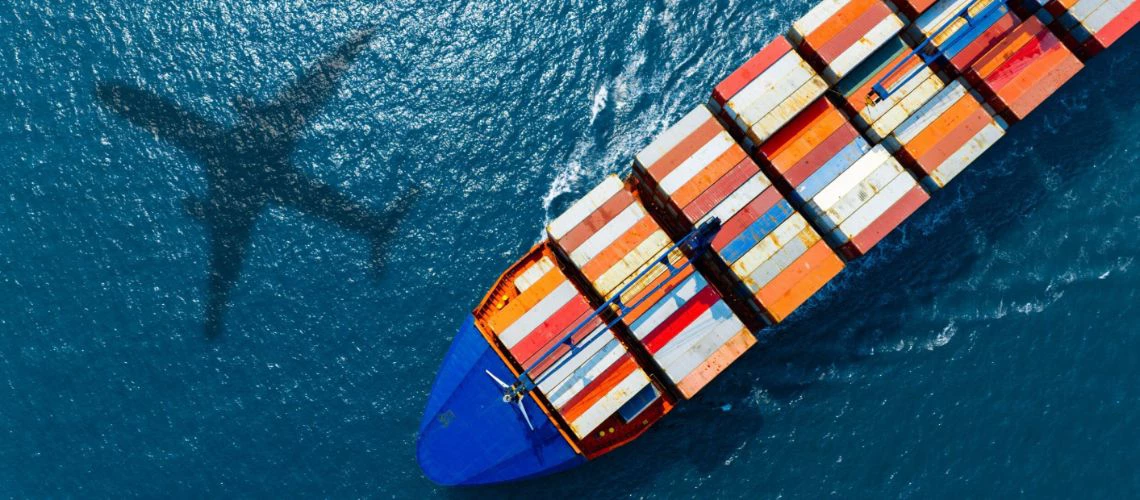
What Is Free Trade?
Free trade is an economic system in which countries exchange goods and services with relatively few government-imposed restrictions. These restrictions can include tariffs, quotas, subsidies, import bans, and other measures designed to protect domestic industries from foreign competition. The basic idea behind free trade is that countries can benefit when they specialize in producing goods and services they can make relatively efficiently and then trade with other countries.
International trade has existed for thousands of years, but the concept of free trade became especially influential with the development of modern economic theory. Today, free trade plays an important role in the global economy and affects businesses, workers, consumers, and governments around the world.
How Does Free Trade Work?
Under free trade, countries reduce or eliminate barriers that make international trade more expensive or difficult. For example, suppose Country A is highly efficient at producing wheat while Country B can produce electronics at a lower cost. Instead of each country trying to produce everything domestically, Country A can specialize in wheat and export it to Country B, while Country B specializes in electronics and exports them to Country A.
This arrangement is based on the economic principle of comparative advantage. A country has a comparative advantage when it can produce a particular good or service at a lower opportunity cost than another country.
Free trade does not necessarily mean that governments have no trade regulations at all. Countries may still maintain rules concerning product safety, labor standards, environmental protection, intellectual property, and national security. Rather, free trade generally refers to reducing unnecessary barriers to international exchange.
Main Features of Free Trade
Several characteristics distinguish free trade from protectionist trade policies.
1. Low or No Tariffs
A tariff is a tax placed on imported goods. Free-trade policies generally aim to reduce tariffs because they increase the price of imported products and can discourage international trade.
For example, if a government imposes a high tariff on imported clothing, foreign clothing becomes more expensive. This may encourage consumers to purchase domestically produced clothing instead.
2. Fewer Import Quotas
An import quota limits the amount of a particular product that can enter a country. Free trade generally favors removing or reducing these limits so that consumers and businesses can purchase goods from foreign suppliers more easily.
3. Greater Competition
Free trade allows domestic companies to compete with businesses from other countries. This competition can encourage companies to improve their products, reduce costs, and develop new technologies.
4. International Specialization
Countries can concentrate their resources on industries where they have a comparative advantage. This can increase productivity and allow countries to participate more effectively in the global economy.
5. Larger Markets
Free trade gives businesses access to customers outside their home countries. A company that sells only domestically may have a limited customer base, while an exporter can potentially reach millions of consumers in other countries.
Advantages of Free Trade
Free trade can provide several important economic benefits.
Lower Prices for Consumers
One of the most direct benefits of free trade is that consumers may have access to lower-priced products. When companies can purchase materials and goods from the most efficient suppliers around the world, production costs may decrease.
Competition among domestic and foreign companies can also put downward pressure on prices. Consumers may therefore benefit from a wider selection of affordable products.
Greater Variety of Goods and Services
Free trade allows consumers to access products that may not be produced domestically. For example, countries with unsuitable climates for growing certain foods can import them from countries where those products are easier to produce.
International trade also gives consumers access to foreign technologies, clothing, electronics, vehicles, foods, and entertainment.
Economic Growth
International trade can contribute to economic growth by increasing production, investment, and business activity. Exporting companies can expand their operations when they gain access to larger international markets.
Countries that successfully develop competitive export industries may attract foreign investment and create new economic opportunities.
Increased Competition and Innovation
Competition from foreign companies can motivate domestic businesses to become more efficient. Companies may invest in research, technology, employee training, and improved production methods to remain competitive.
Over time, this competition can encourage innovation and improve the quality of products and services.
More Efficient Use of Resources
Free trade allows countries to specialize according to their comparative advantages. Instead of using resources to produce goods that can be made more efficiently elsewhere, a country can focus on industries where its resources are particularly productive.
This specialization can increase overall economic efficiency.
Disadvantages and Challenges of Free Trade
Although free trade offers many potential benefits, it can also create challenges.
Job Losses in Some Industries
One of the most common criticisms of free trade is that increased foreign competition can hurt certain domestic industries. If foreign companies can produce a product more cheaply, domestic businesses may lose market share.
Some companies may reduce their workforce, move production abroad, or close entirely. Workers in industries facing strong international competition may therefore experience unemployment or lower wages.
Dependence on Foreign Suppliers
Countries that rely heavily on imports can become vulnerable to disruptions in international supply chains. Natural disasters, wars, political conflicts, pandemics, or transportation problems can interfere with the movement of goods.
Recent global events have demonstrated that international supply chains can be vulnerable when countries depend heavily on foreign sources for essential products.
Pressure on Domestic Businesses
Small businesses may find it difficult to compete with large international corporations. Foreign competitors may have lower production costs, access to advanced technology, or economies of scale.
As a result, some domestic businesses may struggle to survive in highly competitive markets.
Environmental Concerns
International trade can increase transportation and production activity, which may contribute to pollution and greenhouse gas emissions. In addition, companies may move production to countries with weaker environmental regulations.
For this reason, critics argue that free trade agreements should include appropriate environmental standards.
Unequal Distribution of Benefits
The benefits of free trade are not always distributed equally. Consumers may enjoy lower prices, while workers in certain industries may lose jobs. Highly skilled workers and internationally competitive businesses may benefit more than workers whose jobs are vulnerable to foreign competition.
Therefore, the overall economy can benefit from trade even while certain communities or industries experience significant difficulties.
Free Trade Agreements
Countries often promote free trade through formal agreements. A free trade agreement is a treaty between two or more countries that reduces trade barriers between them.
Such agreements may eliminate tariffs on many products, establish rules for international investment, protect intellectual property, and create procedures for resolving trade disputes.
One well-known example is the United States–Mexico–Canada Agreement (USMCA), which governs much of the trade between the United States, Mexico, and Canada. Another example is the European Union, where member countries have developed a highly integrated single market with extensive freedom of movement for goods and services.
Free trade agreements can make international business more predictable by establishing common rules for participating countries.
Free Trade vs. Protectionism
Free trade is often contrasted with protectionism. Protectionism occurs when governments use policies to shield domestic industries from foreign competition.
Common protectionist measures include tariffs, quotas, subsidies, and import restrictions.
Supporters of protectionism argue that these policies can protect jobs, support new industries, preserve national security, and prevent excessive dependence on foreign suppliers.
Supporters of free trade, however, argue that protectionism can lead to higher prices, reduced competition, and inefficient industries. If governments protect companies from competition for too long, those businesses may have less incentive to innovate or improve productivity.
In practice, most countries use a mixture of free-trade and protectionist policies rather than following either approach completely.
Why Is Free Trade Important?
Free trade is important because modern economies are closely connected. Countries depend on one another for raw materials, energy, technology, manufactured goods, agricultural products, and services.
International trade allows countries to participate in a global division of labor. A product sold in one country may contain raw materials from several countries, components manufactured in others, and technology developed somewhere else.
This interconnected system can make production more efficient and provide consumers with more choices. At the same time, it means that economic problems in one country can affect businesses and consumers elsewhere.
Conclusion
Free trade is the exchange of goods and services between countries with relatively few government-imposed barriers. Its central principle is that countries can benefit by specializing in areas where they have a comparative advantage and trading with others.
Free trade can provide lower prices, greater product variety, increased competition, innovation, larger markets, and economic growth. However, it can also create challenges, including job losses in certain industries, pressure on domestic businesses, supply-chain dependence, and environmental concerns.
For this reason, the debate over free trade is not simply about whether international trade is good or bad. The more important question is how countries can gain the benefits of international trade while helping workers, communities, and industries adapt to its challenges. Effective trade policies often seek to balance openness to international markets with appropriate protections for workers, consumers, businesses, and the environment.
- Arts
- Business
- Computers
- Spellen
- Health
- Home
- Kids and Teens
- Money
- News
- Personal Development
- Recreation
- Regional
- Reference
- Science
- Shopping
- Society
- Sports
- Бизнес
- Деньги
- Дом
- Досуг
- Здоровье
- Игры
- Искусство
- Источники информации
- Компьютеры
- Личное развитие
- Наука
- Новости и СМИ
- Общество
- Покупки
- Спорт
- Страны и регионы
- World

 English
 Russian
 French
 Spanish
 Portuguese
 Deutsch
 Turkish
 Italiano
 Arabic
 Romaian
 Portuguese (Brazil)
 Greek
Greek