
What causes a currency to appreciate?
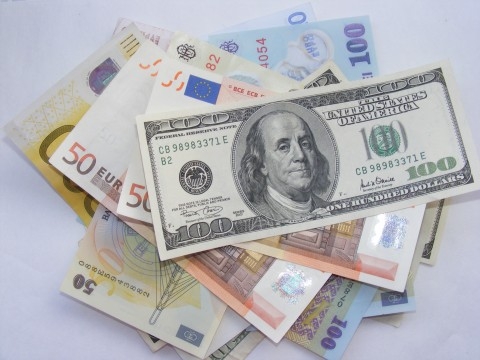
What Causes a Currency to Appreciate?
A currency appreciates when its value rises relative to another currency. In practical terms, appreciation means that one unit of a currency can buy more of a foreign currency than before. For example, if the exchange rate changes from 1 U.S. dollar = 400 units of a country's currency to 1 U.S. dollar = 380 units, that country's currency has appreciated against the dollar.
Currency appreciation is influenced by many economic and financial factors. Some are related to interest rates and investment, while others involve trade, inflation, economic growth, government policies, and investor confidence.
Higher Interest Rates
One of the most important factors that can cause a currency to appreciate is an increase in interest rates.
When a country's central bank raises interest rates, financial assets denominated in that currency may become more attractive to investors. Higher interest rates can provide better returns on savings accounts, bonds, and other investments.
For example, suppose interest rates rise significantly in Country A while rates remain unchanged in Country B. International investors may move some of their money into Country A to earn higher returns. To purchase assets there, they generally need to buy Country A's currency. Increased demand for the currency can push its value upward.
However, interest rates are not the only consideration. Investors also consider inflation, economic stability, political risks, and expectations about future interest rates.
Strong Economic Growth
A rapidly growing economy can also support currency appreciation.
When an economy expands, businesses may invest more, consumers may spend more, and companies may become more profitable. Strong economic conditions can attract foreign investors who want to participate in the country's financial markets or establish businesses there.
Foreign investment creates demand for the domestic currency because investors often need it to purchase local assets. As demand increases, the currency may appreciate.
Strong economic growth can therefore create a positive cycle: better economic prospects attract investment, investment increases demand for the currency, and stronger demand can raise its exchange rate.
Increased Demand for Exports
A country's trade position can have an important effect on its currency.
When foreign consumers and businesses buy a country's exports, they may need to obtain the exporting country's currency to pay for those goods and services. If exports increase substantially, demand for the domestic currency may rise.
For example, if a country becomes a major exporter of automobiles, technology, energy, or agricultural products, international buyers may create additional demand for its currency.
A country with strong export demand can therefore experience upward pressure on its exchange rate, particularly when export revenues significantly exceed spending on imports.
A Trade Surplus
A trade surplus occurs when a country exports more goods and services than it imports.
A persistent trade surplus can support currency appreciation because foreign buyers need the country's currency to purchase its exports. At the same time, residents of the exporting country have relatively less need to exchange their currency for foreign currencies to pay for imports.
However, the relationship is not automatic. Trade flows are only one part of the foreign-exchange market. Capital flows, investment decisions, monetary policy, and expectations can sometimes have a much larger short-term influence on exchange rates.
Lower Inflation
Lower inflation can make a country's currency more attractive over time.
If prices are rising much more slowly in one country than in another, its goods and services may remain relatively competitive. Lower inflation can also preserve the purchasing power of the currency.
Central banks often try to maintain price stability because persistent high inflation can reduce confidence in a currency. Conversely, stable and relatively low inflation can encourage investors and businesses to hold assets denominated in that currency.
For this reason, countries with credible monetary policies and stable inflation may experience stronger currencies than countries struggling with severe inflation.
Foreign Investment
Capital flowing into a country can increase demand for its currency.
Foreign investors may purchase stocks, bonds, real estate, businesses, or government securities. Before making these investments, they may need to exchange their own currency for the local currency.
Large capital inflows can therefore cause the domestic currency to appreciate.
For example, if international investors become optimistic about a country's technology industry, they may purchase shares of its companies. The resulting demand for the country's currency can contribute to appreciation.
The opposite can happen when investors withdraw money from a country. Capital outflows can increase the supply of the domestic currency in foreign-exchange markets and put downward pressure on its value.
Political and Economic Stability
Confidence is another major factor affecting currency values.
Investors generally prefer countries where governments and institutions are stable, property rights are protected, financial markets function effectively, and economic policies are reasonably predictable.
If a country becomes more politically and economically stable, international investors may become more willing to hold its assets. Increased investment can raise demand for its currency.
On the other hand, political crises, wars, corruption concerns, or sudden policy changes can cause investors to move their money elsewhere, potentially weakening the currency.
Expectations About the Future
Currency markets are influenced not only by current conditions but also by expectations.
If investors believe a country's currency will become more valuable in the future, they may buy it today. This increased demand can actually contribute to appreciation before the expected economic improvement occurs.
For example, suppose markets expect a central bank to raise interest rates in the coming months. Investors may begin purchasing the currency immediately in anticipation of higher returns. The currency could appreciate even before the rate increase happens.
This is why exchange rates can sometimes move sharply in response to economic announcements or changes in investor expectations.
Central Bank Policies
Central banks can influence exchange rates through monetary policy and, in some cases, direct intervention in foreign-exchange markets.
Raising interest rates can make a currency more attractive, while lowering rates can reduce its appeal relative to currencies offering higher returns.
A central bank can also affect currency demand through its communication. If investors believe policymakers are committed to controlling inflation and maintaining economic stability, confidence in the currency may increase.
Some central banks also buy or sell foreign currencies directly. Such interventions can influence exchange rates, although their effectiveness depends on the size and persistence of the intervention and broader market conditions.
Increased Productivity
Improvements in productivity can strengthen a currency over the longer term.
When workers and businesses become more productive, a country can produce goods and services more efficiently. This can improve competitiveness, increase exports, raise corporate profits, and attract investment.
Technological innovation is one possible source of productivity growth. Countries that develop highly competitive industries may attract substantial foreign investment, creating additional demand for their currencies.
Reduced Political or Financial Risk
A currency can appreciate when perceived risks decline.
Imagine a country that has recently resolved a major political dispute, stabilized its banking system, or improved its public finances. Investors who previously avoided its assets may become more comfortable investing there.
As capital returns to the country, demand for its currency can increase.
This illustrates an important point: currency appreciation does not always require dramatic economic growth. Sometimes simply becoming less risky compared with alternative investments is enough to attract capital.
Why Currency Appreciation Is Not Always Beneficial
Although a stronger currency can make imported products, foreign travel, and overseas education cheaper, appreciation can also create challenges.
A stronger currency makes a country's exports more expensive for foreign buyers. Exporters may therefore become less competitive in international markets. Companies that depend heavily on foreign customers can see their revenues decline if appreciation is large or prolonged.
Currency appreciation can also reduce the domestic-currency value of foreign earnings when companies convert them back into their home currency.
Therefore, policymakers do not necessarily seek the strongest possible currency. They generally aim for economic and financial stability rather than a particular exchange-rate level.
Conclusion
A currency can appreciate for many reasons, and usually several factors work together. Higher interest rates, strong economic growth, increased exports, foreign investment, low and stable inflation, political stability, higher productivity, and positive expectations can all increase demand for a currency.
Exchange rates are ultimately determined by supply and demand in foreign-exchange markets. When demand for a currency increases relative to its supply, its value tends to rise. Because financial markets respond quickly to new information and expectations, currencies can appreciate even before economic conditions actually change.
Understanding these factors helps explain why exchange rates constantly move and why currency appreciation can have both advantages and disadvantages for consumers, businesses, investors, and the wider economy.
- Arts
- Business
- Computers
- Juegos
- Health
- Home
- Kids and Teens
- Money
- News
- Personal Development
- Recreation
- Regional
- Reference
- Science
- Shopping
- Society
- Sports
- Бизнес
- Деньги
- Дом
- Досуг
- Здоровье
- Игры
- Искусство
- Источники информации
- Компьютеры
- Личное развитие
- Наука
- Новости и СМИ
- Общество
- Покупки
- Спорт
- Страны и регионы
- World

 English
 Russian
 French
 Portuguese
 Deutsch
 Turkish
 Dutch
Dutch
 Italiano
 Arabic
 Romaian
 Portuguese (Brazil)
 Greek
Greek