
Why do exchange rates change?
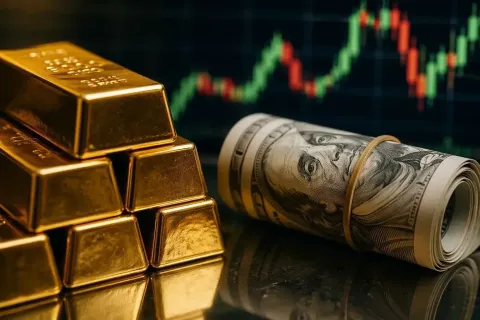
Why Do Exchange Rates Change?
Exchange rates are constantly changing because the value of one currency relative to another is influenced by supply and demand, economic conditions, interest rates, inflation, political events, and expectations about the future. These changes affect international trade, travel, investments, and the prices of goods and services.
Understanding why exchange rates change helps explain why the same amount of money can buy different amounts of foreign currency at different times.
What Is an Exchange Rate?
An exchange rate is the price of one currency expressed in terms of another. For example, if €1 can be exchanged for $1.10, the exchange rate between the euro and U.S. dollar is 1.10 dollars per euro.
Exchange rates can be floating or fixed. Under a floating exchange-rate system, the currency's value is largely determined by market forces. Under a fixed or managed system, a government or central bank attempts to keep the currency at, or within a certain range around, a particular value.
For currencies with floating exchange rates, prices can change many times during a single day.
Supply and Demand for Currencies
The most basic reason exchange rates change is supply and demand.
When demand for a currency increases, its value generally rises relative to other currencies. When more of a currency is being sold than purchased, its value tends to fall.
For example, suppose investors around the world become more interested in assets in the United States. To purchase American stocks, bonds, or businesses, they may need U.S. dollars. Increased demand for dollars can push up the dollar's value against other currencies.
The opposite can also happen. If investors want to sell American assets and move their money elsewhere, they may exchange dollars for foreign currencies. Increased selling pressure can weaken the dollar.
International trade also creates demand for currencies. A company importing goods from another country may need to exchange its domestic currency for the exporter's currency to complete the transaction.
Interest Rates
Interest rates are another major influence on exchange rates.
When a country's central bank raises interest rates, financial assets denominated in that country's currency may become more attractive to international investors. Higher interest rates can provide investors with greater returns on deposits and bonds, encouraging demand for the currency.
For example, if interest rates in Country A rise significantly compared with those in Country B, investors may move some money toward Country A. This can increase demand for Country A's currency and cause it to appreciate.
However, interest rates do not operate in isolation. Investors also consider inflation, economic growth, political stability, and expectations about future interest-rate changes.
Inflation
Inflation can affect the purchasing power and international value of a currency.
When a country experiences persistently high inflation compared with other countries, its goods may become relatively more expensive. Consumers and businesses may therefore purchase more foreign goods and fewer domestic products, increasing demand for foreign currencies.
High inflation can also make a country's financial assets less attractive if investors expect their returns to lose value.
Countries with relatively low and stable inflation often have currencies that are more stable over the long term, although many other factors also influence exchange rates.
Economic Growth
The strength of an economy can influence the value of its currency.
Strong economic growth can attract foreign investment because investors may expect businesses in the country to become more profitable. Foreign investors typically need the country's currency to purchase local assets, increasing demand for it.
Economic growth can also increase imports. If consumers and businesses buy more foreign products, they may demand more foreign currencies, which can put downward pressure on the domestic currency.
Therefore, economic growth does not automatically make a currency stronger. The effect depends on the broader economic situation and the balance between capital inflows, exports, and imports.
Imports and Exports
International trade is closely connected to exchange rates.
When a country exports goods and services, foreign buyers often need the exporting country's currency or another currency accepted by the seller. Strong demand for exports can therefore contribute to demand for the exporter's currency.
Imports can have the opposite effect. Domestic buyers may need foreign currencies to purchase products from abroad.
A country with strong exports and a large trade surplus may experience increased demand for its currency. However, exchange rates are affected by many other factors, so a trade surplus does not guarantee that a currency will appreciate.
Political and Economic Stability
Investors generally prefer countries with stable political and economic environments.
Political uncertainty, government crises, wars, major policy changes, or concerns about financial instability can reduce confidence in a country's assets. Investors may then move money into currencies they consider safer.
This can cause the affected currency to decline.
On the other hand, increased confidence in a country's political and economic outlook can attract investment and strengthen demand for its currency.
Central Bank Policies
Central banks can have a significant influence on exchange rates.
They control or influence interest rates and may use monetary policy to respond to inflation, unemployment, economic growth, or financial instability.
Some central banks also intervene directly in foreign-exchange markets. They may buy or sell currencies or use their foreign-exchange reserves to influence the exchange rate.
Central banks can also affect currencies through communication. If investors believe that a central bank is likely to raise interest rates in the future, they may begin buying the currency before the rate increase actually occurs.
Government Debt and Financial Conditions
Government finances can also influence currency values.
Large government deficits or rapidly increasing debt can sometimes raise concerns about a country's financial stability. If investors believe that economic or fiscal problems could become serious, they may reduce their exposure to the country's assets.
However, government debt does not automatically cause a currency to fall. Investors consider the country's economic growth, institutions, ability to repay debt, inflation, interest rates, and overall financial credibility.
Market Expectations
One of the most important and sometimes overlooked factors is expectation.
Financial markets are forward-looking. Currency traders do not simply react to what is happening today; they try to predict what will happen tomorrow.
For example, if traders expect a country's central bank to raise interest rates, they may buy the currency before the increase occurs. The currency can therefore rise even before the policy actually changes.
Similarly, if investors expect an economic downturn, political crisis, or falling interest rates, they may sell the currency in advance.
This is one reason exchange rates can move sharply even when there has been no major change in current economic conditions.
Global Events and Market Sentiment
Exchange rates can also respond to events occurring outside a particular country.
Financial crises, wars, natural disasters, commodity-price shocks, and major changes in global economic conditions can affect currencies around the world.
During periods of uncertainty, investors sometimes move money toward currencies and assets they perceive as relatively safe. This can cause certain currencies to strengthen while others weaken.
Changes in investor confidence can therefore produce significant exchange-rate movements in a short period.
Why Exchange Rates Can Change Quickly
Exchange rates are traded in large and highly liquid global financial markets. Because millions of transactions take place among banks, businesses, governments, investors, and individuals, even relatively small changes in expectations can affect currency prices.
For example, an unexpected interest-rate decision or inflation report may cause traders to rapidly change their expectations. Large numbers of investors may buy or sell a currency at approximately the same time, causing its exchange rate to move quickly.
This is why exchange rates can sometimes be volatile even when the underlying economy has not changed dramatically.
How Exchange-Rate Changes Affect People
Changes in exchange rates have practical consequences.
When a domestic currency becomes stronger, imported goods and foreign travel may become cheaper because consumers can purchase more foreign currency with the same amount of domestic money. However, exports may become more expensive for foreign buyers, potentially making domestic exporters less competitive.
When a currency weakens, imports generally become more expensive. This can increase the cost of foreign products, fuel, raw materials, and overseas travel. At the same time, exports may become cheaper for foreign customers, potentially benefiting exporters.
Exchange rates can therefore create both advantages and disadvantages depending on whether a person, company, or country is buying or selling internationally.
Conclusion
Exchange rates change because currencies are continuously being bought and sold in response to changing economic and financial conditions. Supply and demand, interest rates, inflation, economic growth, international trade, political stability, central bank policies, government finances, and market expectations all play important roles.
No single factor determines an exchange rate. Instead, currency values reflect the combined expectations and decisions of millions of participants in global markets.
Understanding these influences makes it easier to explain why currencies strengthen or weaken and why exchange-rate movements can have such a significant effect on international trade, investment, travel, and everyday prices.
- Arts
- Business
- Computers
- الألعاب
- Health
- الرئيسية
- Kids and Teens
- مال
- News
- Personal Development
- Recreation
- Regional
- Reference
- Science
- Shopping
- Society
- Sports
- Бизнес
- Деньги
- Дом
- Досуг
- Здоровье
- Игры
- Искусство
- Источники информации
- Компьютеры
- Личное развитие
- Наука
- Новости и СМИ
- Общество
- Покупки
- Спорт
- Страны и регионы
- World

 English
 Russian
 French
 Spanish
 Portuguese
 Deutsch
 Turkish
 Dutch
Dutch
 Italiano
 Romaian
 Portuguese (Brazil)
 Greek
Greek