
What are imports and exports?
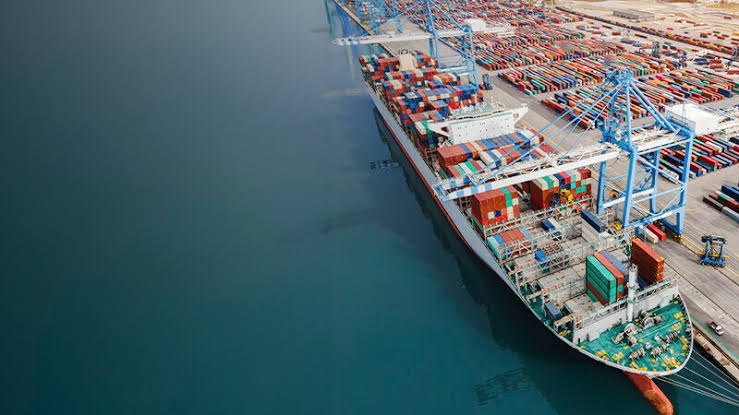
What Are Imports and Exports?
Imports and exports are two essential parts of international trade. They describe the movement of goods and services between countries and allow businesses and consumers to access products that may not be available domestically. Understanding imports and exports can help explain how countries interact economically and why international trade plays such an important role in the global economy.
What Are Imports?
Imports are goods and services that a country purchases from another country. When a business or consumer buys a product made overseas, that product is considered an import in the country where it is purchased.
For example, if a company in the United States buys coffee beans from Brazil, the coffee beans are imported into the United States. Similarly, if a person in Germany purchases a smartphone manufactured in South Korea, that smartphone is an import for Germany.
Imports can include both physical products and services. Common imported goods include:
-
Cars and vehicle parts
-
Electronics and computers
-
Clothing and footwear
-
Food and agricultural products
-
Oil and other energy products
-
Industrial machinery
-
Raw materials
Services can also be imported. For example, a company may pay a foreign business for software development, consulting, accounting, or customer-support services.
Countries import products for several reasons. Some goods may be cheaper to produce elsewhere, while other products may require natural resources, technology, or skills that are limited domestically.
What Are Exports?
Exports are goods and services that a country sells to customers in another country. When a domestic company sells its products or services internationally, those products or services are exports.
For example, if a company in Japan sells cars to customers in Canada, the cars are exports from Japan. If a software company in India provides services to businesses in the United Kingdom, those services are exports from India.
Exports can include:
-
Manufactured products
-
Agricultural goods
-
Natural resources
-
Machinery and equipment
-
Technology
-
Financial services
-
Tourism and other services
Exports are important because they allow businesses to reach customers beyond their domestic markets. A company that successfully sells internationally can potentially increase its revenue and expand its operations.
The Difference Between Imports and Exports
The simplest way to remember the difference is:
Imports come into a country, while exports go out of a country.
For example, imagine that Country A buys oil from Country B. From Country A's perspective, the oil is an import. From Country B's perspective, the same oil is an export.
This means that imports and exports are closely connected. An international transaction is generally an import for the buyer's country and an export for the seller's country.
Why Do Countries Import and Export?
No country has every resource, product, or skill it needs. Countries have different climates, natural resources, technologies, labor costs, infrastructure, and levels of specialization.
International trade allows countries to focus on producing goods and services where they may have advantages and trade with other countries for things they cannot produce efficiently.
For example, a country with fertile farmland may specialize in agricultural products, while another country with advanced manufacturing capabilities may specialize in machinery or electronics. By trading with one another, both countries can gain access to a broader range of products.
International trade can also give consumers more choices and encourage businesses to compete on price, quality, and innovation.
How Imports and Exports Affect the Economy
Imports and exports can have significant effects on a country's economy.
Employment
Export industries can create jobs because companies need workers to produce and distribute goods and services for international customers. Industries such as manufacturing, agriculture, technology, transportation, and logistics may all benefit from strong export demand.
Imports can also support employment. Businesses may import raw materials, components, or equipment that they use to manufacture products domestically.
Prices and Consumer Choice
Imports can provide consumers with products that are unavailable locally. Competition from foreign suppliers can also encourage domestic companies to improve quality and keep prices competitive.
However, increased imports can sometimes create challenges for domestic producers if foreign competitors can offer similar products at lower prices.
Economic Growth
Exports can contribute to economic growth by generating revenue from foreign customers. Successful exporting businesses may invest in new equipment, hire additional employees, and expand production.
At the same time, importing goods and services can help businesses obtain the resources and technology they need to operate efficiently.
What Is the Trade Balance?
The trade balance compares the value of a country's exports with the value of its imports over a particular period.
If a country exports more goods and services than it imports, it has a trade surplus.
If it imports more than it exports, it has a trade deficit.
For example, suppose a country exports $500 billion worth of goods and services in a year but imports $600 billion. It would have a trade deficit of $100 billion.
A trade deficit is not automatically harmful, just as a trade surplus is not automatically beneficial. The broader economic situation matters, including investment, productivity, employment, consumer demand, and how trade is financed.
How International Trade Works
International trade involves more than simply buying and selling products. Businesses may need to deal with shipping, customs requirements, taxes, tariffs, insurance, currency exchange, and international regulations.
A typical transaction might work like this:
-
A buyer in one country orders goods from a foreign supplier.
-
The seller produces and prepares the goods for shipment.
-
The products are transported by ship, aircraft, truck, or rail.
-
Customs authorities process the shipment when it enters the destination country.
-
Any applicable duties or taxes are paid.
-
The goods are delivered to the buyer.
Banks and financial institutions can also help businesses make international payments and manage currency risks.
Tariffs and Trade Barriers
Governments sometimes impose tariffs, which are taxes placed on imported goods. Tariffs can make foreign products more expensive and may be used to protect domestic industries or achieve other economic and policy objectives.
Countries can also use other trade barriers, such as import quotas, licensing requirements, product standards, or restrictions on particular goods.
Trade agreements can have the opposite effect by reducing tariffs and other barriers between participating countries. These agreements can make it easier and less expensive for businesses to trade internationally.
Imports and Exports in Everyday Life
People encounter imports and exports every day, often without realizing it. A grocery store may sell fruit grown in another country. A car may be assembled domestically using parts manufactured overseas. A computer may be designed in one country, contain components from several others, and be assembled somewhere else.
Services are also increasingly traded internationally. A person may use a streaming service operated by a foreign company, purchase an online course from an overseas provider, or hire a freelancer who lives in another country.
This interconnected system is one reason modern economies are often described as part of a global economy.
Conclusion
Imports and exports are fundamental to international trade. Imports are goods and services purchased from other countries, while exports are goods and services sold to foreign customers. Together, they allow countries to access resources, products, technologies, and services that may not be available or economical to produce domestically.
International trade can support economic growth, create employment, increase consumer choice, and help businesses reach global markets. At the same time, it can create challenges for industries facing foreign competition and can be affected by tariffs, regulations, currency movements, and changes in global demand.
Ultimately, imports and exports connect economies around the world and form a major part of how modern businesses and consumers obtain and exchange goods and services.
- Arts
- Business
- Computers
- Oyunlar
- Health
- Home
- Kids and Teens
- Money
- News
- Personal Development
- Recreation
- Regional
- Reference
- Science
- Shopping
- Society
- Sports
- Бизнес
- Деньги
- Дом
- Досуг
- Здоровье
- Игры
- Искусство
- Источники информации
- Компьютеры
- Личное развитие
- Наука
- Новости и СМИ
- Общество
- Покупки
- Спорт
- Страны и регионы
- World

 English
 Russian
 French
 Spanish
 Portuguese
 Deutsch
 Dutch
Dutch
 Italiano
 Arabic
 Romaian
 Portuguese (Brazil)
 Greek
Greek