
How do exchange rates affect imports and exports?
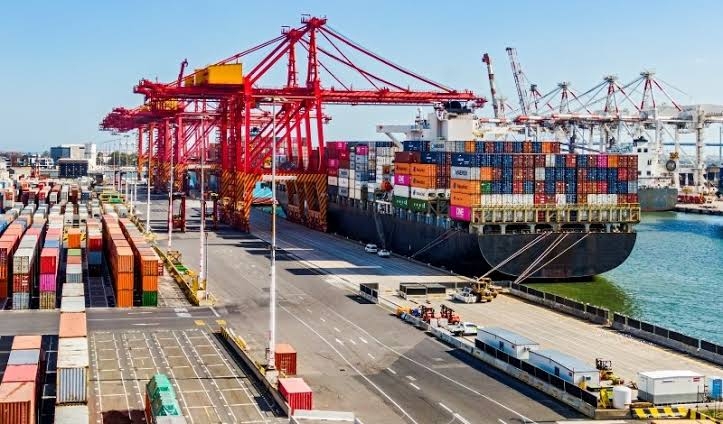
How Do Exchange Rates Affect Imports and Exports?
Exchange rates play an important role in international trade because they determine how much one country’s currency is worth compared with another country’s currency. When businesses buy or sell goods and services across borders, changes in exchange rates can directly affect prices, costs, profits, and demand.
Understanding the relationship between exchange rates and international trade helps explain why imports and exports can rise or fall even when the underlying products and services have not changed.
What Is an Exchange Rate?
An exchange rate is the value of one currency compared with another. For example, if $1 is worth €0.90, businesses and consumers can use this rate to determine how much a product priced in dollars will cost in euros.
Exchange rates constantly change because of factors such as inflation, interest rates, economic growth, political conditions, and investor demand for currencies.
For international businesses, these changes matter because the value of money received or spent in another currency can change from one day to the next.
How Exchange Rates Affect Imports
Imports are goods and services purchased from another country. Exchange rates can make imported products more expensive or cheaper for domestic consumers and businesses.
When the Domestic Currency Strengthens
When a country's currency becomes stronger relative to foreign currencies, imported goods generally become cheaper.
For example, suppose a U.S. company imports machinery from Europe. If the dollar strengthens against the euro, the company may need fewer dollars to purchase the same machinery. This can reduce its costs.
A stronger currency can therefore encourage imports because:
-
Foreign products become relatively cheaper.
-
Businesses can purchase foreign materials at lower costs.
-
Consumers may find imported products more affordable.
-
Companies may increase their purchases from international suppliers.
However, cheaper imports can create challenges for domestic producers. Local businesses competing with imported products may have difficulty matching the lower prices.
When the Domestic Currency Weakens
A weaker domestic currency generally makes imports more expensive. If the same U.S. company buys European machinery while the dollar has fallen against the euro, it will need more dollars to pay for the purchase.
Higher import prices can increase business costs, particularly for companies that rely heavily on foreign raw materials, components, fuel, or equipment.
Businesses may respond by raising their prices, finding domestic suppliers, reducing their profit margins, or purchasing fewer imported goods.
How Exchange Rates Affect Exports
Exports are goods and services sold to customers in other countries. Exchange rates can significantly influence how competitive a country's products are in international markets.
When the Domestic Currency Weakens
A weaker domestic currency can make exports cheaper for foreign buyers.
For example, imagine a Japanese company sells products to customers in the United States. If the yen becomes weaker against the dollar, the Japanese products may become less expensive in dollar terms, assuming the company does not change its prices.
Lower relative prices can increase demand for exports and make domestic businesses more competitive internationally.
A weaker currency can therefore benefit exporters by:
-
Making products more affordable to foreign customers.
-
Increasing international demand.
-
Improving the competitiveness of domestic businesses.
-
Potentially increasing export revenues.
However, the benefits are not guaranteed. Exporters that depend on imported materials may face higher production costs when their domestic currency weakens.
When the Domestic Currency Strengthens
A stronger domestic currency can make exports more expensive for foreign customers.
For instance, if the euro strengthens against the dollar, European products may become more expensive for American buyers. Foreign customers may then purchase fewer European goods or switch to products from countries with more competitive prices.
As a result, a strong currency can put pressure on exporters, particularly industries where customers are highly sensitive to price.
The Trade Balance
Exchange rates can also influence a country's trade balance, which is the difference between the value of its exports and imports.
When a currency weakens, exports may become cheaper while imports become more expensive. This can potentially encourage exports and discourage imports, improving the trade balance.
When a currency strengthens, the opposite may happen: imports become cheaper and exports become more expensive, potentially increasing imports relative to exports.
However, exchange rates are only one factor affecting the trade balance. Consumer demand, production capacity, government policies, transportation costs, tariffs, and economic conditions in trading-partner countries also matter.
The Role of Inflation
Inflation can complicate the relationship between exchange rates and trade.
Suppose a country's currency becomes weaker, making its exports cheaper for international customers. If domestic inflation is also high, production costs may rise. Businesses may then increase their export prices, reducing some of the competitive advantage created by the weaker currency.
Similarly, a stronger currency can make imported goods cheaper and potentially reduce the cost of imported raw materials. This may help businesses control production costs.
Exchange Rate Risk for Businesses
Exchange rate fluctuations create uncertainty for companies involved in international trade.
Consider a company that agrees to receive €1 million from a foreign customer three months from now. If the euro loses value against the company's domestic currency before payment is received, the company may receive less money in domestic-currency terms than expected.
Businesses can manage this risk using strategies such as currency contracts, pricing adjustments, or financial hedging instruments. Larger international companies often use these methods to reduce the impact of unexpected currency movements.
A Simple Example
Imagine that a company in Country A sells computers to customers in Country B.
If Country A's currency becomes weaker:
-
The computers may become cheaper for customers in Country B.
-
Demand for the computers may increase.
-
The company may sell more computers internationally.
-
Imported components used to manufacture the computers may become more expensive.
If Country A's currency becomes stronger:
-
The computers may become more expensive for foreign customers.
-
Demand may decrease.
-
Imported components may become cheaper.
-
The company may face greater competition from foreign producers.
This example shows why exchange-rate changes can create both advantages and disadvantages for the same business.
Exchange Rates Do Not Affect Every Industry Equally
The impact of exchange rates varies between industries. Companies that sell mostly domestic products may have relatively little exposure to currency movements. In contrast, businesses that regularly import raw materials or export finished products can be highly sensitive to exchange-rate changes.
For example, manufacturers may be affected by the cost of imported components, while tourism businesses can benefit when a country's currency becomes cheaper because foreign visitors may find the destination more affordable.
Conclusion
Exchange rates have a major influence on imports and exports by changing the relative prices of goods and services between countries. A stronger domestic currency generally makes imports cheaper and exports more expensive, while a weaker currency tends to make imports more expensive and exports more competitive.
However, the effects are not always straightforward. Inflation, production costs, consumer demand, trade policies, and businesses' dependence on imported materials can all influence the final outcome.
For businesses engaged in international trade, monitoring exchange rates is therefore essential. Understanding currency movements can help companies make better decisions about pricing, sourcing, production, and international expansion. For entire economies, exchange rates can influence trade balances, business competitiveness, consumer prices, and economic growth.
- Arts
- Business
- Computers
- Jogos
- Health
- Início
- Kids and Teens
- Money
- News
- Personal Development
- Recreation
- Regional
- Reference
- Science
- Shopping
- Society
- Sports
- Бизнес
- Деньги
- Дом
- Досуг
- Здоровье
- Игры
- Искусство
- Источники информации
- Компьютеры
- Личное развитие
- Наука
- Новости и СМИ
- Общество
- Покупки
- Спорт
- Страны и регионы
- World

 English
 Russian
 French
 Spanish
 Deutsch
 Turkish
 Dutch
Dutch
 Italiano
 Arabic
 Romaian
 Portuguese (Brazil)
 Greek
Greek