
What is the foreign exchange market?
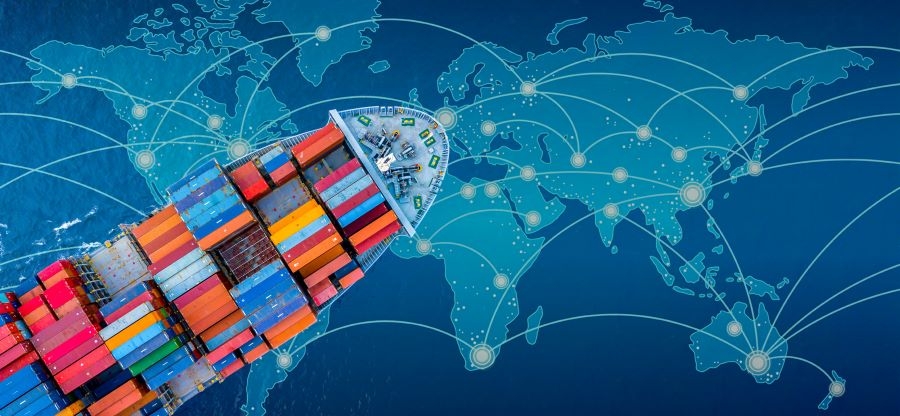
What Is the Foreign Exchange Market?
The foreign exchange market, commonly called the forex market or FX market, is the global marketplace where currencies are bought and sold. It allows individuals, businesses, banks, governments, and investors to exchange one currency for another.
For example, when a European company purchases goods from the United States, it may need to exchange euros for U.S. dollars to pay the American supplier. Similarly, a traveler visiting another country exchanges their home currency for the local currency. These transactions are made possible by the foreign exchange market.
The forex market is one of the most important parts of the global financial system because international trade, investment, tourism, and financial transactions all depend on the ability to exchange currencies.
How Does the Foreign Exchange Market Work?
Unlike a traditional stock exchange, the foreign exchange market does not operate from one central physical location. It is a global, decentralized network of banks, financial institutions, businesses, brokers, governments, and other participants.
Currency trading takes place electronically through financial institutions and trading platforms. Because financial centers around the world operate in different time zones, forex trading is generally available 24 hours a day, five days a week.
Currencies are traded in pairs. Common examples include:
-
EUR/USD — euro against the U.S. dollar
-
GBP/USD — British pound against the U.S. dollar
-
USD/JPY — U.S. dollar against the Japanese yen
-
USD/CHF — U.S. dollar against the Swiss franc
-
AUD/USD — Australian dollar against the U.S. dollar
When currencies are traded as a pair, the first currency is the base currency, while the second is the quote currency. For example, if EUR/USD is 1.10, it means that one euro is worth 1.10 U.S. dollars.
What Determines Exchange Rates?
The price of one currency relative to another is known as the exchange rate. Exchange rates change constantly because of supply and demand in the foreign exchange market.
Several factors can influence currency values.
Interest Rates
Central banks influence currency markets through interest-rate decisions. Higher interest rates can make assets denominated in a country's currency more attractive to investors, potentially increasing demand for that currency.
Lower interest rates can have the opposite effect, although the relationship is not always straightforward.
Inflation
Inflation can affect a currency's purchasing power and its attractiveness to investors. Countries with persistently high inflation may experience pressure on the value of their currencies, particularly when compared with countries that maintain more stable prices.
Economic Conditions
Economic growth, employment, consumer spending, industrial production, and other economic indicators can influence expectations about a country's economy and its currency.
Political Stability
Political uncertainty can affect investor confidence. Investors may move money toward currencies and countries they consider more stable, increasing demand for those currencies.
International Trade
Exports and imports also influence currency demand. When a country exports goods and services, foreign buyers may need its currency to make payments. Imports can create demand for foreign currencies.
Market Expectations
Forex markets respond not only to current conditions but also to expectations about the future. Traders may buy or sell currencies based on anticipated changes in interest rates, economic growth, inflation, government policies, or geopolitical conditions.
Who Participates in the Forex Market?
The foreign exchange market includes many different participants.
Commercial and investment banks are among the largest participants. They exchange currencies for their customers and for their own financial activities.
Central banks participate in currency markets as part of monetary policy and foreign-exchange management. In some circumstances, they may buy or sell currencies to influence market conditions or manage foreign-exchange reserves.
Businesses use the forex market when they conduct international trade. A company that imports products from another country may need to purchase the supplier's currency.
Investment funds and financial institutions trade currencies as part of their investment and risk-management strategies.
Individual traders can also participate through online forex brokers. Retail forex trading has become widely accessible, although it can involve significant risks, especially when leverage is used.
Travelers and consumers participate in the currency market on a smaller scale when exchanging money for international travel or making purchases in foreign currencies.
Why Is the Forex Market Important?
The foreign exchange market plays a central role in the international economy.
Facilitating International Trade
Businesses in different countries often use different currencies. Forex markets allow these currencies to be converted, making international trade possible.
For example, a company in Japan may purchase machinery from Germany. The Japanese buyer may need to convert yen into euros to complete the transaction.
Supporting International Investment
Investors frequently purchase assets in other countries. Someone investing in foreign stocks, bonds, or property may need to convert their domestic currency into the currency of the investment.
Enabling International Travel
Tourists need local currencies to pay for accommodation, transportation, food, and other expenses. Currency exchange services rely on the broader foreign exchange market to determine exchange rates.
Managing Currency Risk
Exchange rates can change significantly. Businesses that receive revenue or have expenses in foreign currencies may face financial losses if exchange rates move against them.
Companies can use financial instruments such as forward contracts, futures, and options to manage some of this currency risk.
The Spot and Derivatives Markets
Foreign exchange transactions can take several forms.
The spot market involves exchanging currencies at the current market rate, with settlement typically occurring shortly after the transaction.
The forward market involves an agreement to exchange currencies at a specified future date and exchange rate. Businesses commonly use forward contracts to reduce uncertainty about future currency costs.
Other foreign exchange derivatives include futures, options, and swaps. These instruments can be used for hedging, investment, or other financial strategies.
Major and Minor Currency Pairs
Some currencies are traded much more frequently than others.
The most actively traded currencies include the U.S. dollar, euro, Japanese yen, British pound, Swiss franc, Canadian dollar, Australian dollar, and New Zealand dollar.
Currency pairs involving the U.S. dollar are often called major pairs. Examples include EUR/USD and USD/JPY.
Pairs that do not involve the U.S. dollar are often called cross currency pairs, such as EUR/GBP or EUR/JPY.
Currencies from emerging or smaller economies may be referred to as exotic currencies when paired with a major currency. These currencies can have lower trading volumes and may experience wider spreads and greater price fluctuations.
Advantages and Risks of the Forex Market
The forex market offers several benefits. Its enormous global size provides substantial liquidity, meaning many currencies can be bought and sold relatively easily. Its international nature also allows participants to trade across different countries and time zones.
However, currency trading involves significant risks. Exchange rates can change quickly in response to economic announcements, political developments, central-bank decisions, or unexpected events.
Retail traders face additional risks when using leverage, which allows them to control a larger position with a smaller amount of capital. While leverage can increase potential profits, it can also magnify losses.
For this reason, understanding exchange rates, risk management, and the factors affecting currencies is essential before participating in forex trading.
Conclusion
The foreign exchange market is the global system through which currencies are exchanged. It connects banks, governments, businesses, investors, and consumers around the world and supports international trade, investment, and travel.
Currency values are influenced by supply and demand as well as interest rates, inflation, economic performance, political conditions, trade flows, and market expectations. Because exchange rates constantly change, the forex market provides opportunities for financial institutions and traders while also creating risks.
Ultimately, the foreign exchange market is a fundamental part of the modern global economy. Without it, businesses and individuals would have far greater difficulty conducting financial transactions across national borders.
- Arts
- Business
- Computers
- Jeux
- Health
- Domicile
- Kids and Teens
- Argent
- News
- Personal Development
- Recreation
- Regional
- Reference
- Science
- Shopping
- Society
- Sports
- Бизнес
- Деньги
- Дом
- Досуг
- Здоровье
- Игры
- Искусство
- Источники информации
- Компьютеры
- Личное развитие
- Наука
- Новости и СМИ
- Общество
- Покупки
- Спорт
- Страны и регионы
- World

 English
 Russian
 Spanish
 Portuguese
 Deutsch
 Turkish
 Dutch
Dutch
 Italiano
 Arabic
 Romaian
 Portuguese (Brazil)
 Greek
Greek