
What is an import tariff?
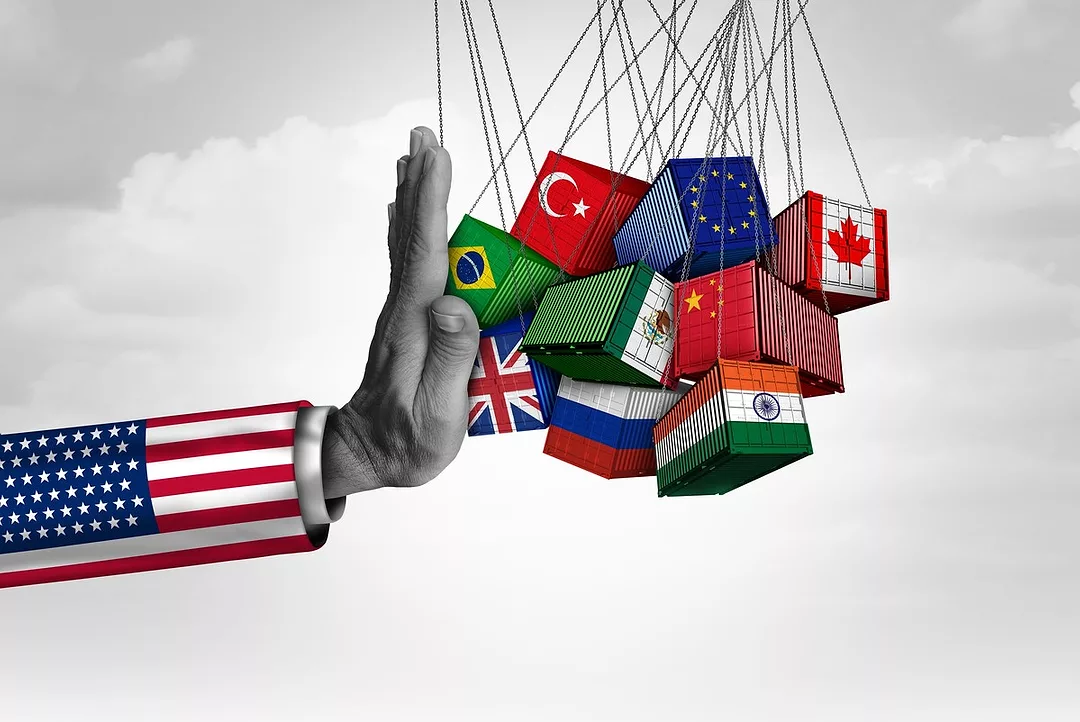
What Is an Import Tariff?
An import tariff is a tax imposed by a government on goods and services brought into a country from abroad. Tariffs are one of the oldest tools used in international trade policy. Governments may use them to protect domestic industries, raise government revenue, influence trade relationships, or encourage consumers and businesses to buy domestically produced goods.
Import tariffs can affect businesses, consumers, workers, and the broader economy. Understanding how tariffs work helps explain why changes in trade policy can influence prices, production, employment, and international relations.
How Does an Import Tariff Work?
When a company imports a product, it may have to pay a tariff to the government of the country where the product enters. The tariff is generally calculated either as a percentage of the product's value or as a fixed amount per unit.
For example, suppose a country imposes a 10% tariff on imported electronics. If a business imports a shipment of electronics worth $100,000, the tariff would be $10,000.
There are two common types of tariffs:
-
Ad valorem tariff: A percentage of the imported product's value. For example, a 15% tariff on a $1,000 product would be $150.
-
Specific tariff: A fixed charge based on the quantity of goods. For example, a government might charge $2 for every kilogram of an imported product.
Some trade policies can also combine these approaches.
Who Pays an Import Tariff?
Although tariffs are imposed on imported goods, foreign exporters do not normally send the tariff payment directly to the importing country's government. Instead, the importer—usually a company purchasing goods from abroad—is responsible for paying the tariff when the goods enter the country.
However, the economic burden of a tariff can be shared among several parties.
An importer may respond to a tariff by increasing the price charged to customers. Consumers therefore may pay more for the imported product. Alternatively, the importer might negotiate lower prices with the foreign supplier, meaning the foreign producer absorbs part of the cost. The importer may also accept lower profit margins.
As a result, saying that a foreign country "pays" a tariff can be misleading. The actual economic effects depend on how businesses, consumers, and producers respond to the policy.
Why Do Governments Impose Import Tariffs?
Governments can impose tariffs for several reasons.
Protecting Domestic Industries
One major purpose of tariffs is to protect domestic businesses from foreign competition. If imported goods are significantly cheaper than similar products made domestically, local producers may struggle to compete.
A tariff raises the price of imported goods, potentially making domestic products more competitive. Governments may use this approach to support industries considered strategically important, such as agriculture, manufacturing, or energy.
Protecting Jobs
Tariffs may also be introduced to protect employment in industries facing strong foreign competition. If domestic companies lose market share to imports, they may reduce production or employment. By making imports more expensive, tariffs can provide domestic producers with greater opportunities to sell their products.
However, tariffs can also affect jobs negatively in industries that rely on imported materials or components. Higher input costs can make businesses less competitive and may lead to reduced production or employment.
Raising Government Revenue
Tariffs can generate revenue for governments. Before modern income and consumption taxes became widespread, tariffs were an important source of government funding in many countries.
Today, tariffs generally represent a smaller share of government revenue in many developed economies, but they can still provide substantial funds, particularly in countries with large volumes of imports.
Addressing Unfair Trade Practices
Governments sometimes impose tariffs in response to practices they consider unfair. For example, a country may accuse foreign companies of receiving government subsidies that allow them to sell products at artificially low prices.
Tariffs can be used as a trade-policy response intended to protect domestic producers or encourage changes in foreign trade practices.
Supporting National Security
Governments may also use tariffs or similar trade restrictions to protect industries considered important to national security. A country may want to maintain domestic production capacity for products such as advanced technology, critical materials, food, or industrial equipment.
What Are the Effects of Import Tariffs?
The effects of a tariff depend on its size, the products affected, and how businesses and consumers respond.
Higher Prices
One of the most immediate effects can be higher prices for imported products. If an imported good becomes more expensive because of a tariff, consumers may switch to domestic alternatives, reduce their purchases, or continue buying the imported product at a higher price.
Tariffs can also raise the prices of domestic products if domestic producers face less competition from imports.
Benefits for Domestic Producers
Domestic companies competing with imported products may benefit from tariffs. With imported goods becoming more expensive, local producers may gain market share.
This can encourage domestic production and potentially support employment in protected industries.
Higher Costs for Businesses
Tariffs can increase costs for companies that import raw materials, machinery, components, or finished products. For example, a manufacturer that imports steel may face higher production costs after a tariff is introduced.
Businesses may respond by raising prices, finding alternative suppliers, changing production methods, or accepting lower profits.
Reduced International Trade
Tariffs generally make international trade more expensive. If tariffs become high enough, businesses may reduce imports or stop trading certain products altogether.
Trading partners may also respond by imposing tariffs on the country's exports. This can create a trade dispute or trade war, in which countries repeatedly increase restrictions on one another's goods.
Import Tariffs and Consumers
Consumers can be affected significantly by import tariffs. When tariffs increase the cost of imported goods, retailers and businesses may pass some or all of the additional cost to customers.
For example, if a tariff increases the cost of imported clothing, electronics, food, or vehicles, consumers may face higher prices.
Consumers may benefit indirectly if tariffs help domestic industries create jobs or expand production. However, the benefits may be concentrated among workers and businesses in protected industries, while higher prices can affect a much larger group of consumers.
Import Tariffs vs. Import Quotas
Tariffs and quotas are both tools for restricting imports, but they work differently.
A tariff places a tax on imported goods, making them more expensive. An import quota limits the quantity of a product that can be imported during a particular period.
For example, a government might impose a 20% tariff on imported agricultural products or establish a quota allowing only a specified number of tons of those products to enter the country.
Tariffs generate government revenue, while quotas generally do not create revenue simply from limiting quantities.
Are Import Tariffs Good or Bad?
There is no universal answer. The effects depend on the economic circumstances and the government's objectives.
Tariffs can help protect industries, support certain jobs, encourage domestic production, and address specific trade concerns. They may be particularly attractive when policymakers want to protect strategically important sectors.
However, tariffs can also increase prices, raise production costs, reduce consumer choice, and provoke retaliation from trading partners. If businesses depend heavily on imported materials, tariffs may make domestic companies less competitive rather than more competitive.
Economists often emphasize that tariffs create both winners and losers. Domestic producers in protected industries may gain, while consumers and businesses that rely on imports may face higher costs.
A Simple Example
Imagine that Country A produces bicycles for $500 each, while imported bicycles from Country B cost $400.
Country A imposes a 25% tariff on imported bicycles. The tariff adds $100 to the imported bicycle, increasing its effective cost to $500 before other expenses.
The domestic producer may now be able to compete more effectively. Consumers, however, may have fewer low-cost options. The importer must pay the tariff, and some of that additional cost may ultimately be reflected in the price paid by consumers.
If Country B responds by imposing tariffs on products from Country A, exporters in Country A may also face higher costs and reduced sales.
Conclusion
An import tariff is a government tax on goods entering a country. It can be calculated as a percentage of the product's value or as a fixed charge per unit. Governments use tariffs for purposes such as protecting domestic industries, supporting jobs, raising revenue, addressing trade concerns, and promoting national security.
While tariffs can benefit selected domestic industries, they can also increase prices and costs for consumers and businesses. They may further trigger retaliatory measures from trading partners and reduce international trade.
Ultimately, an import tariff is not simply a tax on foreign goods. It is a broader economic policy tool whose effects can spread throughout an economy, influencing prices, production, employment, consumers, businesses, and international trade relationships.
- Arts
- Business
- Computers
- Giochi
- Health
- Home
- Kids and Teens
- Money
- News
- Personal Development
- Recreation
- Regional
- Reference
- Science
- Shopping
- Society
- Sports
- Бизнес
- Деньги
- Дом
- Досуг
- Здоровье
- Игры
- Искусство
- Источники информации
- Компьютеры
- Личное развитие
- Наука
- Новости и СМИ
- Общество
- Покупки
- Спорт
- Страны и регионы
- World

 English
 Russian
 French
 Spanish
 Portuguese
 Deutsch
 Turkish
 Dutch
Dutch
 Arabic
 Romaian
 Portuguese (Brazil)
 Greek
Greek