
How does globalization affect developing countries?
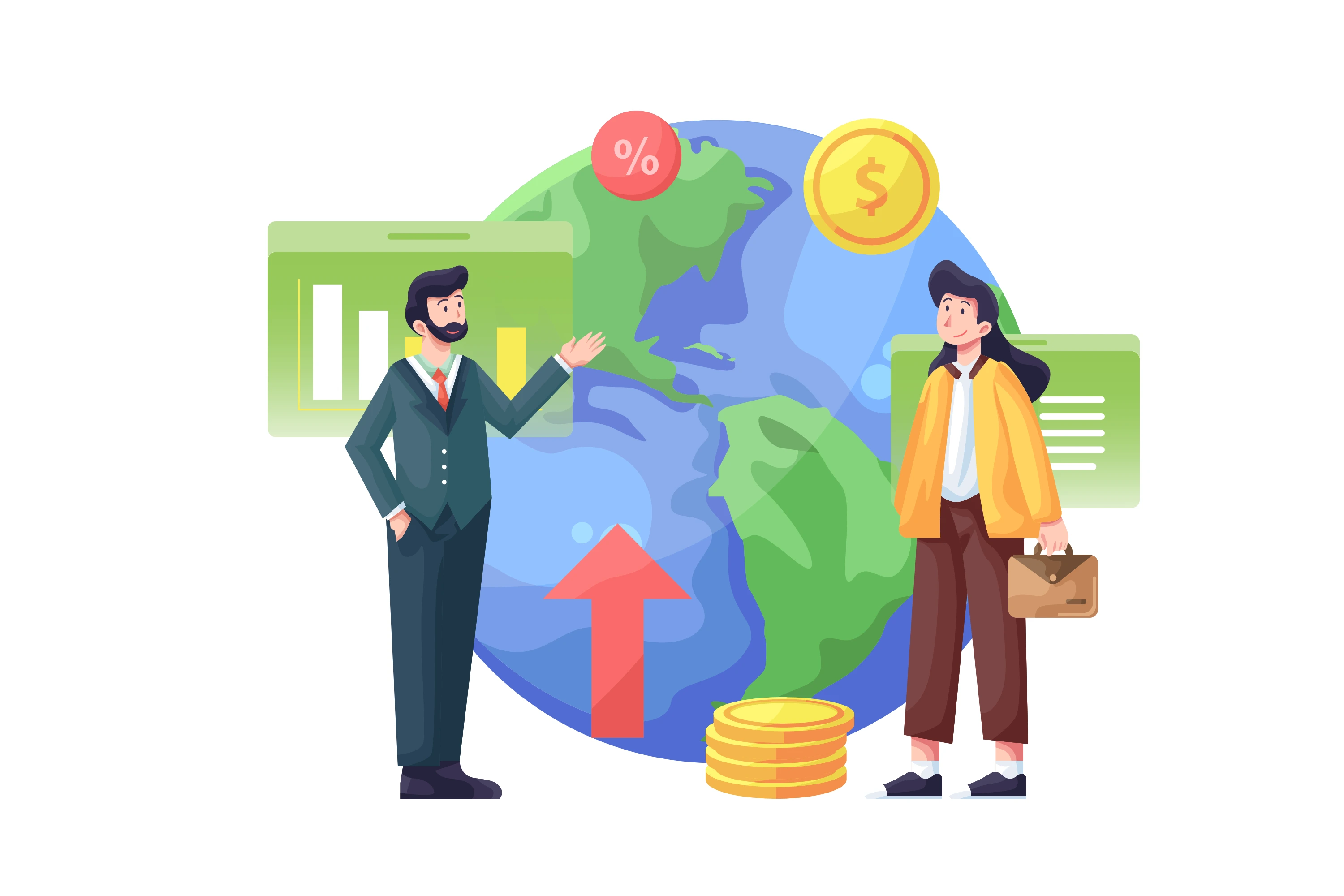
How Does Globalization Affect Developing Countries?
Globalization is the process through which countries become increasingly connected through trade, investment, technology, communication, migration, and cultural exchange. It has transformed the world economy by allowing goods, services, money, information, and ideas to move more easily across national borders. For developing countries, globalization has created important opportunities for economic growth and modernization, but it has also introduced significant challenges. Its effects depend on how well countries can take advantage of global opportunities while managing the risks that come with greater international integration.
Economic Growth and Trade
One of the most important effects of globalization on developing countries is increased access to international markets. In the past, many developing economies depended heavily on small domestic markets. Globalization allows businesses in these countries to sell their products and services to consumers around the world.
Exports can generate foreign currency, increase government revenue, and encourage businesses to expand. Countries that successfully develop competitive export industries can experience faster economic growth. Manufacturing, agriculture, tourism, information technology, and business services have all benefited from international demand in different developing countries.
Globalization can also attract foreign direct investment (FDI). International companies may establish factories, offices, or service centers in developing countries because of lower production costs, growing consumer markets, or access to natural resources. Such investment can provide capital that might otherwise be difficult for developing economies to obtain.
Job Creation and Employment
Foreign investment and international trade can create new employment opportunities. Multinational companies often employ local workers in manufacturing, technology, retail, transportation, tourism, and other sectors. Export-oriented industries can also create indirect employment by increasing demand for local suppliers and services.
For many developing countries, these opportunities can help reduce poverty and raise household incomes. Workers may gain access to more stable employment and develop skills that can improve their future career prospects.
However, the quality of employment matters. Some workers in developing countries receive low wages and may work in unsafe conditions. Companies may move production to countries where labor costs are lower, which can put pressure on wages and working conditions. Therefore, globalization does not automatically guarantee good jobs; effective labor laws and enforcement are important.
Technology and Knowledge Transfer
Globalization makes it easier for developing countries to gain access to modern technologies, knowledge, and management practices. Foreign companies can introduce advanced production methods, digital technologies, and professional standards.
Technology transfer can improve productivity and help local businesses become more competitive. Access to the internet and digital communication has also allowed entrepreneurs in developing countries to participate in international markets without having a large physical presence abroad.
Education and international cooperation can further increase the benefits. Students, researchers, and professionals can exchange knowledge with people in other countries, contributing to innovation and skill development.
Reduction of Poverty
Globalization can contribute to poverty reduction when economic growth creates broad employment and income opportunities. Countries that have integrated successfully into global markets have sometimes experienced major improvements in living standards.
Higher incomes can allow families to spend more on education, healthcare, housing, and other necessities. Governments may also have more resources to invest in infrastructure and public services when economic activity increases.
Nevertheless, the benefits of globalization are not distributed equally. Highly skilled workers and large businesses may gain more than low-skilled workers or small enterprises. If economic growth is concentrated among a relatively small part of society, inequality can increase even while the overall economy grows.
Increased Competition
Globalization exposes domestic businesses to international competition. This can be beneficial because competition encourages companies to improve their products, reduce costs, adopt new technologies, and become more efficient.
Consumers may benefit from lower prices and a wider variety of goods and services. Businesses that become internationally competitive can expand and create additional jobs.
At the same time, small local companies may struggle to compete with large multinational corporations. Businesses that lack access to capital, technology, or skilled workers can lose market share or close. Governments may therefore need policies that help small and medium-sized enterprises adapt to international competition.
Dependence on Global Markets
Greater international integration can make developing countries more vulnerable to events beyond their control. A global recession, financial crisis, pandemic, war, or disruption of international supply chains can reduce demand for exports and decrease foreign investment.
Countries that depend heavily on a small number of commodities can be particularly vulnerable. For example, a country that relies mainly on oil, minerals, or a single agricultural product may experience serious economic difficulties if global prices fall.
Diversifying the economy is therefore an important way for developing countries to reduce the risks associated with globalization.
Effects on Agriculture
Globalization has both positive and negative effects on agriculture. Farmers may gain access to larger international markets and receive opportunities to export valuable crops. Modern technologies, improved seeds, equipment, and farming techniques can increase productivity.
However, small farmers may face strong competition from large international producers. Changes in global prices can also make agricultural incomes unpredictable. In some cases, farmers may become dependent on producing crops for export rather than food for local consumption.
Governments can help farmers benefit from globalization by improving transportation, storage, education, financing, and access to international markets.
Cultural and Social Effects
Globalization is not limited to economics. It also increases cultural exchange. Developing countries gain greater access to international music, films, literature, education, food, fashion, and ideas.
This exchange can encourage understanding between societies and expose people to new perspectives. Young people, in particular, can communicate with others around the world through social media and digital platforms.
However, globalization can also create concerns about cultural identity. International media and consumer culture may influence local traditions, languages, and lifestyles. Some communities worry that distinctive cultural practices may gradually disappear as global culture becomes more influential.
Environmental Challenges
Economic globalization can contribute to environmental problems if industrial growth occurs without adequate environmental regulations. Increased manufacturing, transportation, mining, and resource extraction can lead to pollution, deforestation, habitat loss, and higher greenhouse gas emissions.
Developing countries sometimes face pressure to prioritize rapid economic growth over environmental protection. In addition, companies may seek locations where environmental regulations are weaker.
On the other hand, globalization can also help developing countries gain access to cleaner technologies, international environmental standards, and funding for sustainable development. International cooperation can therefore make globalization part of the solution to environmental problems rather than only a source of them.
The Importance of Government Policies
The effects of globalization are strongly influenced by government policies. Countries with strong institutions, good infrastructure, effective education systems, and stable economic policies are generally better positioned to benefit from global integration.
Governments can support workers and businesses through education and training, social protection, infrastructure investment, access to finance, and policies that encourage innovation. They can also enforce labor and environmental standards to prevent economic growth from coming at the expense of workers or natural resources.
Conclusion
Globalization has had a profound effect on developing countries. It can create opportunities for economic growth, international trade, foreign investment, employment, technological progress, and poverty reduction. It can also increase competition, inequality, economic dependence, cultural pressures, and environmental risks.
The overall impact is therefore neither entirely positive nor entirely negative. Developing countries are more likely to benefit when they have the institutions, skills, infrastructure, and policies necessary to participate effectively in the global economy. With careful management, globalization can become an important tool for development, allowing countries to connect with international markets while improving living standards and building more sustainable economies.
- Arts
- Business
- Computers
- Games
- Health
- Home
- Kids and Teens
- Money
- News
- Personal Development
- Recreation
- Regional
- Reference
- Science
- Shopping
- Society
- Sports
- Бизнес
- Деньги
- Дом
- Досуг
- Здоровье
- Игры
- Искусство
- Источники информации
- Компьютеры
- Личное развитие
- Наука
- Новости и СМИ
- Общество
- Покупки
- Спорт
- Страны и регионы
- World

 Russian
 French
 Spanish
 Portuguese
 Deutsch
 Turkish
 Dutch
Dutch
 Italiano
 Arabic
 Romaian
 Portuguese (Brazil)
 Greek
Greek