
How does globalization affect international trade?
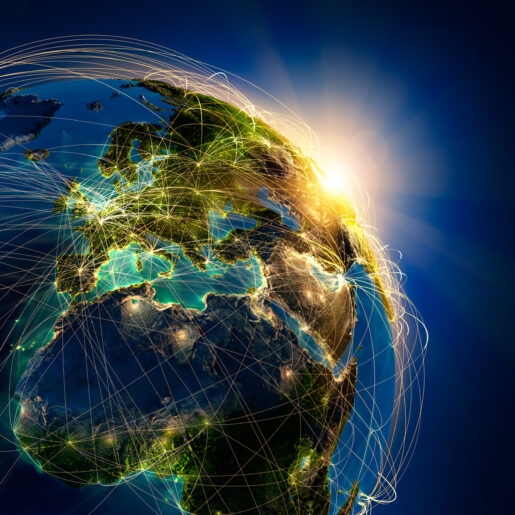
How Does Globalization Affect International Trade?
Globalization has transformed the way countries, businesses, and consumers interact with one another. One of its most significant effects has been on international trade. Globalization refers to the increasing integration of economies, societies, and markets across national borders. As transportation, communication, technology, and international financial systems have improved, goods and services can move more easily between countries. This has expanded international trade and created both opportunities and challenges for economies around the world.
Globalization and the Expansion of International Trade
One of the most important effects of globalization is the growth of international trade. In the past, trading across borders was often expensive, slow, and complicated. Improvements in transportation, such as container shipping and more efficient air freight, have significantly reduced the cost and time required to move products internationally.
At the same time, technological developments have made it easier for companies to communicate and conduct business with partners in other countries. The internet allows businesses to advertise products, negotiate contracts, receive orders, and provide services to customers around the world. As a result, even smaller companies can participate in international markets.
Globalization has therefore expanded the number of countries and businesses involved in international trade. Consumers can purchase products manufactured in different parts of the world, while businesses can sell their goods and services to much larger markets.
Reduction of Trade Barriers
Globalization has encouraged countries to reduce barriers to international trade. Governments have negotiated trade agreements that lower tariffs, remove quotas, simplify customs procedures, and establish common rules for international commerce.
Trade agreements can make it easier and less expensive for businesses to export and import goods. When trade barriers are reduced, companies can access foreign markets more easily, while consumers can benefit from a greater variety of products.
International organizations and regional trading groups have also contributed to this process. By establishing rules and encouraging cooperation, they have helped create a more predictable environment for international trade.
However, trade liberalization can also create difficulties. Domestic industries that compete with cheaper foreign products may lose market share. Some companies may be unable to compete successfully, which can result in business closures and job losses in particular sectors.
The Growth of Global Supply Chains
Globalization has also changed how products are produced. Instead of manufacturing an entire product in one country, companies can divide production into different stages and locate each stage where it is most efficient or cost-effective.
For example, a company may design a product in one country, manufacture components in several others, assemble the final product elsewhere, and sell it worldwide. This creates global supply chains in which goods, services, technology, and raw materials cross multiple borders before reaching consumers.
Global supply chains can reduce production costs and allow businesses to specialize. Countries can focus on activities in which they have advantages, such as skilled labor, natural resources, technology, or relatively low production costs.
However, international supply chains can also make economies more vulnerable to disruptions. Natural disasters, wars, political disputes, pandemics, transportation problems, or trade restrictions in one country can affect production and prices in many others.
Increased Competition
Globalization has increased competition among businesses. Companies are no longer competing only with firms from their own countries. They may also compete with businesses from countries where production costs are lower or where companies have advanced technology and specialized skills.
This competition can encourage businesses to improve efficiency, reduce costs, develop new products, and provide better services. Consumers may benefit from lower prices, higher quality, and greater choice.
On the other hand, increased competition can be difficult for businesses that lack the resources or technology needed to compete internationally. Small domestic producers may struggle against large multinational corporations, particularly when foreign competitors benefit from economies of scale.
Greater Access to Foreign Markets
Globalization has provided businesses with access to customers beyond their domestic markets. A company that once depended entirely on local consumers can now sell products internationally through online platforms, international distributors, and digital marketplaces.
Access to larger markets can help businesses increase sales and production. It can also allow companies to spread their fixed costs over a larger number of products, potentially making production more efficient.
Developing countries can particularly benefit when globalization provides opportunities to export agricultural products, manufactured goods, tourism services, information technology, and other services. International trade can generate foreign exchange earnings and contribute to economic growth.
Effects on Developing Countries
Globalization has created important opportunities for developing countries. Foreign companies may invest in factories, infrastructure, technology, and services, creating employment and increasing production. Export-oriented industries can connect developing economies to international markets and provide opportunities for economic development.
Globalization can also facilitate the transfer of knowledge and technology. Businesses in developing countries may gain access to modern production methods, management practices, and international standards.
Nevertheless, the benefits are not distributed equally. Some countries remain heavily dependent on a small number of exports, making them vulnerable to changes in global demand and prices. Workers may also face low wages or poor working conditions in industries competing primarily on production costs. Effective government policies are therefore important for ensuring that international trade contributes to broad-based economic development.
Effects on Consumers
Consumers are among the major beneficiaries of globalization and international trade. Imported goods increase the range of products available in domestic markets. Consumers may have access to food, clothing, electronics, vehicles, and services produced in countries around the world.
International competition can also put downward pressure on prices. When businesses compete for consumers, they have greater incentives to offer attractive prices and improve product quality.
However, globalization can sometimes make consumers more exposed to international economic conditions. A disruption in global supply chains or a sudden increase in international commodity prices can raise the prices of imported goods.
Globalization and International Services
Globalization does not affect only trade in physical products. International trade in services has also expanded significantly.
Businesses can now provide financial services, software development, consulting, education, entertainment, tourism, and customer support across national borders. Digital technology has made it possible for some services to be delivered almost instantly to customers in other countries.
The growth of digital trade has created new opportunities for countries with highly educated workforces and strong technological infrastructure. It has also allowed individuals and small businesses to serve international customers without establishing physical operations abroad.
Environmental and Social Concerns
The expansion of international trade can create environmental challenges. Greater production and transportation can increase energy consumption, pollution, and greenhouse gas emissions. The movement of goods across long distances may contribute to environmental pressures if sustainable practices are not adopted.
Globalization can also create social concerns related to working conditions, income inequality, and employment. While international trade can create jobs and raise incomes, some workers may lose employment when companies relocate production or when domestic industries cannot compete with imports.
These challenges have increased interest in sustainable trade policies, stronger labor standards, responsible business practices, and environmentally friendly production.
Conclusion
Globalization has profoundly changed international trade by making it easier, faster, and more extensive. It has reduced many trade barriers, expanded access to foreign markets, encouraged global supply chains, increased competition, and given consumers access to a wider variety of goods and services.
At the same time, globalization can create economic, social, and environmental challenges. Some industries and workers benefit greatly from international trade, while others face stronger competition and economic disruption. Global supply chains can improve efficiency but can also increase vulnerability to international crises.
Overall, globalization has made national economies more closely connected and has become a major force behind the growth of international trade. Its benefits depend largely on how governments, businesses, and international institutions manage its risks and ensure that the gains from trade are shared as broadly as possible.
- Arts
- Business
- Computers
- Games
- Health
- Home
- Kids and Teens
- Money
- News
- Personal Development
- Recreation
- Regional
- Reference
- Science
- Shopping
- Society
- Sports
- Бизнес
- Деньги
- Дом
- Досуг
- Здоровье
- Игры
- Искусство
- Источники информации
- Компьютеры
- Личное развитие
- Наука
- Новости и СМИ
- Общество
- Покупки
- Спорт
- Страны и регионы
- World

 Russian
 French
 Spanish
 Portuguese
 Deutsch
 Turkish
 Dutch
Dutch
 Italiano
 Arabic
 Romaian
 Portuguese (Brazil)
 Greek
Greek