
International economics models
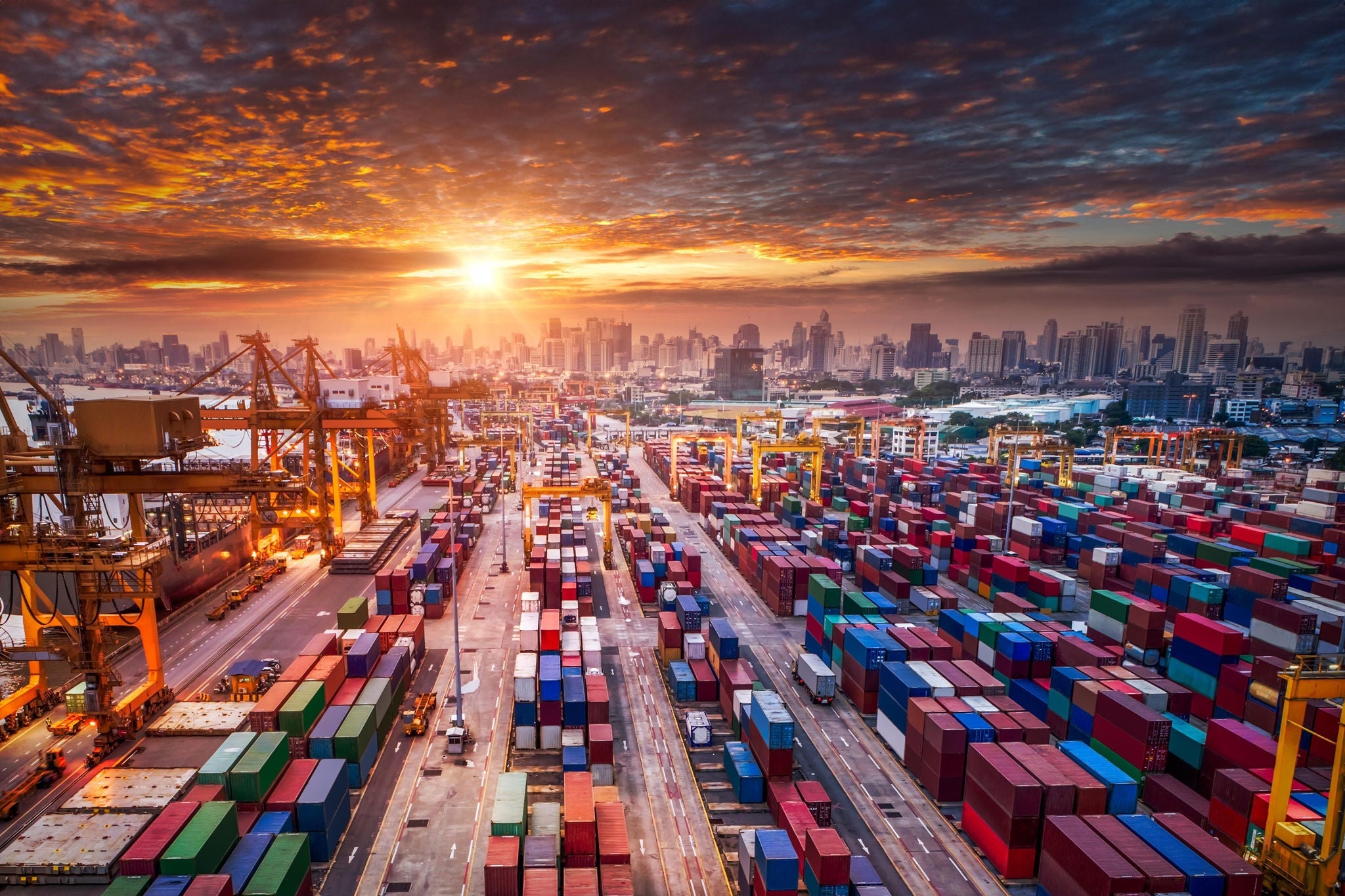
International Economics Models
International economics models are analytical frameworks used to explain how countries interact through trade, investment, finance, migration, and the movement of goods and services. These models help economists understand why nations trade, what determines trade patterns, how international markets affect domestic economies, and how government policies influence global economic activity.
Because economies differ in resources, technology, labor, capital, and consumer preferences, international economics models provide useful tools for examining the benefits and costs of economic interaction.
1. The Ricardian Model
The Ricardian model, developed from the work of David Ricardo, is one of the fundamental models of international trade. It explains trade through comparative advantage.
According to the model, countries can benefit from trade even when one country is more productive in producing every good. What matters is the relative opportunity cost of producing different goods. A country should specialize in goods for which it has a comparative advantage and trade for other goods.
For example, if Country A can produce both computers and clothing more efficiently than Country B but has a particularly large advantage in computers, Country A should specialize relatively more in computers. Country B can specialize in clothing. Trade can then allow both countries to consume more than they could produce independently.
The Ricardian model demonstrates the important principle that specialization and trade can increase overall economic efficiency.
2. The Heckscher-Ohlin Model
The Heckscher-Ohlin (H-O) model explains international trade based on differences in countries' factor endowments. The main factors of production are labor, capital, and natural resources.
The model argues that countries tend to export goods that intensively use resources they possess in relative abundance and import goods that require resources that are relatively scarce.
For instance, a country with abundant capital but relatively little labor may specialize in capital-intensive products such as machinery. A labor-abundant country may have a comparative advantage in labor-intensive manufacturing.
The H-O model therefore connects trade patterns to differences in resource availability rather than differences in technology alone.
3. The Specific Factors Model
The specific factors model focuses on the short-run effects of international trade. It assumes that some factors of production are tied to particular industries and cannot easily move between sectors.
For example, workers may be able to move between industries, while specialized machinery or land may be specific to particular industries. When trade changes the price of a product, owners of factors associated with expanding industries may benefit, while owners of factors associated with declining industries may lose.
This model helps explain why trade policy can create political conflicts within countries. Although international trade may benefit an economy overall, its effects are not necessarily distributed equally among workers, businesses, and industries.
4. The Gravity Model of Trade
The gravity model is widely used to explain the volume of trade between countries. It is loosely based on the idea that larger economies tend to trade more with each other, while greater geographical distance tends to reduce trade.
In simplified form, trade between two countries increases with their economic size and decreases with the distance between them.
Modern versions of the gravity model also consider factors such as common languages, shared borders, trade agreements, transportation costs, historical relationships, and cultural connections.
The model is particularly useful for empirical research because it can be tested using actual international trade data.
5. The Mundell-Fleming Model
The Mundell-Fleming model examines the relationship between national income, interest rates, exchange rates, and international capital flows in an open economy. It extends the traditional Keynesian framework to include international economic interactions.
The model is especially useful for analyzing monetary and fiscal policy under different exchange-rate systems.
For example, under a flexible exchange-rate system, changes in monetary policy can affect interest rates, capital flows, exchange rates, and net exports. Under a fixed exchange-rate system, policymakers face different constraints.
The Mundell-Fleming model is therefore important for understanding macroeconomic policy in economies connected to international financial markets.
6. The Purchasing Power Parity Model
Purchasing Power Parity (PPP) is an important concept for understanding exchange rates. It suggests that, in the long run, exchange rates should adjust so that similar goods have comparable prices across countries after converting currencies.
For example, if a particular basket of goods is significantly more expensive in one country than another, exchange-rate movements may eventually reduce the difference.
PPP does not always hold in the short run because transportation costs, taxes, tariffs, non-traded goods, market imperfections, and differences in consumer preferences affect prices. Nevertheless, it provides an important benchmark for analyzing exchange rates and international price levels.
7. The Balance of Payments Model
The balance of payments framework records a country's economic transactions with the rest of the world. It includes the current account, financial account, and other international transactions.
The current account records trade in goods and services, income flows, and transfers. The financial account records international investment and other financial transactions.
This framework helps economists analyze whether a country is borrowing from or lending to the rest of the world and how international transactions affect its external position.
8. New Trade Theory
Traditional trade models emphasize differences between countries. New trade theory, which became influential in the late twentieth century, emphasizes economies of scale, increasing returns, and imperfect competition.
Countries with similar levels of resources and technology may trade heavily with each other because firms can reduce average production costs by operating on a large scale. Consumers may also benefit from having access to greater product variety.
This model helps explain why developed countries often trade similar but differentiated products, such as automobiles, electronics, and pharmaceuticals, with one another.
9. The New Economic Geography Model
New economic geography examines why economic activity becomes concentrated in particular regions or countries. It combines international trade theory with factors such as transportation costs, economies of scale, labor mobility, and market size.
When firms locate near large markets, they can reduce transportation costs and gain access to customers. Workers may then move toward areas with more employment opportunities, making those markets even larger. This can create a cycle of economic concentration.
The model helps explain the development of industrial clusters and major economic centers.
Importance of International Economics Models
International economics models simplify complicated economic relationships so that economists can identify important causes and effects. They help governments evaluate trade agreements, tariffs, exchange-rate policies, investment regulations, and other economic decisions.
However, no single model explains every aspect of the global economy. Real-world economies involve political institutions, technological change, environmental concerns, supply-chain disruptions, financial crises, and strategic behavior that may not be fully captured by simple assumptions.
Therefore, economists often use several models together and compare their predictions with real-world evidence.
Conclusion
International economics models provide essential tools for understanding the global economy. The Ricardian model emphasizes comparative advantage, while the Heckscher-Ohlin model focuses on differences in factor endowments. The specific factors model explains distributional effects, the gravity model examines trade flows, and the Mundell-Fleming model analyzes macroeconomic policy in open economies. Other frameworks, including purchasing power parity, new trade theory, and new economic geography, address exchange rates, economies of scale, product differentiation, and geographic concentration.
Together, these models demonstrate that international economic relationships are complex but can be systematically analyzed. They provide the theoretical foundation for understanding why countries trade, how international markets influence domestic economies, and how globalization shapes economic opportunities and challenges.
- Arts
- Business
- Computers
- Spiele
- Health
- Startseite
- Kids and Teens
- Geld
- News
- Personal Development
- Recreation
- Regional
- Reference
- Science
- Shopping
- Society
- Sports
- Бизнес
- Деньги
- Дом
- Досуг
- Здоровье
- Игры
- Искусство
- Источники информации
- Компьютеры
- Личное развитие
- Наука
- Новости и СМИ
- Общество
- Покупки
- Спорт
- Страны и регионы
- World

 English
 Russian
 French
 Spanish
 Portuguese
 Turkish
 Dutch
Dutch
 Italiano
 Arabic
 Romaian
 Portuguese (Brazil)
 Greek
Greek