
International economics notes
International Economics Notes
Introduction
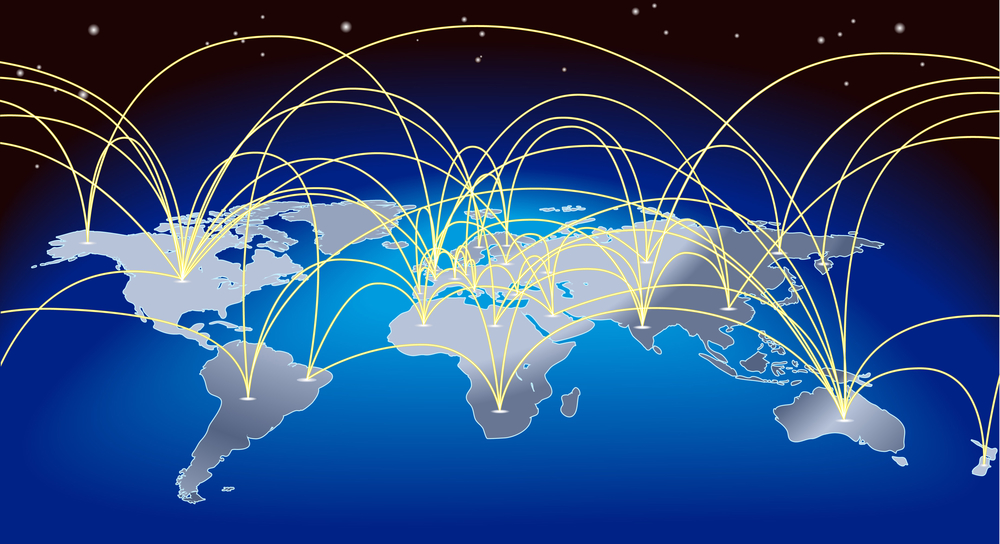
International economics is the branch of economics that studies economic interactions between countries. It examines how nations trade goods and services, move capital and technology across borders, determine exchange rates, and develop policies affecting international economic activity. In an increasingly interconnected world, international economics helps explain why countries trade, how trade affects national economies, and how global economic events influence businesses, governments, and individuals.
1. Meaning and Importance of International Economics
International economics focuses on economic relationships between different countries. Unlike domestic economics, which mainly examines activities within one country, international economics considers cross-border transactions and the policies that govern them.
Its major areas include:
-
International trade in goods and services
-
Exchange rates and foreign currencies
-
International investment and capital flows
-
Trade policies and restrictions
-
Balance of payments
-
Economic integration
-
International financial institutions
-
Global economic development
International economics is important because no modern economy is completely self-sufficient. Countries depend on one another for raw materials, energy, technology, investment, food, manufactured goods, and services.
2. International Trade
International trade refers to the exchange of goods and services between countries. It consists mainly of exports and imports.
-
Exports are goods and services sold to foreign countries.
-
Imports are goods and services purchased from foreign countries.
Countries engage in trade because they have different resources, technologies, climates, labor costs, and levels of productivity.
Absolute Advantage
A country has an absolute advantage when it can produce a particular good using fewer resources than another country.
Comparative Advantage
The theory of comparative advantage, associated with David Ricardo, states that countries benefit from specializing in goods they can produce at a lower opportunity cost, even if one country is more productive in producing all goods.
Comparative advantage provides an important theoretical justification for international trade.
3. Benefits of International Trade
International trade can provide several benefits:
-
Greater variety of goods: Consumers can purchase products unavailable domestically.
-
Lower prices: Competition and specialization can reduce production costs.
-
Specialization: Countries can concentrate on industries where they are relatively efficient.
-
Larger markets: Businesses can sell products to consumers in other countries.
-
Economic growth: Increased trade can encourage production, investment, and employment.
-
Technology transfer: International business can spread knowledge and technology.
-
International cooperation: Economic relationships can strengthen connections between countries.
However, trade can also create adjustment problems. Industries facing strong foreign competition may decline, causing unemployment or regional economic difficulties.
4. Trade Barriers
Governments sometimes restrict international trade to protect domestic industries or achieve other economic and political objectives.
The main trade barriers include:
-
Tariff: A tax imposed on imported goods.
-
Quota: A limit on the quantity of a product that can be imported.
-
Subsidy: Financial assistance given by governments to domestic producers.
-
Embargo: A government restriction or prohibition on trade with a particular country.
-
Non-tariff barriers: Regulations, licensing requirements, standards, and administrative procedures that can restrict imports.
Although protectionist policies may help selected domestic industries, they can also increase prices, reduce consumer choice, and provoke retaliation from trading partners.
5. Balance of Payments
The balance of payments is a record of a country's economic transactions with the rest of the world during a particular period.
It generally includes:
Current Account
The current account records trade in goods and services, primary income, and certain transfers.
Financial Account
The financial account records international transactions involving financial assets, such as foreign direct investment and portfolio investment.
A country's international transactions must ultimately be accounted for through these components. A current-account deficit, for example, can be associated with financial inflows from abroad.
6. Foreign Exchange and Exchange Rates
An exchange rate is the price of one country's currency expressed in terms of another currency.
For example, if one currency becomes more valuable relative to another, it has appreciated. If it becomes less valuable, it has depreciated.
Exchange rates are influenced by factors such as:
-
Interest rates
-
Inflation
-
Economic growth
-
Demand for exports and imports
-
Capital flows
-
Government and central-bank policies
-
Political and economic expectations
Fixed and Floating Exchange Rates
Under a fixed exchange-rate system, a government or central bank attempts to maintain its currency at a particular value relative to another currency or standard.
Under a floating exchange-rate system, the currency's value is primarily determined by market demand and supply, although governments and central banks may sometimes intervene.
7. Inflation and International Economics
Inflation is a sustained increase in the general price level. Differences in inflation rates between countries can influence international competitiveness and exchange rates.
If prices rise significantly faster in one country than in its trading partners, its exports may become relatively expensive while imports become relatively attractive. Over time, this can affect the country's trade balance and currency value.
8. International Investment
International investment involves the movement of capital between countries.
Foreign Direct Investment
Foreign direct investment (FDI) occurs when an investor or company establishes or acquires a lasting business interest in another country. Examples include building factories, purchasing companies, or establishing foreign subsidiaries.
FDI can provide host countries with:
-
Capital
-
Employment
-
Technology
-
Management expertise
-
Access to international markets
However, concerns can arise regarding foreign ownership, profit outflows, environmental effects, and dependence on multinational companies.
Portfolio Investment
Portfolio investment involves purchasing foreign financial assets, such as stocks and bonds, without necessarily obtaining managerial control of the underlying business.
9. Economic Integration
Economic integration occurs when countries cooperate to reduce barriers to economic exchange.
Major forms include:
-
Free trade area: Members remove many trade barriers among themselves but maintain independent trade policies toward non-members.
-
Customs union: Members eliminate internal trade barriers and adopt a common external tariff.
-
Common market: Members allow freer movement of goods, services, capital, and labor.
-
Economic union: Members coordinate broader economic policies.
-
Monetary union: Members share a common currency or coordinate monetary policy closely.
Economic integration can increase trade and investment, but it may also require countries to give up some control over economic policies.
10. Globalization
Globalization refers to the growing integration of economies through trade, investment, technology, communication, and international production.
Multinational corporations play a major role in globalization by operating across multiple countries. Global supply chains allow different stages of production to take place in different locations.
Globalization can create economic opportunities and lower production costs, but it can also contribute to inequality, job displacement in some industries, environmental pressures, and increased vulnerability to international crises.
11. International Economic Institutions
Several international institutions influence the global economy.
-
International Monetary Fund (IMF): Supports international monetary cooperation and provides financial assistance to countries facing certain external financing problems.
-
World Bank: Provides financing and development support to eligible countries.
-
World Trade Organization (WTO): Provides a framework for international trade rules and negotiations.
-
Central banks: Manage monetary policy and may influence exchange rates, inflation, and financial stability.
These institutions aim to promote economic stability, development, and international cooperation.
12. Major Challenges in International Economics
The global economy faces several important challenges:
-
Trade conflicts and protectionism
-
Geopolitical tensions
-
Financial crises
-
Climate change
-
Unequal economic development
-
Global supply-chain disruptions
-
Currency instability
-
Rising government debt
-
Technological changes and automation
-
Income and wealth inequality
These challenges demonstrate that economic decisions in one country can have consequences for many other countries.
Conclusion
International economics provides a framework for understanding how countries interact economically. International trade, comparative advantage, exchange rates, investment, globalization, and economic integration are central concepts in the subject. While international economic cooperation can generate growth, efficiency, and greater consumer choice, it also creates challenges that require effective national and international policies.
Understanding international economics is therefore essential for analyzing the modern global economy. As countries become increasingly connected through trade, finance, technology, and investment, international economic decisions will continue to play an important role in determining global prosperity and stability.
- Arts
- Business
- Computers
- Игры
- Health
- Главная
- Kids and Teens
- Деньги
- News
- Personal Development
- Recreation
- Regional
- Reference
- Science
- Shopping
- Society
- Sports
- Бизнес
- Деньги
- Дом
- Досуг
- Здоровье
- Игры
- Искусство
- Источники информации
- Компьютеры
- Личное развитие
- Наука
- Новости и СМИ
- Общество
- Покупки
- Спорт
- Страны и регионы
- World

 English
 French
 Spanish
 Portuguese
 Deutsch
 Turkish
 Dutch
Dutch
 Italiano
 Arabic
 Romaian
 Portuguese (Brazil)
 Greek
Greek