
What is the future of globalization?
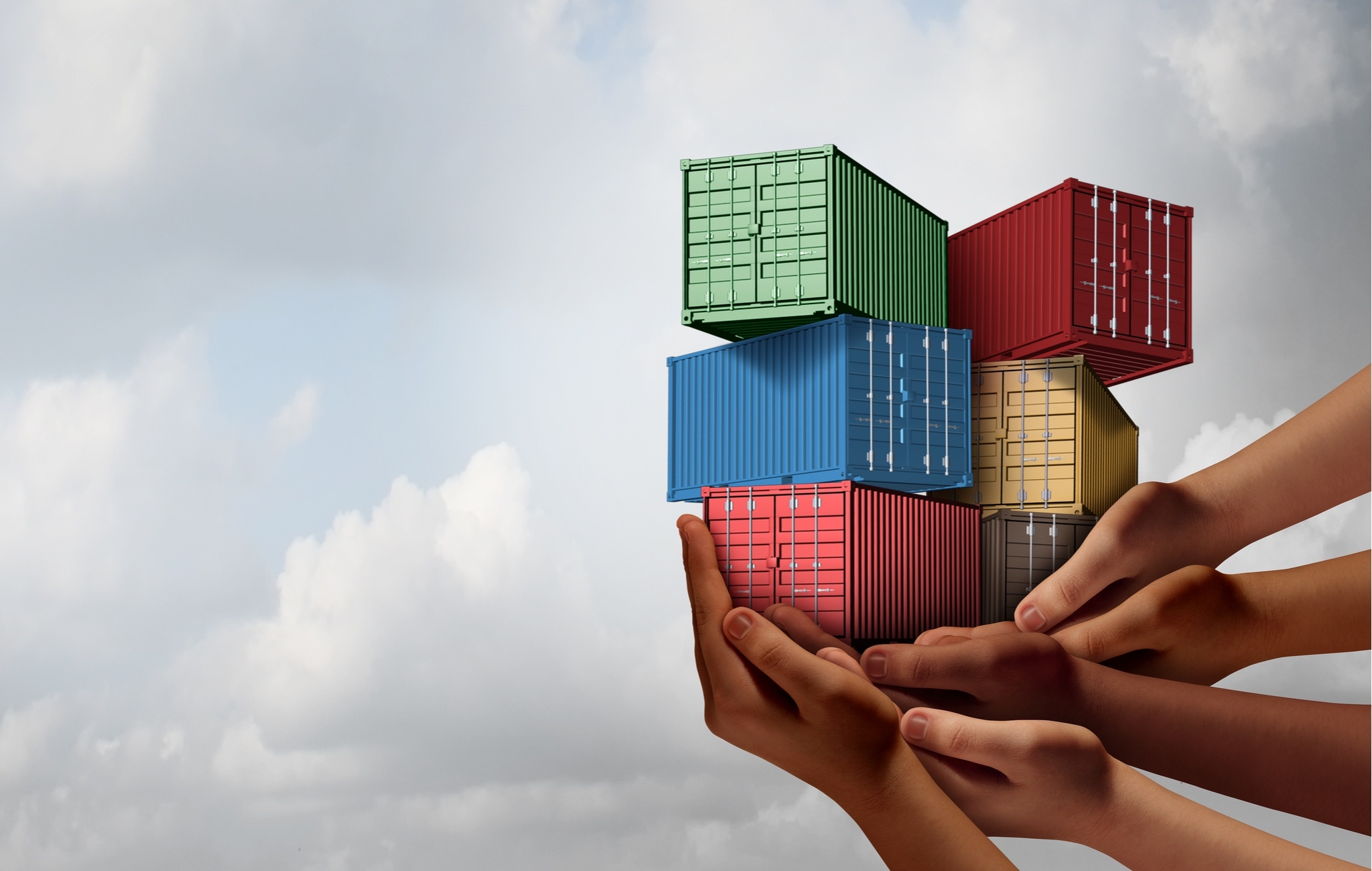
What Is the Future of Globalization?
Globalization has transformed the world by connecting economies, businesses, governments, and people across national borders. Over the past several decades, advances in transportation, communication, technology, and international trade have made it easier for goods, services, capital, information, and workers to move between countries. However, globalization is now entering a new phase. Geopolitical tensions, technological change, climate concerns, supply-chain disruptions, and changing economic policies are reshaping how countries interact.
The future of globalization is therefore unlikely to mean simply more international trade and deeper economic integration. Instead, globalization is likely to become more selective, digital, regional, and resilient.
A Shift Toward a New Form of Globalization
For many years, companies built global supply chains primarily to reduce costs. Manufacturing moved to countries where labor and production were cheaper, while businesses relied on international networks for raw materials, components, and finished products. This system helped lower prices and contributed to economic growth in many developing countries.
However, recent disruptions have exposed weaknesses in highly interconnected supply chains. The COVID-19 pandemic, geopolitical conflicts, trade disputes, and transportation disruptions demonstrated how quickly problems in one part of the world can affect businesses and consumers elsewhere.
As a result, companies and governments are increasingly emphasizing resilience alongside efficiency. Businesses may diversify suppliers, maintain larger inventories, or move some production closer to their major markets. This does not necessarily mean the end of globalization. Instead, it represents a transition toward a more flexible form of international economic integration.
The Rise of Regionalization
One important feature of future globalization will likely be greater regional cooperation. Countries may increasingly organize trade and production around regional economic networks rather than relying on a single global supply chain.
North America, Europe, and Asia already have extensive regional trade relationships. Companies may increasingly locate factories and suppliers in nearby countries that offer political stability, reliable infrastructure, and access to major markets.
This trend, sometimes described as “nearshoring” or “friend-shoring,” could reduce dependence on distant suppliers while maintaining the advantages of international trade. Globalization may therefore become less about producing everything everywhere and more about connecting strong regional networks.
Digital Globalization
Technology will be one of the strongest forces shaping globalization in the coming decades. Digital services can cross borders almost instantly, allowing businesses to reach international customers without establishing physical operations in every country.
Cloud computing, artificial intelligence, online platforms, digital payments, and remote work are making international economic activity increasingly digital. A small company can potentially sell software, consulting services, education, entertainment, or creative products to customers around the world.
Artificial intelligence may accelerate this process by reducing language barriers, automating administrative tasks, improving logistics, and helping businesses analyze foreign markets. As digital technologies become more accessible, globalization may increasingly involve the movement of data, knowledge, and services rather than only physical products.
At the same time, digital globalization will create new challenges. Countries will need to address cybersecurity, data privacy, digital taxation, artificial intelligence regulation, and unequal access to technology.
Globalization and Climate Change
Climate change will also influence the future of international trade. Governments and businesses are under increasing pressure to reduce carbon emissions and make supply chains more sustainable.
This could encourage companies to shorten some supply chains, use cleaner transportation, increase renewable energy use, and develop more sustainable production methods. International trade itself may become more closely connected to environmental standards.
Carbon taxes, emissions regulations, and green trade policies could change the competitive advantages of countries and industries. Businesses that adapt quickly to environmental requirements may gain advantages in international markets, while industries that depend heavily on carbon-intensive production could face increasing costs.
Thus, future globalization will not only be measured by how much countries trade, but also by how sustainably they trade.
The Changing Role of Governments
The future of globalization will involve a stronger role for governments. During the era of rapid economic integration, many governments prioritized trade liberalization and the removal of barriers to international investment. Today, national security and economic resilience have become more important considerations.
Governments are increasingly concerned about dependence on foreign suppliers for strategically important goods such as semiconductors, energy technologies, medical supplies, and critical minerals. This may lead to industrial policies designed to encourage domestic or allied production.
However, complete economic self-sufficiency is generally unrealistic. Modern economies depend on international specialization and access to global markets. The likely outcome is therefore not the disappearance of globalization, but a balance between international cooperation and national economic security.
More Inclusive Globalization?
Another major question is whether future globalization will benefit a broader share of the world's population.
Globalization has created enormous economic opportunities, but its benefits have not been distributed equally. Some workers and communities have experienced job losses or wage pressures as production moved across borders. At the same time, consumers have often benefited from lower prices and greater product variety.
Future globalization may place greater emphasis on education, worker training, social protection, and inclusive economic growth. Governments will need to help workers adapt to automation, artificial intelligence, and changing international markets.
Developing countries could also benefit from the expansion of digital services and new technologies. If they can develop strong infrastructure, education systems, and digital skills, they may participate in global markets without relying entirely on traditional manufacturing.
The Importance of International Cooperation
Despite current tensions, global challenges cannot be solved by individual countries acting alone. Climate change, pandemics, financial instability, cyber threats, migration, and technological risks all cross national borders.
International institutions and agreements will therefore remain important. Countries will need mechanisms for resolving trade disputes, coordinating economic policies, establishing digital standards, and addressing environmental problems.
The future may involve more difficult negotiations because countries have increasingly different strategic interests. Nevertheless, cooperation will remain essential because economic interdependence cannot simply be eliminated.
Conclusion
The future of globalization is unlikely to resemble the globalization of the past. Instead of a system focused primarily on maximizing efficiency and reducing production costs, the next phase will emphasize resilience, technology, sustainability, security, and regional cooperation.
Globalization will probably become more digital as businesses increasingly trade services, data, knowledge, and intellectual property across borders. Supply chains may become more diversified and regional, while governments may take a more active role in protecting strategic industries. At the same time, climate change and technological progress will force countries to reconsider how international economic activity is organized.
Globalization, therefore, is not disappearing. It is changing. The world economy is likely to remain deeply interconnected, but the connections will become more carefully managed. The countries and businesses that succeed in the future will be those capable of balancing global opportunities with local resilience, technological innovation, environmental responsibility, and economic security.
Ultimately, the future of globalization will depend on whether nations can cooperate while also adapting to a rapidly changing world. If they can, globalization may enter a more sustainable and inclusive phase rather than simply coming to an end.
- Arts
- Business
- Computers
- Игры
- Health
- Главная
- Kids and Teens
- Деньги
- News
- Personal Development
- Recreation
- Regional
- Reference
- Science
- Shopping
- Society
- Sports
- Бизнес
- Деньги
- Дом
- Досуг
- Здоровье
- Игры
- Искусство
- Источники информации
- Компьютеры
- Личное развитие
- Наука
- Новости и СМИ
- Общество
- Покупки
- Спорт
- Страны и регионы
- World

 English
 French
 Spanish
 Portuguese
 Deutsch
 Turkish
 Dutch
Dutch
 Italiano
 Arabic
 Romaian
 Portuguese (Brazil)
 Greek
Greek