
Should I Build a Multi-Tenant SaaS?
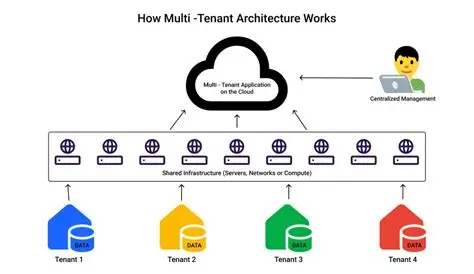
At first, multi-tenancy sounds like an engineering decision.
One application. Many customers. Shared infrastructure. One codebase.
Efficient.
Then the first customer asks for something different.
The second customer needs stricter permissions.
The third wants its data isolated.
An enterprise prospect asks where its information is stored.
A customer accidentally sees a record that belongs to another organization.
Suddenly, “Should we build multi-tenant SaaS?” is no longer a database question.
It is a business-model question with architectural consequences.
And that distinction matters.
Because multi-tenancy can dramatically improve the economics of a SaaS company. It can also create security, performance, compliance, and operational complexity that is difficult to unwind once the product has hundreds or thousands of customers.
So should you build a multi-tenant SaaS?
Usually, yes—if your customers genuinely use the same product and your business benefits from shared infrastructure.
But “usually” is doing a lot of work.
What Multi-Tenant SaaS Actually Means
In a multi-tenant SaaS architecture, multiple customers—or tenants—use the same underlying application.
The customers may see completely different accounts, workspaces, users, settings, and data.
Underneath, however, the platform is shared to some degree.
There are several ways to implement this.
The most common models include:
- Shared database, shared schema
- Shared database, separate schemas
- Separate database per tenant
- Hybrid models
The architecture you choose determines both your operating costs and the complexity of protecting customer data.
The simplest model can be extremely efficient.
It can also make a single authorization mistake catastrophic.
That tension sits at the center of multi-tenant SaaS.
Why Companies Choose Multi-Tenancy
The economic argument is compelling.
Imagine running a SaaS platform for 10,000 small businesses.
If every customer requires an independent application environment, you have 10,000 environments to provision, monitor, update, secure, back up, and troubleshoot.
That's operationally expensive.
With multi-tenancy, the application infrastructure can be shared.
One deployment can serve thousands of customers.
One product update can reach everyone.
Infrastructure utilization can improve because workloads from different customers can share resources.
And the engineering team isn't maintaining 10,000 versions of the same software.
This is the central attraction:
Multi-tenancy converts software infrastructure from a collection of customer-specific installations into a shared platform.
That is a powerful economic model.
But Multi-Tenancy Is Not Just “Add tenant_id”
One of the easiest mistakes is assuming multi-tenancy means adding a column to every database table.
Maybe.
But the real system is larger.
You need to establish a tenant boundary across:
- Database queries
- API endpoints
- Background jobs
- File storage
- Search indexes
- Caches
- Analytics
- Logs
- Webhooks
- Emails
- Administrative tools
- Data exports
- Integrations
- Backups
A user belongs to an organization.
That organization owns resources.
Those resources may reference other resources.
Every path through the application must respect the boundary.
A forgotten filter isn't merely a bug.
It can become a cross-tenant data exposure.
The rule I would adopt
Every request should have a clear answer to:
“Which tenant is this operation being performed for?”
And the system should enforce that answer rather than trusting developers to remember it manually.
That distinction becomes increasingly important as the engineering team grows.
The Three Major Multi-Tenant Models
| Architecture | Isolation | Infrastructure efficiency | Operational complexity | Best fit |
|---|---|---|---|---|
| Shared database, shared schema | Lower | Very high | Lower initially | Large numbers of similar SMB customers |
| Shared database, separate schema | Medium–High | High | Medium | Customers needing stronger logical separation |
| Database per tenant | Very high | Lower | High | Regulated or high-value enterprise customers |
| Hybrid | Variable | High | High | SaaS with diverse customer requirements |
There is no universally superior model.
The right answer depends on what your customers demand.
Shared Schema: Efficient, but Demanding
The shared-schema approach puts many tenants in the same database tables.
A simplified example might look like:
users
organizations
projects
invoices
Each tenant-owned record contains an organization or tenant identifier.
This is operationally attractive.
One database.
One migration.
One connection architecture.
One backup strategy.
But the application must enforce tenant boundaries relentlessly.
The upside is scale and simplicity.
The downside is that the database itself may not provide all the isolation guarantees you want unless you deliberately design for them.
For a large self-service SaaS platform with relatively uniform customers, this can be an excellent model.
Separate Schemas: A Middle Ground
Instead of putting all tenants' tables together, each tenant gets a separate database schema.
This provides stronger logical separation.
But it also creates management complexity.
Now migrations have to account for potentially many schemas.
Monitoring becomes more complicated.
Provisioning changes.
Operational automation becomes essential.
It's a reasonable compromise when the business wants more separation without accepting the cost of a database per customer.
Database Per Tenant: Maximum Isolation, Maximum Responsibility
This approach gives every customer an independent database.
The security story can be attractive.
A database breach involving one tenant's application context doesn't automatically imply that another tenant's tables sit beside it.
But the operational burden increases sharply.
If you have 5,000 customers, you may have 5,000 databases.
Five thousand backup configurations.
Five thousand connection targets.
Five thousand migration paths.
Five thousand things that can fail.
Automation becomes mandatory.
This model often makes more sense when customers are large, highly regulated, unusually sensitive, or willing to pay for dedicated infrastructure.
The Hybrid Model Is Often the Most Practical
Here's where things become interesting.
You don't necessarily have to choose one architecture forever.
A SaaS company might run thousands of smaller customers on shared infrastructure while offering dedicated databases or environments to enterprise accounts.
The application remains largely the same.
The infrastructure varies.
This creates a powerful commercial possibility:
Isolation becomes part of the pricing strategy.
Basic plan?
Shared environment.
Enterprise plan?
Dedicated database.
Highly regulated customer?
Dedicated infrastructure and additional controls.
Now architecture isn't merely an engineering constraint.
It's a product feature.
When Multi-Tenancy Makes Sense
Multi-tenancy is particularly attractive when customers have broadly similar needs.
Think:
- Project management
- CRM
- Accounting workflows
- HR software
- Marketing platforms
- Help-desk systems
- Collaboration tools
- Scheduling software
- Analytics platforms
The exact implementation varies, but the underlying pattern is similar:
Many organizations want access to the same core capabilities.
That is exactly where shared software shines.
When You Should Think Twice
Multi-tenancy becomes more complicated when customers require fundamentally different environments.
Consider a platform where one customer requires:
- Dedicated infrastructure
- Data residency in a specific jurisdiction
- Strict network isolation
- Customer-managed encryption keys
- Customized deployment schedules
- Specialized compliance controls
- Air-gapped environments
You can still create a multi-tenant product strategy.
But the infrastructure may no longer be uniformly multi-tenant.
This is why the phrase “multi-tenant SaaS” can be misleading.
The application and infrastructure don't have to use exactly the same isolation model for every customer.
Performance: The Noisy Neighbor Problem
Security gets most of the attention.
Performance deserves nearly as much.
Suppose your platform has 10,000 customers.
One customer launches a massive data import.
Another generates millions of API requests.
A third runs a large report every five minutes.
If everyone shares the same resources, one tenant's workload can affect everyone else.
This is the noisy neighbor problem.
You need mechanisms to prevent it.
Potential solutions include:
- Rate limiting
- Per-tenant quotas
- Job prioritization
- Dedicated worker pools
- Resource budgets
- Query limits
- Usage-based pricing
- Tenant-level monitoring
- Workload isolation
The objective isn't to punish high-volume customers.
It's to prevent unpredictable resource consumption from becoming a platform-wide incident.
Pricing and Multi-Tenancy Are Closely Connected
One of the most interesting consequences of multi-tenancy is that it changes your cost structure.
If 1,000 customers share infrastructure, the marginal cost of serving another customer can be relatively low—depending on the workload.
That creates room for attractive SaaS economics.
But don't assume every additional customer is cheap.
Storage grows.
Database load grows.
Support requirements grow.
Email volume grows.
Background processing grows.
Third-party API costs grow.
The unit economics still matter.
A good SaaS operator therefore asks:
What does one additional tenant actually cost us?
Not merely in cloud infrastructure.
In everything.
A Lesson From Building Shared Systems
One lesson I've learned from working through shared software environments is that teams tend to think about isolation too narrowly.
They secure the database.
Then forget the file storage.
They secure the API.
Then expose tenant information through an analytics endpoint.
They correctly scope the web request.
Then a background job processes records without carrying tenant context.
The problem isn't usually a lack of intelligence.
It's fragmentation.
Different engineers think about different layers.
That's why I prefer treating tenant identity as a first-class architectural concept that travels through the entire system.
The tenant should not disappear when the request becomes a queue job.
It shouldn't disappear when data becomes a file.
It shouldn't disappear when an event enters a messaging system.
If the system forgets who owns the data, the architecture has forgotten something fundamental.
Build Tenant Isolation Into the Data Model
A robust design should make incorrect access difficult.
Depending on your database and architecture, this might involve:
- Foreign keys
- Composite indexes
- Tenant-scoped repositories
- Database-level row security
- Explicit authorization policies
- Tenant-aware background jobs
- Automated tests for cross-tenant access
- Audit logging
Testing deserves particular emphasis.
Don't merely test:
“User can retrieve their project.”
Also test:
“User from Organization A cannot retrieve Organization B's project even if they know the project's identifier.”
The second test is where multi-tenant security becomes real.
Multi-Tenancy Changes Your Testing Strategy
With a single-customer application, many bugs are local.
With multi-tenancy, some bugs are relational.
You need to test interactions between tenants.
Try to access another tenant's records.
Attempt unauthorized exports.
Test deleted users.
Test organization transfers.
Test administrators.
Test background jobs.
Test caches.
Test search.
Test API keys.
Test webhooks.
Test imports.
The application should fail closed.
Should Every SaaS Startup Start Multi-Tenant?
Not necessarily.
If you're validating a product with five pilot customers, you don't need an elaborate tenancy platform.
But you should avoid architectural decisions that make future tenant isolation unnecessarily painful.
There's a middle path.
Build a clean organizational model early.
Give resources explicit ownership.
Keep authorization centralized.
Avoid hard-coding assumptions that one account equals one customer forever.
Then increase sophistication as customer volume and requirements justify it.
This is different from building an enormous multi-tenant architecture before you have customers.
It's designing so you don't accidentally eliminate the option.
The Business Case in One Sentence
Multi-tenancy is compelling when:
Your customers want substantially the same software, while your business benefits from operating that software as a shared platform.
If both halves are true, the model is powerful.
If neither is true, don't force it.
The Provocative Conclusion: Your Customers Don't Care About Tenancy
They care about consequences.
They care that their data is safe.
They care that the application stays fast.
They care that an update doesn't break their workflow.
They care that the software is available when they need it.
They care about where their information is stored when regulation requires them to care.
They care about price.
They care about trust.
They don't care whether your database has one schema, 10,000 schemas, or some beautifully engineered abstraction that would make an infrastructure conference applaud.
That leads to the most important question.
Should you build a multi-tenant SaaS?
If shared infrastructure gives you better economics, your customers have substantially similar needs, and you can enforce strong tenant isolation, multi-tenancy is often the right foundation.
But don't worship the model.
A shared architecture is not inherently better than a dedicated one. Sometimes the best enterprise product is a multi-tenant application with selectively dedicated infrastructure.
Sometimes the smartest architecture is hybrid.
And sometimes the biggest mistake is building a complex tenancy system before you know what your customers actually require.
The goal isn't to maximize the number of customers who can occupy one database.
The goal is to create a SaaS business where security, economics, performance, and customer requirements reinforce one another rather than collide.
That's the real test.
If multi-tenancy helps you achieve that, build it.
If it doesn't, don't let the word “SaaS” bully you into an architecture your business doesn't need.
- Arts
- Business
- Computers
- Oyunlar
- Health
- Home
- Kids and Teens
- Money
- News
- Personal Development
- Recreation
- Regional
- Reference
- Science
- Shopping
- Society
- Sports
- Бизнес
- Деньги
- Дом
- Досуг
- Здоровье
- Игры
- Искусство
- Источники информации
- Компьютеры
- Личное развитие
- Наука
- Новости и СМИ
- Общество
- Покупки
- Спорт
- Страны и регионы
- World

 English
 Russian
 French
 Spanish
 Portuguese
 Deutsch
 Dutch
Dutch
 Italiano
 Arabic
 Romaian
 Portuguese (Brazil)
 Greek
Greek