
What Is Vertical AI SaaS?
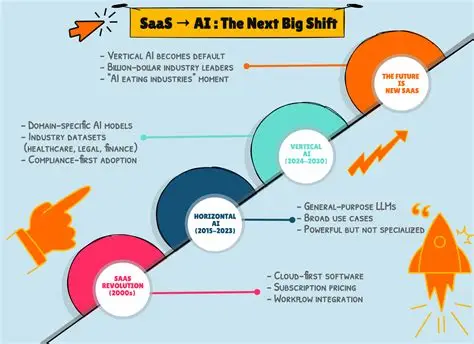
The most consequential AI companies may not look like AI companies at all.
They may look like dental billing platforms. Insurance claims systems. Construction estimating tools. Legal case-management software. A workflow product for freight brokers that, at first glance, seems almost aggressively unglamorous.
That is the point.
For the past several years, the software industry has been obsessed with general-purpose AI: models that write, summarize, reason, generate images, answer questions, and increasingly operate software on a user’s behalf. But a different opportunity is taking shape underneath that spectacle.
It is called vertical AI SaaS.
The basic idea is deceptively simple: take AI and build it deeply into software designed for one specific industry or profession.
Not AI for everyone.
AI for the insurance adjuster.
AI for the property manager.
AI for the accountant.
AI for the surgeon’s administrative workflow.
The distinction matters because specialized industries do not merely have different vocabulary. They have different regulations, workflows, data structures, economic incentives, error tolerances, and definitions of what “done” means.
Vertical AI SaaS is software that understands those differences well enough to do useful work—not simply generate plausible text.
Vertical AI SaaS, Defined
Traditional SaaS—software as a service—typically gives customers access to an application through the cloud. Salesforce serves sales teams. Workday serves human resources and finance departments. ServiceNow manages enterprise workflows.
Vertical SaaS narrows the target.
Instead of selling software horizontally across industries, a vertical SaaS company builds for a particular sector: healthcare, real estate, manufacturing, hospitality, logistics, legal services, and so on.
AI adds another layer.
A vertical AI SaaS product does not merely store industry information or automate a fixed sequence of clicks. It uses machine learning or generative AI to interpret information, make recommendations, generate outputs, take actions, or increasingly execute portions of a workflow.
A useful shorthand is:
Vertical SaaS + proprietary workflow context + AI automation = vertical AI SaaS.
The important word is context.
A generic chatbot can draft an insurance claim summary. A vertical AI system can potentially ingest the claim, extract information from documents, identify missing fields, compare the case against relevant policy language, draft the required documentation, route exceptions, and update the system of record.
The second product is not simply “more intelligent.”
It is embedded closer to the economic activity itself.
Why Vertical AI Is Different From a Generic AI Copilot
Consider two products.
The first is an AI assistant that helps employees write emails, summarize meetings, and brainstorm.
The second is software used by a commercial property manager to process tenant requests.
Both may use the same underlying language model.
Their businesses can be radically different.
| Dimension | Horizontal AI SaaS | Traditional Vertical SaaS | Vertical AI SaaS |
|---|---|---|---|
| Primary customer | Broad business/user base | Specific industry | Specific industry + role |
| Core value | Productivity | Workflow management | Workflow execution |
| Data | General-purpose | Industry-specific | Industry-specific + operational |
| Automation | Usually user-directed | Rules/workflows | AI-assisted or autonomous |
| Domain expertise | Limited | High | Very high |
| Switching costs | Moderate | Often high | Potentially very high |
| Human involvement | High | Moderate | Can decline as AI improves |
| Pricing logic | Per user/license | Per user/module/transaction | Often tied to work performed |
| Main moat | Product + distribution | Workflow + integrations | Workflow + data + feedback + execution |
| Key risk | Commoditization | Market size | Accuracy, trust, regulation |
That final column explains much of the excitement.
Traditional SaaS often sells access to software.
Vertical AI SaaS can sell completed work.
That is a profound change in the economic model.
The Real Opportunity: Selling Outcomes Instead of Seats
For decades, enterprise software has been priced around seats.
Five employees need the software? Buy five licenses.
A vertical AI company can eventually ask a different question:
How much work did the system complete?
Imagine an accounting platform that charges based on the number of reconciliations it performs. Or a legal platform priced around documents reviewed. Or a healthcare administration product priced around claims processed.
The software becomes less like a tool employees use and more like a digital worker operating inside the business.
That does not mean human employees disappear. Far from it.
It means the unit of software consumption can shift from access to output.
This is one reason vertical AI may become strategically important even if foundation models become cheaper and more widely available.
The Model Is Not the Moat
There is a temptation to think the company with the best model wins.
In vertical AI, that may be the wrong battlefield.
Foundation models are increasingly available through APIs. Open-source models continue to improve. Model inference costs can fall. A competitor can often access broadly similar underlying intelligence.
So where does defensibility come from?
Usually, it comes from everything surrounding the model.
1. Proprietary Workflow Data
A vertical AI platform sees what actually happens inside a particular business process.
That is valuable.
Not because “data” is automatically a moat—it isn't—but because repeated workflow interactions can generate feedback about what successful work looks like.
2. Deep Integrations
A system that connects with the customer’s billing software, CRM, document repository, scheduling platform, communications systems, and compliance infrastructure becomes harder to replace.
The AI is only one component.
The connective tissue may be more defensible.
3. Domain-Specific Accuracy
A general model can produce a convincing answer.
A professional system needs to produce the correct answer under industry-specific constraints.
That is a much higher bar.
In a casual brainstorming application, an imperfect response is annoying.
In tax preparation, medical administration, or legal work, an imperfect response can create financial or regulatory consequences.
4. Distribution
Vertical markets have their own channels, associations, consultants, vendors, and trusted relationships.
A company that understands how a particular profession buys software can have an advantage that has nothing to do with model architecture.
A Lesson I Learned About “Vertical”
I have watched technology teams make the same mistake repeatedly: they define a market according to what the software can do rather than according to what the customer is actually trying to accomplish.
The product demo looks impressive.
A document is uploaded. The AI reads it. A polished summary appears.
Everyone nods.
Then someone asks the question that matters:
“What happens next?”
If the employee still has to copy the result into another system, verify every field, send an email, update a record, chase an approval, and perform the actual operational work, the AI has improved a task.
It has not necessarily transformed the workflow.
That distinction changed how I think about vertical AI.
The strongest products do not stop at intelligence. They connect intelligence to action.
That means the product team has to understand the messy middle: the exceptions, handoffs, approvals, legacy systems, regulatory requirements, and strange little processes that never appear in a polished software demo.
That is where vertical expertise becomes valuable.
Why Industry Expertise Suddenly Matters More
For years, software companies competed partly on abstraction.
They tried to build flexible platforms that could serve many kinds of customers.
AI reverses some of that logic.
When AI can handle more of the mechanical work, the differentiator becomes understanding which work should be done, in what sequence, under which constraints, and with whose approval.
That favors companies willing to go deep.
A vertical AI startup might spend years understanding one industry before expanding into adjacent markets.
That sounds narrower.
It may actually be a better starting point.
A company that owns one workflow exceptionally well can expand from there: adjacent workflows, additional users, new modules, payments, compliance, analytics, and eventually an industry-specific operating system.
The progression looks something like this:
Single task → workflow → department → organization → industry platform.
That is a very different growth story from “build an AI assistant and acquire as many users as possible.”
Where Vertical AI SaaS Can Go Wrong
The opportunity is large, but the category is not automatically attractive.
AI Can Be Wrong at Exactly the Wrong Moment
Specialized software often operates in environments where confidence is not enough.
An AI system can be 95% accurate and still create unacceptable economics if the remaining 5% requires expensive human review.
The relevant metric is not simply model accuracy.
It is workflow-level accuracy and cost.
Integration Can Become the Product
Connecting to legacy systems can consume enormous engineering resources.
Some vertical markets run on software that was never designed to communicate with modern AI systems. The startup then becomes an integration company with an AI layer.
That can still be valuable.
It just changes the economics.
The Market May Be Smaller Than It Looks
“Healthcare” is not one market.
Neither is “legal.”
A startup may discover that its supposedly enormous addressable market is actually a collection of fragmented niches with different purchasing behavior.
Vertical focus is powerful.
Over-specialization can become a ceiling.
The Most Interesting Question: Who Owns the Workflow?
This is where the vertical AI story gets provocative.
If AI increasingly performs work, the most valuable software company may not be the one with the most impressive model.
It may be the one that owns the workflow.
Think about what happens when software moves from passive record-keeping to active execution.
The system knows what a customer requested.
It knows the relevant business rules.
It has access to the necessary documents.
It can communicate with other systems.
It can perform the task.
And, importantly, it learns from the corrections humans make.
At that point, the application is no longer simply a database with buttons.
It begins to resemble an operating layer for a profession.
That creates a potentially enormous strategic prize.
The company controlling that layer can influence not only how work is recorded, but how work gets done.
Vertical AI May Reshape SaaS Economics
Traditional SaaS grew by digitizing processes and charging companies for access.
Vertical AI has the potential to go one step further: digitize the labor embedded inside those processes.
That creates a strange inversion.
The software may become cheaper per user while becoming more valuable per customer.
A company might need fewer licenses because fewer people are manually processing transactions. Yet the software could command a larger share of the customer’s budget because it is responsible for more of the customer’s operations.
That is why measuring vertical AI companies solely through conventional SaaS metrics can become misleading.
Revenue per seat may matter less.
Revenue per workflow matters more.
Gross margin matters, but so does inference cost.
Retention matters, but so does the percentage of a customer’s workflow that the platform controls.
And the ultimate question becomes almost brutally simple:
If the customer turned your product off tomorrow, how much work would stop getting done?
That is the test.
The Bottom Line
Vertical AI SaaS is not simply “ChatGPT for lawyers,” “AI for dentists,” or another layer of generative AI pasted onto industry software.
The deeper idea is more consequential.
It is software that combines domain expertise, operational data, integrations, and AI to perform increasingly meaningful pieces of specialized work.
The winners will not necessarily have the largest models.
They will understand the smallest details.
They will know why an exception matters. Why a particular field cannot be left blank. Why a customer request must be routed to a specific person. Why a workflow that looks inefficient from the outside exists for a reason.
And then they will automate it anyway—carefully, measurably, and one step at a time.
That may be the uncomfortable truth about the next phase of SaaS.
The great software companies of the previous era helped people use computers to do their jobs.
The great vertical AI companies may help computers do the jobs themselves.
If that happens, the defining competitive question in software will no longer be who has the best interface.
It will be much harder:
Who understands the work well enough to take responsibility for it?
- Arts
- Business
- Computers
- Jogos
- Health
- Início
- Kids and Teens
- Money
- News
- Personal Development
- Recreation
- Regional
- Reference
- Science
- Shopping
- Society
- Sports
- Бизнес
- Деньги
- Дом
- Досуг
- Здоровье
- Игры
- Искусство
- Источники информации
- Компьютеры
- Личное развитие
- Наука
- Новости и СМИ
- Общество
- Покупки
- Спорт
- Страны и регионы
- World

 English
 Russian
 French
 Spanish
 Deutsch
 Turkish
 Dutch
Dutch
 Italiano
 Arabic
 Romaian
 Portuguese (Brazil)
 Greek
Greek