
What Is SaaS Management?
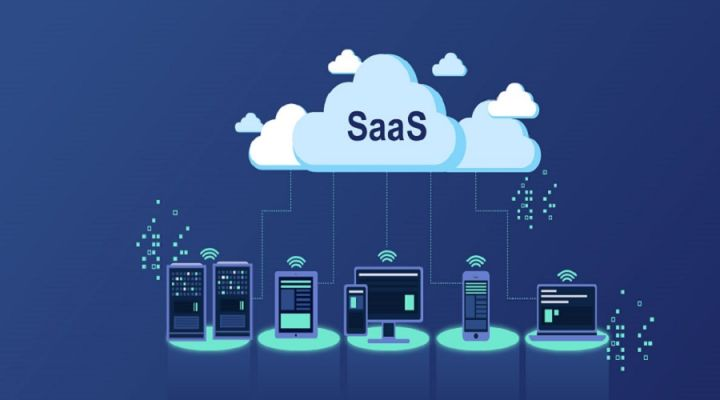
A company can have too much software without realizing it.
That is the strange thing about SaaS.
Adding another application feels almost weightless. There is no server room to expand. No installation disc. Often, there is barely a conversation.
Someone needs a better reporting tool.
Someone else wants a new CRM extension.
A department finds an AI assistant that promises to save hours every week.
Click.
Approved.
Or not approved.
Either way, the software is suddenly part of the company.
Multiply that moment hundreds of times and a large organization develops something few executives intended to build: a sprawling software estate composed of overlapping applications, forgotten licenses, disconnected contracts, dormant accounts, sensitive integrations, and recurring bills.
This is the problem SaaS management is designed to solve.
At its simplest, SaaS management means discovering, organizing, monitoring, optimizing, and governing the software-as-a-service applications an organization uses.
But that definition misses the interesting part.
SaaS management is really about answering a more difficult question:
What software does the organization depend on, and is it getting the right value, security, and control from every application it pays for?
SaaS Management, Defined
SaaS management is the ongoing process of managing cloud-based software throughout its lifecycle.
That lifecycle typically includes:
Discover → evaluate → purchase → deploy → use → monitor → optimize → renew or retire.
The process sounds straightforward.
At enterprise scale, it is not.
A company may have applications purchased centrally by IT, negotiated by procurement, expensed by departments, subscribed to by employees, inherited through acquisitions, or introduced through third-party integrations.
The result is a fragmented picture.
Finance sees invoices.
IT sees some applications.
Security sees application permissions.
Procurement sees contracts.
Employees see the tools they use every morning.
SaaS management attempts to connect those perspectives.
Why SaaS Management Became Necessary
Traditional enterprise software created friction.
That friction was annoying, but it also created visibility.
Buying software often involved procurement, IT, implementation teams, hardware, licensing negotiations, and lengthy deployment projects.
SaaS removed much of that.
That was a feature.
It was also the beginning of the management problem.
Modern SaaS can be deployed rapidly. Employees can experiment. Departments can move without waiting for centralized infrastructure teams.
The organization gains speed.
It also loses some visibility.
This is how shadow IT emerges: employees or departments adopt software outside established IT processes.
It is tempting to frame shadow IT as a discipline problem.
I think that is too simple.
When employees repeatedly bypass an organization's software process, the behavior can reveal something about the process itself.
If obtaining an approved tool takes six weeks while finding an alternative takes ten minutes, employees have been given a very clear incentive.
SaaS management has to address that reality.
What Does SaaS Management Actually Manage?
The answer is broader than applications.
A mature SaaS management program tracks several layers simultaneously.
Applications
What software exists?
Which products are being used?
Are there duplicate or overlapping applications?
Users
Who has accounts?
Who actively uses the software?
Which accounts belong to former employees?
Which users have excessive privileges?
Licenses
How many seats have been purchased?
How many are actually being used?
Are users assigned expensive licenses they do not need?
Spend
How much does each application cost?
Which department owns the expense?
Are there duplicate subscriptions?
What is the projected annual spend?
Contracts
When do agreements renew?
What are the termination requirements?
What price increases are permitted?
Are automatic renewals involved?
Data and Integrations
What information does the application access?
Which systems does it connect to?
Can it read or modify sensitive business information?
This is why SaaS management is not simply a finance function.
It is simultaneously an IT, security, procurement, and operational discipline.
The Four Core Problems SaaS Management Solves
1. Visibility
The first problem is surprisingly basic.
What do we have?
Organizations cannot optimize software they cannot see.
A SaaS management platform may combine information from identity systems, financial systems, procurement records, application APIs, and other sources to create a more complete inventory.
The objective is not just a list of names.
The useful inventory looks more like this:
| Application | Owner | Users | Annual Cost | Utilization | Risk | Renewal |
|---|---|---|---|---|---|---|
| CRM platform | Sales | 1,250 | $420K | High | High | 5 months |
| Design platform | Marketing | 180 | $72K | Medium | Medium | 2 months |
| Project tool | Product | 640 | $115K | High | Medium | 8 months |
| Survey platform | Research | 42 | $31K | Low | Low | 1 month |
| AI assistant | Multiple | 900 | $96K | Medium | High | 4 months |
The numbers above are illustrative, but the structure matters.
Once applications are viewed this way, patterns emerge.
Perhaps three departments are paying for similar software.
Perhaps an expensive platform has dozens of unused licenses.
Perhaps an application with relatively modest spending has access to highly sensitive data.
Perhaps a renewal is approaching before anyone has evaluated whether the product is still needed.
Visibility turns isolated facts into decisions.
2. Cost Optimization
SaaS spending is unusual because it accumulates quietly.
One subscription rarely attracts executive attention.
Hundreds can.
The common mistake is to equate optimization with cancellation.
It isn't.
Suppose a company discovers that 15% of licenses for a particular application are unused.
The obvious response is to eliminate them.
But perhaps those licenses belong to seasonal workers. Perhaps they are required for occasional compliance tasks. Perhaps reducing the license count would create administrative headaches larger than the savings.
The better question is:
What is the economic value of the license relative to its actual business use?
That leads to more sophisticated strategies:
- Reclaiming dormant licenses
- Downgrading unnecessary plans
- Consolidating overlapping applications
- Negotiating volume discounts
- Moving users to appropriate license tiers
- Eliminating redundant subscriptions
- Renegotiating contracts before renewal
The goal is not the smallest software bill.
It is the highest software value per dollar.
3. Security and Risk
Every SaaS application introduces some level of risk.
Not necessarily because the vendor is unsafe.
Because the application exists somewhere outside the organization's traditional infrastructure and may have access to corporate information.
Consider a seemingly harmless productivity application.
It might have permission to read company files.
It might connect to employee calendars.
It might access customer information through an API.
It might retain data after an employee stops using the service.
Suddenly, “just another SaaS tool” looks different.
SaaS management helps security teams understand the application's place within the larger environment.
Important questions include:
- What data does the application access?
- Who has administrative privileges?
- Is single sign-on enabled?
- Are former employees still active?
- What integrations are connected?
- Is the application approved?
- Does the vendor meet required security standards?
The critical shift is from application-level visibility to relationship-level visibility.
The risk is not merely what an application is.
It is what the application can reach.
4. Lifecycle Management
Software has a lifecycle.
Too many organizations manage only the beginning.
Someone requests the application.
Procurement negotiates it.
IT deploys it.
Then everyone moves on.
Until renewal.
By that point, the original business owner may have left. Usage may have changed. Another application may have replaced it.
Yet the contract renews.
Good SaaS management keeps the application visible throughout its entire existence.
A mature process asks:
Is this application still necessary?
Is it still being used?
Is it still secure?
Is the current pricing appropriate?
Does another application now provide the same functionality?
Should we renew, renegotiate, downgrade, replace, or retire it?
That final decision is where SaaS management becomes strategic.
SaaS Management vs. SaaS Governance
The two concepts overlap, but they are not identical.
| Capability | SaaS Management | SaaS Governance |
|---|---|---|
| Application discovery | Core | Core |
| License optimization | Core | Supporting |
| Spend analysis | Core | Supporting |
| User access | Core | Core |
| Security policies | Supporting | Core |
| Vendor risk | Important | Core |
| Approval rules | Important | Core |
| Compliance | Important | Core |
| Renewal tracking | Core | Important |
| Business ownership | Core | Core |
| Policy enforcement | Supporting | Core |
A useful distinction is:
SaaS management asks what is happening. SaaS governance establishes what should happen.
Management tells you that an employee has access to 14 applications.
Governance determines whether that access is appropriate.
Management identifies $2 million in annual software spending.
Governance determines which purchasing rules apply.
Management discovers an application.
Governance determines whether the organization should allow it.
Both are necessary.
The Lesson Hidden in a SaaS Inventory
One of the most useful lessons I have learned from looking at software environments is that the inventory itself can become a diagnostic tool.
Imagine discovering four project-management platforms inside one organization.
The easy conclusion is that the company has wasted money.
Perhaps.
But there may be another explanation.
One team needs advanced engineering workflows. Another needs client collaboration. A third has international compliance requirements. The central platform may simply not meet everyone's needs.
The problem, then, is not four applications.
The problem is the absence of a deliberate decision about when specialization is justified.
This is an important principle:
SaaS management should not confuse standardization with optimization.
Sometimes one platform is better.
Sometimes four are rational.
The job is to know which situation you are in.
How AI Is Changing SaaS Management
Artificial intelligence adds a new layer to the problem.
Organizations are adopting AI applications faster than many traditional software governance processes were designed to handle.
An employee may connect an AI assistant to documents, email, customer records, calendars, or internal knowledge.
The application can suddenly do much more than store information.
It can interpret it.
Summarize it.
Generate new information from it.
And, increasingly, act on it.
That makes SaaS management more complicated.
The relevant question is no longer simply:
“Who has an account?”
It becomes:
“What can this software do with the access it has?”
AI therefore pushes SaaS management toward behavioral visibility.
Organizations will increasingly need to understand not only which applications exist, but how automated systems use corporate data and permissions.
What a Mature SaaS Management Program Looks Like
The strongest programs share several characteristics.
They have a centralized application inventory.
Every important application has an owner.
Identity is integrated with SaaS access.
Procurement data connects to usage data.
Renewal dates are visible well before contracts expire.
Security teams can identify risky integrations.
Employees have a fast path for requesting legitimate software.
And, critically, the system is automated wherever possible.
At 30 applications, manual management might work.
At 300, it becomes painful.
At 3,000, it becomes fiction.
Automation is not simply about efficiency.
It is what makes continuous management possible.
The Future of SaaS Management
There is an interesting shift happening beneath the surface.
The first generation of SaaS management tools primarily answered:
What applications do we have?
The next generation will increasingly answer:
What should we do about them?
That could mean automatically identifying unused licenses, recommending consolidation, flagging anomalous access, predicting renewal risks, or routing applications through appropriate security workflows.
Eventually, SaaS management may become less like a dashboard and more like an autonomous control layer.
The software estate watches itself.
It identifies exceptions.
It recommends action.
Humans handle the decisions that require judgment.
Machines handle the repetitive ones.
That is a much more ambitious definition of SaaS management.
Conclusion: The Software You Don't Notice May Be the Most Important
SaaS management is easy to underestimate because much of its work happens out of sight.
There is no dramatic product launch.
No employee celebrates the cancellation of an unused license.
Nobody posts on social media because an inactive account was automatically removed.
Yet these small decisions compound.
A company that knows its software estate can spend more intelligently.
It can reduce unnecessary access.
It can negotiate from better information.
It can identify security exposure earlier.
It can give employees useful tools without allowing software adoption to become completely chaotic.
And that leads to the question that matters most.
What if the biggest SaaS management failure isn't having too much software—but having software nobody truly understands?
An application with a large price tag is visible.
An application with an unclear owner, excessive permissions, forgotten integrations, and access to sensitive information is something else entirely.
That is the real challenge.
The future of SaaS management will not be about building a perfect list of applications.
It will be about creating an organization where every significant piece of software has a reason to exist, a person accountable for it, a measurable business purpose, appropriate access, and an exit plan.
Because eventually, every application reaches the same question:
Are we still better off with you than without you?
SaaS management exists to make sure someone is actually asking it.
- Arts
- Business
- Computers
- Spiele
- Health
- Startseite
- Kids and Teens
- Geld
- News
- Personal Development
- Recreation
- Regional
- Reference
- Science
- Shopping
- Society
- Sports
- Бизнес
- Деньги
- Дом
- Досуг
- Здоровье
- Игры
- Искусство
- Источники информации
- Компьютеры
- Личное развитие
- Наука
- Новости и СМИ
- Общество
- Покупки
- Спорт
- Страны и регионы
- World

 English
 Russian
 French
 Spanish
 Portuguese
 Turkish
 Dutch
Dutch
 Italiano
 Arabic
 Romaian
 Portuguese (Brazil)
 Greek
Greek