
What Information Should I Give Potential Sponsors?
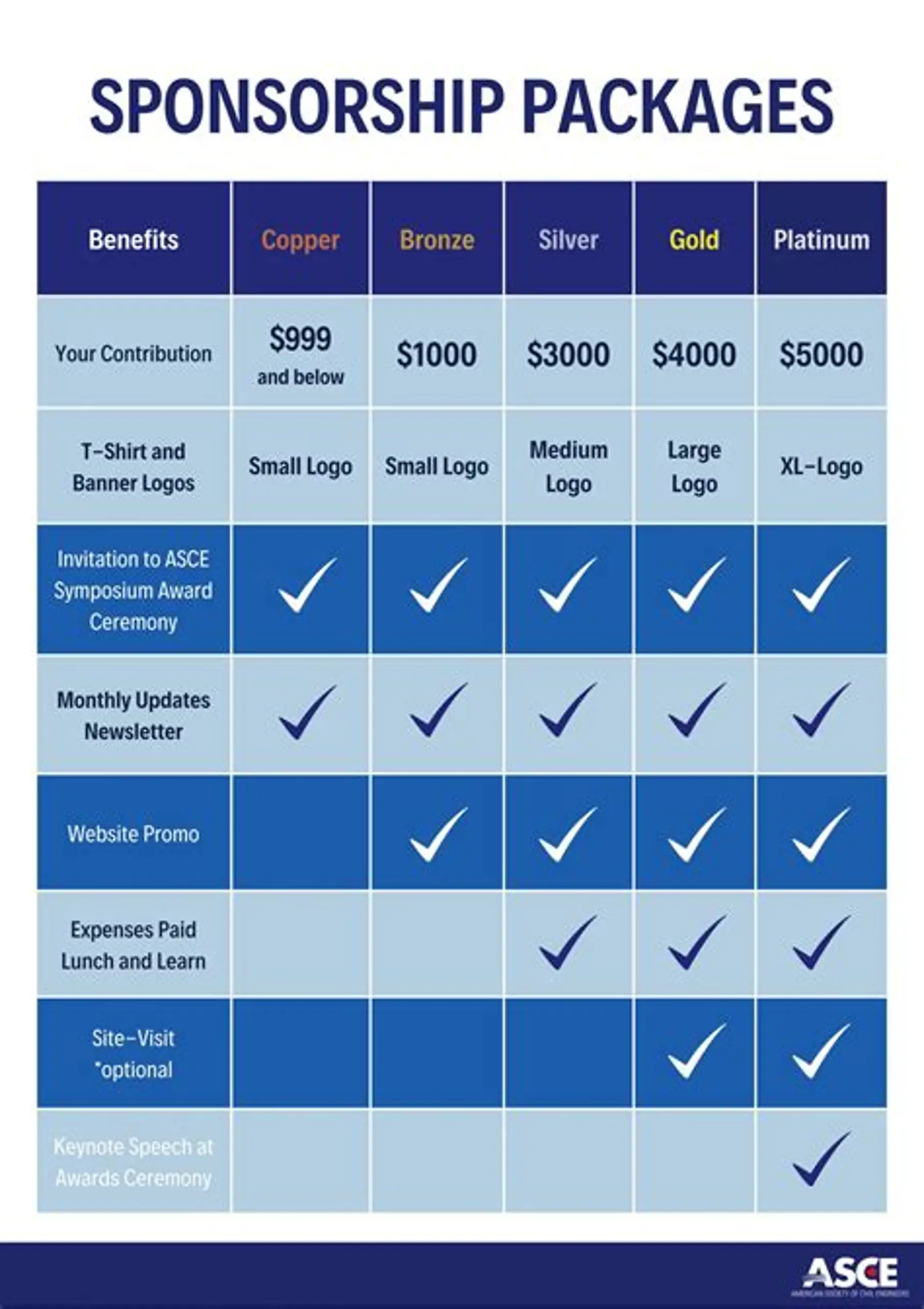
A potential sponsor doesn't need to know everything about you.
They need to know the right things.
That's a surprisingly important distinction.
When people prepare sponsorship materials, they often start with their own story. They explain when the organization was founded. They describe the mission. They list accomplishments. They add photographs, testimonials, awards, and several pages of background information.
Then, somewhere near the end, the sponsor finally discovers what they're being offered.
That's backwards.
A sponsor is making a business decision. Your job is to give them enough information to understand the opportunity, assess the value, evaluate the risk, and decide whether a conversation makes sense.
Not twenty pages of information.
The right information.
Start With the Question Every Sponsor Is Asking
Even if the sponsor never says it aloud, the underlying question is usually:
“What does this opportunity do for my organization?”
That question should shape everything you provide.
Sponsors may care about:
- Reaching new customers
- Increasing brand awareness
- Generating leads
- Driving sales
- Building community credibility
- Entertaining clients
- Engaging employees
- Creating content
- Entering a new market
- Supporting a cause that matters to their customers
Your proposal should connect your opportunity to one or more of those objectives.
That's the difference between describing an opportunity and selling one.
1. Tell Them Who You Reach
Audience information belongs near the beginning of your sponsorship materials.
Not buried on page nine.
A sponsor needs to know whether your audience overlaps with its target market.
Give them information such as:
- Total audience size
- Geographic location
- Age ranges
- Household characteristics
- Occupations
- Income ranges, when relevant and appropriately collected
- Industry or professional role
- Customer interests
- Purchasing behavior
- Attendance patterns
- Digital audience size
- Email subscriber count
- Social reach
- Engagement levels
But don't throw every statistic you have onto the page.
Relevance matters more than volume.
Numbers without context are weak
“25,000 followers” sounds impressive.
But what if only 2% of them live in the sponsor's market?
Now the number is considerably less useful.
A better presentation might be:
“Our community includes 25,000 digital followers, with 71% located in the three metropolitan areas where your company operates.”
That's information a marketing executive can use.
2. Explain Why Your Audience Matters
Audience size gets attention.
Audience relevance gets sponsorship dollars.
Imagine two opportunities.
One reaches 100,000 people nationwide.
The other reaches 8,000 people, but 6,000 are precisely the type of customers a regional company wants.
The second opportunity could be more valuable.
That's why you need to explain the connection.
Ask yourself:
Why does this particular audience matter to this particular sponsor?
Then make that answer visible.
For example:
- A bank may value local business owners.
- A family-focused brand may value parents.
- A software company may value technology decision-makers.
- A healthcare organization may value patients and caregivers.
- A luxury brand may value affluent consumers.
Don't make the sponsor figure out the connection.
Make it obvious.
3. Describe the Opportunity Clearly
Potential sponsors need to understand exactly what they are considering.
If it's an event, explain:
- Event name
- Date
- Location
- Expected attendance
- Event format
- Major activities
- Audience profile
- Promotional timeline
- What makes the event distinctive
If it's a personal sponsorship, explain:
- What you do
- Who follows or engages with you
- What platforms you use
- What content you create
- Where you appear publicly
- What the sponsor can participate in
If it's a nonprofit initiative, explain:
- The program
- Who benefits
- Geographic reach
- Program scale
- Duration
- Measurable outcomes
Clarity reduces perceived risk.
A sponsor should never have to guess what it is buying.
4. Give Them Specific Sponsorship Benefits
This is where you move from information to value.
Don't simply say:
“Your company will receive exposure.”
Explain what exposure means.
For example:
- Logo placement on event signage
- Inclusion in promotional emails
- Dedicated social media posts
- Sponsored content
- Speaking opportunities
- Product demonstrations
- Sampling
- VIP tickets
- Hospitality
- Exhibition space
- Branded experiences
- Customer contests
- Lead-generation opportunities
- Category exclusivity
The more tangible the benefit, the easier it is to evaluate.
Put benefits into a hierarchy
Not every benefit deserves equal weight.
A sponsorship package might look like this:
| Information / Benefit | Basic Sponsor | Mid-Level Sponsor | Premium Sponsor | Why It Matters |
|---|---|---|---|---|
| Website recognition | ✓ | ✓ | ✓ | Digital visibility |
| Event signage | ✓ | ✓ | Premium placement | Physical visibility |
| Social promotion | 1 post | 3 posts | Dedicated campaign | Audience engagement |
| Email exposure | Mention | Featured placement | Dedicated email | Direct reach |
| Tickets | 4 | 10 | 20 VIP | Hospitality |
| Activation space | — | Shared | Dedicated | Customer interaction |
| Speaking opportunity | — | — | ✓ | Authority and visibility |
| Category exclusivity | — | — | ✓ | Competitive differentiation |
| Custom content | — | Limited | ✓ | Reusable marketing assets |
| Post-event reporting | Basic | Detailed | Detailed + strategy review | Accountability |
This makes the value progression much easier to understand.
5. Tell Them What You Expect From Them
This piece is often missing.
Sponsors aren't just buying benefits. They're participating in a partnership.
Tell them what the relationship requires.
For example:
- Logo files
- Promotional materials
- Product samples
- Staff for an activation
- Approval of creative
- Booth personnel
- Payment deadlines
- Promotional commitments
- Lead-management responsibilities
Why include this?
Because surprises damage partnerships.
A professional proposal establishes expectations before the agreement is signed.
6. Explain How Their Investment Will Be Used
Transparency matters.
You don't necessarily need to provide your entire operating budget.
But if a sponsor is funding a specific program, explain where the money goes.
For example:
A $10,000 sponsorship supports:
- $4,000 program production
- $2,500 audience outreach
- $1,500 participant materials
- $1,000 venue and logistics
- $1,000 measurement and reporting
The exact breakdown will vary.
The principle doesn't.
Sponsors want confidence that their investment is being handled responsibly.
7. Provide Proof
Potential sponsors don't know you as well as you know yourself.
Your materials need to bridge that gap.
Give them evidence.
Useful proof can include:
- Past attendance
- Audience growth
- Sponsor retention
- Media coverage
- Engagement statistics
- Testimonials
- Previous campaign results
- Photos of sponsor activations
- Case studies
- Survey results
- Lead counts
- Website traffic
- Email performance
A short case study can be particularly persuasive.
Sponsor: Regional retailer
Investment: $5,000
Activation: Product demonstration and giveaway
Results: 380 customer interactions, 214 contest entries, 91 coupon redemptions
Now the potential sponsor can imagine itself participating.
That's powerful.
8. Explain How Success Will Be Measured
Never make the sponsor guess how you'll determine whether the partnership worked.
Tell them.
Depending on the sponsorship, you could measure:
- Attendance
- Impressions
- Website visits
- QR scans
- Leads
- Product samples distributed
- Coupon redemptions
- Social engagement
- Email performance
- Content views
- Event interactions
- Survey responses
- Media mentions
And be careful with vanity metrics.
A million impressions may sound wonderful.
But if none of those impressions reached the sponsor's target market, the number doesn't tell the whole story.
Measurement should reflect the sponsor's actual objective.
9. Give Them the Investment
Don't make the sponsor play detective.
State the price.
If you have multiple sponsorship levels, show them clearly.
| Sponsorship Level | Example Investment | Audience Access | Activation | Reporting |
|---|---|---|---|---|
| Presenting Partner | $15,000 | Premium | Custom activation | Full report + review |
| Gold | $7,500 | High | Dedicated space | Detailed report |
| Silver | $3,500 | Moderate | Shared opportunity | Summary report |
| Community | $1,000 | Basic | Recognition | Basic recap |
| In-Kind | Variable | Based on contribution | Product/service integration | Deliverable recap |
These are illustrative figures, not universal pricing standards.
The correct price depends on the size and quality of your audience, the market, the assets involved, the sponsor's potential return, exclusivity, activation requirements, and your track record.
10. Tell Them What Happens Next
A strong proposal ends with a clear path forward.
Who should they contact?
What do you want to discuss?
When are decisions needed?
What happens after they say yes?
Don't create unnecessary friction.
Something as simple as:
“The next step is a 20-minute conversation to determine which partnership structure best fits your marketing objectives.”
That's clear.
And it's less intimidating than asking someone to immediately sign a contract.
What I Learned About Sponsor Information
One of the most useful lessons I've learned is that more information does not automatically create more credibility.
Sometimes it does the opposite.
I've seen proposals with pages of statistics that never answered the sponsor's basic questions. I've seen beautiful presentations where the audience was described as “engaged” but nobody explained what engagement actually meant.
And I've seen smaller organizations win attention because they could answer one critical question with unusual precision:
“Who exactly are you helping us reach?”
That taught me to separate information into two categories:
Interesting information.
And decision-making information.
The sponsor needs the second category.
Your history may be interesting.
Your awards may be impressive.
Your mission may be meaningful.
But if the sponsor's marketing team is trying to decide whether your audience overlaps with its customer base, those facts are secondary.
Lead with what helps them make the decision.
Don't Hide Behind Your Mission
This is especially important for nonprofits.
Your cause may be extraordinary.
Your mission may change lives.
But a corporate sponsor still needs to understand the business case.
That doesn't diminish your mission.
It makes the partnership sustainable.
You can explain the social impact while also explaining the commercial opportunity.
The strongest proposals often connect the two:
“This partnership helps your company reach local families while supporting our literacy initiative for 600 elementary students.”
Now both sides of the relationship have a reason to exist.
Make the Information Easy to Consume
Potential sponsors are busy.
Respect their attention.
Use:
- Headings
- Tables
- Bullet points
- Charts
- Short case studies
- Audience snapshots
- Testimonials
- Photos
- Clear pricing
- Simple calls to action
Avoid turning your proposal into an autobiography.
A good test is this:
Could an executive understand the opportunity in three minutes?
If not, simplify.
Then simplify again.
The Information You Don't Give Can Matter, Too
Don't exaggerate.
Don't invent audience numbers.
Don't promise guaranteed media coverage.
Don't claim “exclusive access” if three competitors will receive the same opportunity.
Don't inflate the value of every logo placement into a six-figure media package.
Sophisticated sponsors have seen these tactics before.
Credibility is an asset.
Protect it.
The Real Goal
Here's the provocative conclusion:
You are not trying to tell potential sponsors everything. You're trying to give them enough evidence to want the next conversation.
That's a different job.
Your proposal should answer the important questions before they're asked.
Who is the audience?
Why does that audience matter?
What exactly is the sponsor getting?
What can the sponsor do with the opportunity?
How much does it cost?
How will success be measured?
Why should they trust you?
And what happens next?
If your materials answer those questions clearly, you've done something more valuable than creating a polished sponsorship document.
You've reduced uncertainty.
That's what sponsors are really buying into before they ever sign an agreement: confidence that the opportunity makes business sense, that you can deliver what you promised, and that the relationship will be worth their time.
Give them information.
But give them the right information.
Because the best sponsorship proposal isn't the one with the most facts.
It's the one that makes the right facts impossible to miss.
- Arts
- Business
- Computers
- Games
- Health
- Home
- Kids and Teens
- Money
- News
- Personal Development
- Recreation
- Regional
- Reference
- Science
- Shopping
- Society
- Sports
- Бизнес
- Деньги
- Дом
- Досуг
- Здоровье
- Игры
- Искусство
- Источники информации
- Компьютеры
- Личное развитие
- Наука
- Новости и СМИ
- Общество
- Покупки
- Спорт
- Страны и регионы
- World

 Russian
 French
 Spanish
 Portuguese
 Deutsch
 Turkish
 Dutch
Dutch
 Italiano
 Arabic
 Romaian
 Portuguese (Brazil)
 Greek
Greek