
What Are the Different Sponsorship Levels?
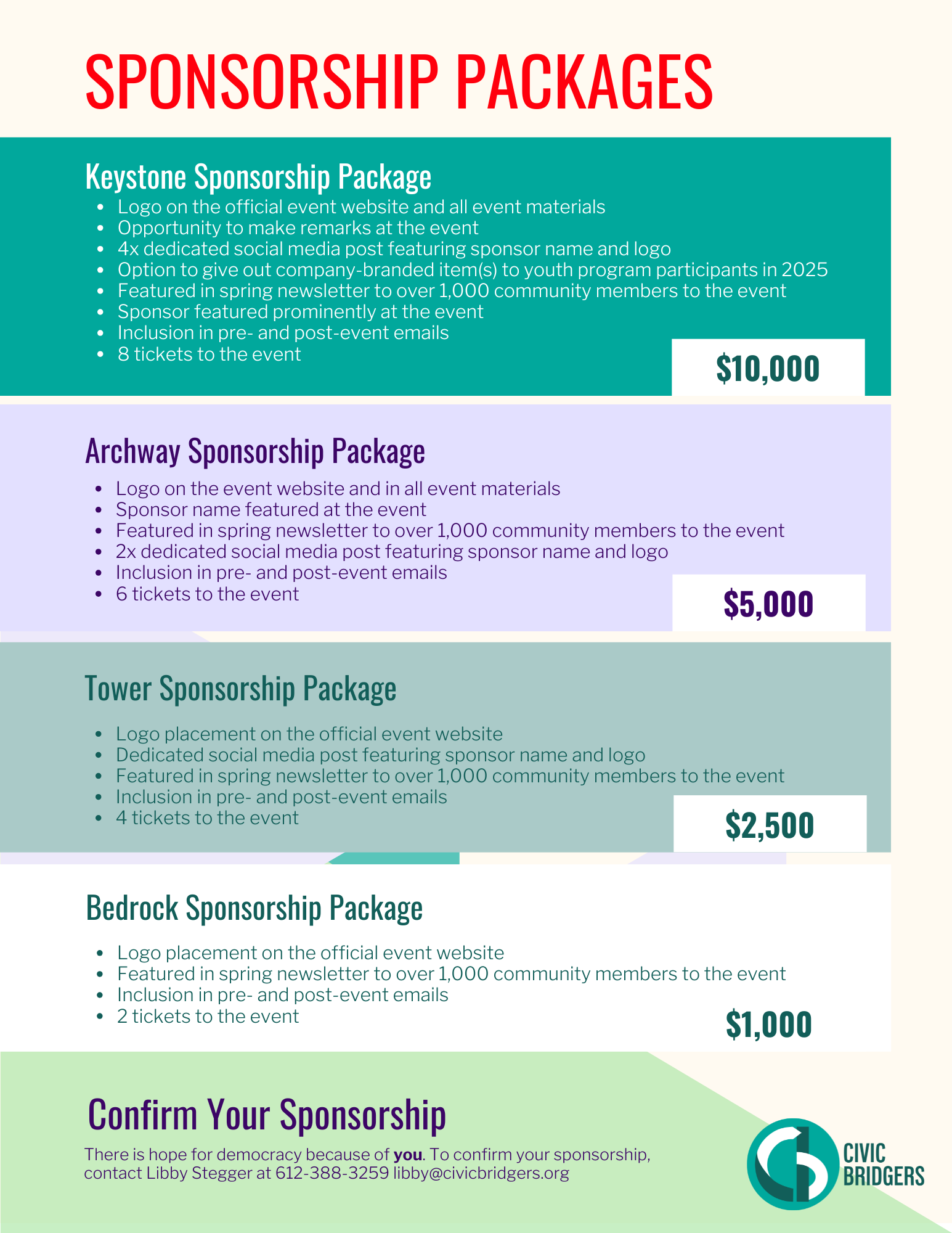
A prospective sponsor asks for your sponsorship levels.
You send them a document.
At the top is Platinum.
Below that, Gold.
Then Silver.
Then Bronze.
It looks professional. Familiar. Organized.
But then the sponsor asks a question that many organizations are not prepared to answer:
“Why should we choose one level over another?”
Suddenly, the colors and labels do not seem quite so important.
Because sponsorship levels are not simply a way to organize prices.
At least, they should not be.
A well-designed sponsorship structure gives companies meaningful choices. It helps them understand how different investment levels create different degrees of access, visibility, participation, and strategic value.
A weak structure does something else.
It sells larger logos.
That is not the same thing.
The real purpose of sponsorship levels is to match different types of corporate investment with different levels of opportunity. One company may want broad visibility. Another may want direct audience engagement. A third may want category exclusivity, content integration, or a long-term partnership.
So, what are the different sponsorship levels?
The answer depends on your organization, audience, assets, and sponsor market. But most sponsorship programs are built around a hierarchy that moves from smaller community support to premium, highly integrated partnerships.
The names can change.
The strategy should not.
What Are Sponsorship Levels?
Sponsorship levels are structured tiers of corporate partnership, each offering a different combination of benefits, rights, recognition, access, and activation opportunities in exchange for a specified level of investment.
They help answer two important questions:
For the sponsor:
“What level of opportunity is available for our budget and objectives?”
For the organization:
“How can we organize and protect the value of our sponsorship assets?”
A sponsorship level might include:
- Brand visibility
- Event recognition
- Digital promotion
- Audience access
- Exhibit opportunities
- Hospitality
- Content opportunities
- Category exclusivity
- Employee engagement
- Product demonstrations
- Custom activations
As investment increases, the opportunity should generally become more valuable.
But “more valuable” does not simply mean “more benefits.”
That is an important distinction.
A higher sponsorship level should ideally offer greater strategic value.
More meaningful access.
More prominent integration.
Greater exclusivity.
Better activation opportunities.
A deeper relationship with the audience.
The Most Common Sponsorship Levels
While organizations use different names, several levels appear frequently in sponsorship programs.
Presenting or Title Sponsor
This is usually the highest and most valuable sponsorship level.
The presenting sponsor often receives a strong association with the event, initiative, or program.
For example:
The ABC Company Annual Leadership Conference
or:
The Annual Leadership Conference, presented by ABC Company
This level may include:
- Naming or presenting rights
- Category exclusivity
- Major brand integration
- Premium signage
- High-level audience engagement
- Executive participation
- Custom activations
- Extensive media and digital recognition
This sponsorship is typically reserved for one company.
That scarcity matters.
If five companies can all become the “presenting sponsor,” the designation loses much of its meaning.
Platinum Sponsor
Platinum is often the highest traditional tier below a presenting or title sponsor.
It usually offers substantial visibility and engagement.
A Platinum sponsor might receive:
- Prominent branding
- Premium event placement
- Major activation space
- VIP access
- Featured digital promotion
- Speaking or content opportunities
- Enhanced hospitality
- Significant audience engagement
This level works well for companies that want a substantial presence but may not need or want naming rights.
Gold Sponsor
Gold sponsorship is often a major investment level.
It provides significant recognition and meaningful participation without the premium exclusivity associated with the highest tiers.
Benefits may include:
- Prominent logo placement
- Event signage
- Exhibit opportunities
- Digital marketing recognition
- VIP tickets
- Sponsored content
- Audience engagement opportunities
Gold can be a strong level for companies seeking visibility and access at a significant but more moderate investment.
Silver Sponsor
Silver sponsorship typically provides a middle-tier opportunity.
It may appeal to companies that want meaningful association with your organization but have a smaller budget or narrower objectives.
Common benefits include:
- Brand recognition
- Website placement
- Event signage
- Social media mentions
- Limited hospitality
- Selected activation opportunities
A strong Silver package should still provide genuine value.
Do not treat lower-level sponsors as an afterthought.
They may become future major partners.
Bronze or Supporting Sponsor
Bronze is often an entry-level corporate sponsorship.
It gives companies a way to participate without making a major financial commitment.
Benefits may include:
- Basic logo recognition
- Website listing
- Event acknowledgment
- Limited promotional opportunities
- General admission or event access
This level can work particularly well for:
- Small businesses
- Community organizations
- First-time sponsors
- Companies testing a new market
- Businesses with limited marketing budgets
Community Sponsor
Some organizations add a community sponsorship level below Bronze.
This is particularly useful for local events and nonprofits.
The investment is generally more accessible, while the benefits focus on local visibility and community association.
A community sponsor may receive:
- Logo recognition
- Local event visibility
- Website acknowledgment
- Community appreciation
- Event participation opportunities
This can create an entry point for businesses that might never consider a larger corporate sponsorship.
A Comparison of Common Sponsorship Levels
Here is how a typical sponsorship hierarchy might be structured.
| Sponsorship Level | Typical Investment Range | Primary Value | Brand Visibility | Audience Engagement | Exclusivity |
|---|---|---|---|---|---|
| Title/Presenting | $50,000+ | Deep strategic association | Maximum | Highly customized | Often exclusive |
| Platinum | $25,000–$49,999 | Major brand integration | Very high | Extensive | Frequently available |
| Gold | $10,000–$24,999 | Significant exposure and access | High | Strong | Selective |
| Silver | $5,000–$9,999 | Balanced visibility and participation | Moderate | Moderate | Limited |
| Bronze/Supporting | $2,500–$4,999 | Entry-level recognition | Basic to moderate | Limited | Rare |
| Community Partner | Under $2,500 | Local association and support | Basic | Minimal to selective | Rare |
These numbers are examples.
Your market may support significantly higher or lower investment levels.
A national conference with 50,000 attendees will have a different sponsorship economy from a local charity event with 500 participants.
That is why copying another organization's price structure can be dangerous.
The right sponsorship levels should reflect your own assets and audience.
Why Different Sponsorship Levels Matter
Imagine walking into a restaurant where there is only one option.
One meal.
One price.
One choice.
That may work for a very specific audience.
Most markets need flexibility.
Sponsorship is similar.
Companies have different:
- Budgets
- Marketing objectives
- Audience priorities
- Geographic markets
- Activation capabilities
- Timelines
- Decision-making processes
Different sponsorship levels allow you to serve more than one type of partner.
But there is another benefit.
They help companies understand value.
A sponsor considering a $5,000 investment can see what that level provides.
A company considering $25,000 can see how the opportunity expands.
The structure creates context.
Without it, sponsors may struggle to understand why one investment level costs more than another.
The Biggest Mistake: Making Levels Differ Only by Logo Size
This happens more often than it should.
A Bronze sponsor receives a small logo.
Silver receives a medium logo.
Gold receives a large logo.
Platinum receives an enormous logo.
Then a few additional social media posts are added.
Technically, the packages are different.
Strategically, they may not be.
The strongest sponsorship levels offer different forms of value.
Consider this progression:
Bronze
Basic recognition and association.
Silver
Recognition plus selected audience access.
Gold
Recognition, access, and meaningful activation.
Platinum
Deep brand integration, premium activation, and significant audience engagement.
Presenting
Strategic association, exclusivity, and customized partnership rights.
Now the differences are not simply visual.
They are experiential.
That creates a stronger reason for a sponsor to invest at a higher level.
My Lesson Learned: Bigger Packages Are Not Always Better
I learned this through a sponsorship conversation that did not go the way I expected.
I had developed what I thought was an excellent package structure.
The levels were clear.
The prices were logical.
The benefits increased with each tier.
A prospective company seemed interested in one of the larger packages.
Naturally, I focused on the premium benefits.
More exposure.
More recognition.
More opportunities.
But something was not connecting.
Eventually, I stopped presenting and started asking questions.
The company explained that broad visibility was not its main objective.
They wanted direct interaction with a specific segment of the audience.
Several benefits in the premium package were essentially irrelevant to them.
Meanwhile, a more targeted activation opportunity—which was not even the centerpiece of the package—was exactly what they wanted.
That was a valuable lesson.
The highest sponsorship level is not automatically the best sponsorship level for every company.
Sponsors do not always want more.
Sometimes they want more relevant.
That experience changed the way I looked at sponsorship tiers.
I still believe packages provide important structure.
But I no longer assume that a sponsor's ideal opportunity is determined by the size of its budget.
The conversation matters.
How Many Sponsorship Levels Should You Offer?
For most organizations, three to five primary levels is enough.
Why?
Because too many choices can create confusion.
Consider a sponsorship program with:
- Diamond
- Platinum
- Gold Plus
- Gold
- Silver Plus
- Silver
- Bronze
- Community
- Friend of the Event
That is a lot to process.
What is the difference between Gold and Gold Plus?
Does Silver Plus really create enough additional value?
Are the distinctions meaningful?
If not, simplify.
A strong structure might include:
- Presenting Sponsor
- Major Sponsor
- Supporting Sponsor
- Community Sponsor
Or:
- Platinum
- Gold
- Silver
- Bronze
The labels are flexible.
The logic is not.
Each level should be clearly differentiated.
Should Every Sponsorship Level Have a Fixed Price?
Not always.
Fixed pricing works well when:
- Your event is recurring
- Your benefits are standardized
- Your audience is predictable
- Your sponsorship inventory is clearly defined
However, higher-level opportunities may benefit from flexible pricing.
A major sponsor may want:
- A multi-year agreement
- Additional activation rights
- Custom content
- Category exclusivity
- Multiple events
- Specialized audience access
In those cases, the package may serve as a starting point.
For example:
Premium Partnership: Starting at $50,000
That gives you flexibility while communicating the scale of investment.
But be careful.
“Custom pricing” should not mean you invent numbers randomly.
Your pricing should still reflect value.
Sponsorship Levels Should Match Sponsor Objectives
This is where strategic sponsorship becomes more interesting.
Instead of building every level around a collection of promotional benefits, consider organizing opportunities around sponsor objectives.
For example:
Visibility-Focused Sponsorship
Best for companies seeking:
- Brand recognition
- Market awareness
- Community association
Engagement-Focused Sponsorship
Best for companies seeking:
- Direct interaction
- Product demonstrations
- Customer conversations
Content-Focused Sponsorship
Best for companies seeking:
- Thought leadership
- Educational opportunities
- Branded content
Strategic Partnership
Best for companies seeking:
- Long-term alignment
- Deep audience integration
- Custom programs
- Measurable outcomes
This approach may not replace traditional tiers.
But it can improve them.
What Makes a Sponsorship Level Valuable?
A valuable sponsorship level usually combines several elements.
Scarcity
Limited opportunities can increase value.
There may be only one presenting sponsor.
Only one category-exclusive financial services sponsor.
Only one official technology partner.
Scarcity creates distinction.
Relevance
The opportunity must connect with the sponsor's objectives.
A benefit that is irrelevant has little value, regardless of how expensive the package is.
Access
Sponsors often value access to audiences, decision-makers, communities, or experiences.
Activation
The ability to participate can be more valuable than passive recognition.
Credibility
Association with a respected event or organization can strengthen the value of the partnership.
Measurability
The more clearly you can discuss results, the easier it becomes to demonstrate value.
Should Sponsorship Levels Be Customizable?
Yes—but within reason.
A sponsorship structure should provide consistency.
Customization should provide flexibility.
Those two ideas can work together.
You might have fixed core packages while allowing sponsors to customize:
- Activation opportunities
- Content programs
- Hospitality
- Employee involvement
- Audience engagement
- Digital campaigns
This approach prevents every conversation from becoming a completely new project.
At the same time, it allows you to respond to meaningful sponsor objectives.
The best systems have boundaries.
And flexibility inside those boundaries.
How to Decide Which Sponsorship Levels You Need
Start with your assets.
What do you actually have to offer?
Create an inventory of:
- Audience access
- Event visibility
- Digital reach
- Content opportunities
- Physical space
- Hospitality
- Media relationships
- Intellectual property
- Community connections
- Employee engagement opportunities
Then consider your sponsor market.
What kinds of companies are realistic prospects?
What budgets might they have?
What objectives are common?
Next, create levels based on meaningful differences in value.
Do not start with colors or metal names.
Start with the opportunity.
That is the foundation.
The Provocative Truth About Sponsorship Levels
Here is something worth considering before you create another Platinum, Gold, Silver, and Bronze chart.
A sponsorship level is not valuable because you gave it an impressive name.
Calling something “Platinum” does not make it premium.
Calling something “Gold” does not create demand.
Value comes from what the sponsor can actually accomplish.
Can they reach the right people?
Can they build relationships?
Can they create an experience?
Can they achieve meaningful brand association?
Can they support a business objective?
Those questions matter far more than the color of the package heading.
So, what are the different sponsorship levels?
They can include Title, Presenting, Platinum, Gold, Silver, Bronze, Community, and countless variations.
But the names are only the surface.
The real work happens underneath.
A strong sponsorship structure creates logical choices.
It protects valuable assets.
It gives companies room to participate at different investment levels.
And it leaves space for something that standardized packages can never fully replace.
A conversation.
Because the best sponsor may not want Platinum.
They may not want Gold.
They may not even care what the package is called.
They want an opportunity that makes sense for their business.
Your sponsorship levels should help them find it.
Not make them search for it.
- Arts
- Business
- Computers
- Jocuri
- Health
- Home
- Kids and Teens
- Money
- News
- Personal Development
- Recreation
- Regional
- Reference
- Science
- Shopping
- Society
- Sports
- Бизнес
- Деньги
- Дом
- Досуг
- Здоровье
- Игры
- Искусство
- Источники информации
- Компьютеры
- Личное развитие
- Наука
- Новости и СМИ
- Общество
- Покупки
- Спорт
- Страны и регионы
- World

 English
 Russian
 French
 Spanish
 Portuguese
 Deutsch
 Turkish
 Dutch
Dutch
 Italiano
 Arabic
 Portuguese (Brazil)
 Greek
Greek