
How Should Sponsorship Packages Be Priced?
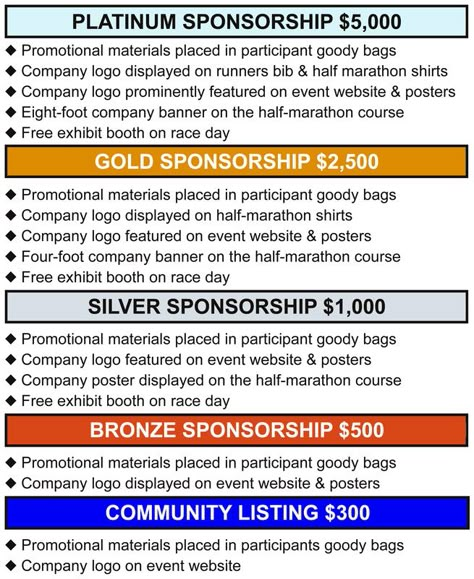
Put a number on a sponsorship package too high, and prospects disappear.
Put it too low, and you may sell out quickly—and still lose money.
That second problem is more dangerous than it looks.
A sponsorship can appear successful on paper while quietly underpricing the audience, access, visibility, credibility, and business opportunities you're giving away.
So how should sponsorship packages be priced?
Not by guessing.
Not by copying what another event charges.
And certainly not by adding up the cost of printing banners and putting a logo on a website.
Sponsorship pricing should be based on value.
That sounds obvious. In practice, it's one of the hardest parts of sponsorship sales.
The right price sits at the intersection of several factors: audience quality, reach, exclusivity, brand exposure, activation opportunities, access, event reputation, sponsor objectives, scarcity, and measurable business outcomes.
The more valuable those elements are, the stronger your pricing position becomes.
Start With the Audience, Not the Logo
Here's where many sponsorship packages go wrong.
The organizer starts with inventory.
“Logo on the website: $1,000.”
“Banner: $2,000.”
“Email mention: $500.”
“Booth: $1,500.”
Add everything together and call it a sponsorship package.
That's not really value-based pricing.
The sponsor isn't buying a banner.
They're buying access to an audience.
So start there.
Ask:
- Who attends?
- How many people attend?
- What industries are represented?
- What positions do attendees hold?
- How much purchasing authority do they have?
- Are they local, regional, national, or international?
- How engaged are they?
- How difficult would this audience be for the sponsor to reach independently?
A room with 500 highly qualified decision-makers can be dramatically more valuable than an online audience of 100,000 people who have little relevance to the sponsor.
Audience quality beats audience size when the fit is strong.
The Five Factors That Drive Sponsorship Pricing
There isn't a universal formula, but five major factors should be at the center of your pricing model.
1. Audience Reach
Reach is the most obvious factor.
How many people will encounter the sponsor?
Consider:
- Event attendance
- Website traffic
- Email subscribers
- Social media reach
- Media coverage
- Livestream viewers
- Podcast downloads
- Video views
- Post-event content consumption
Don't inflate these numbers.
Credibility matters.
If your proposal claims a million impressions and the sponsor later discovers that the figure includes every automated email open, page refresh, and social-media appearance, you've created a trust problem.
Use defensible numbers.
2. Audience Quality
Reach tells you how many.
Quality tells you who.
This can dramatically change pricing.
Suppose Event A attracts 10,000 consumers.
Event B attracts 800 chief executives, purchasing managers, and senior industry leaders.
For a B2B technology company, Event B may be far more valuable.
Your sponsorship pricing should reflect that.
3. Exclusivity
Exclusivity creates scarcity.
If three competing banks can all buy the same sponsorship package, none of them is receiving true category protection.
But if one bank becomes the exclusive financial services sponsor, that right may have significant value.
Category exclusivity can justify a premium.
So can geographic exclusivity, product exclusivity, or certain forms of industry exclusivity.
Be precise.
“Exclusive sponsor” is vague.
“Exclusive commercial banking sponsor” is much more meaningful.
4. Activation Opportunities
Visibility has value.
Engagement can have more.
Can the sponsor host a workshop?
Speak on a panel?
Demonstrate a product?
Meet customers?
Host VIP guests?
Offer samples?
Conduct an opt-in lead-generation campaign?
Create branded content?
The more meaningful the activation opportunities, the more sophisticated your pricing can become.
5. Association and Credibility
This factor is often overlooked because it is difficult to put into a spreadsheet.
But it matters.
A respected event can transfer some of its credibility to the companies associated with it.
A company sponsoring a respected educational conference may gain a different kind of association than a company purchasing a banner ad.
That's not merely exposure.
It's positioning.
A Practical Sponsorship Pricing Framework
Here's an illustrative pricing model for a mid-sized event.
| Sponsorship Level | Illustrative Investment | Audience Reach | Visibility | Exclusivity | Activation | Access |
|---|---|---|---|---|---|---|
| Bronze | $2,500 | Basic | Standard | None | Limited | General |
| Silver | $7,500 | Moderate | Strong | Limited | Moderate | Networking |
| Gold | $15,000 | High | Premium | Category option | Strong | VIP |
| Presenting | $30,000 | Very High | Dominant | Category exclusive | Extensive | Executive |
| Title | $50,000+ | Maximum | Naming-level | Broad/exclusive | Custom | Highest |
These figures are examples, not universal market rates.
The point is the progression.
As investment increases, the sponsor should receive more than additional impressions.
They should receive more strategic value.
That might mean greater access.
More exclusivity.
Better activation.
More hospitality.
More content opportunities.
A stronger association with the event.
Don't Price Packages With a Simple Cost-Plus Formula
One of the easiest mistakes is saying:
“The event costs us $50,000, so we need to sell $75,000 in sponsorship.”
That may help you understand your financial requirements.
It doesn't tell you what the sponsorship is worth.
Imagine your event costs $50,000 to produce but attracts 2,000 highly desirable executives.
The sponsorship opportunity could be worth considerably more than the event's production cost.
Conversely, you might spend $200,000 producing an event but have an audience that sponsors don't particularly value.
Your costs matter.
They just aren't the entire pricing equation.
Production cost establishes your financial reality. It doesn't establish market value.
Use Sponsorship Anchoring Carefully
Pricing psychology can help.
If your highest package is $50,000, a $25,000 package may look expensive.
But if you introduce a $100,000 title partnership first, the $25,000 package may suddenly appear much more accessible.
This is an anchoring effect.
But there is a warning.
Never create a fictional premium package simply to make another package look inexpensive.
Sophisticated buyers notice.
Instead, build a genuine top-tier opportunity.
Give the highest-level sponsor something materially different:
- Naming rights
- Presenting rights
- Category exclusivity
- Executive hospitality
- Major speaking opportunities
- Custom content
- Year-round visibility
- Strategic partnership rights
Now the anchor has substance.
Price Based on Sponsor Objectives
Two companies can receive the same audience and value it completely differently.
A consumer brand may care about mass awareness.
A consulting firm may care about executive relationships.
A software company may want qualified leads.
A bank may want community visibility.
A healthcare company may want credibility and education.
That means one-size-fits-all pricing can become limiting.
The package price can be standardized while the activation strategy is customized.
For example:
The Gold sponsorship costs $15,000.
But the Gold sponsor can choose between a lead-generation activation, executive hospitality experience, educational workshop, or community initiative.
Same investment.
Different path to value.
That's much stronger than creating 20 completely different packages.
Build a Rate Card Behind the Scenes
You don't necessarily need to show sponsors every calculation.
But you should have one.
Create an internal value matrix for your benefits.
For example:
| Benefit | Internal Value Range | Strategic Value |
|---|---|---|
| Website recognition | $500–$2,000 | Low–Moderate |
| Email promotion | $500–$3,000 | Moderate |
| Event signage | $1,000–$5,000 | Moderate |
| Dedicated content | $2,000–$10,000 | High |
| Speaking opportunity | $3,000–$15,000 | High |
| VIP hospitality | $5,000–$20,000 | High |
| Lead-generation activation | $5,000–$25,000+ | Very High |
| Category exclusivity | $5,000–$50,000+ | Very High |
| Presenting rights | $15,000–$100,000+ | Exceptional |
| Naming rights | $25,000–$250,000+ | Exceptional |
Again, these aren't market guarantees.
They're internal planning ranges.
The purpose is to prevent your team from giving away premium benefits casually.
I've seen sponsorship packages become bloated because an organizer thought, “It doesn't cost us anything to add that.”
That's precisely the problem.
Something can cost you almost nothing to deliver and still be highly valuable to the sponsor.
A Lesson I Learned About Pricing
One of the most important sponsorship lessons I've learned is that the first price isn't always the real negotiation.
The real negotiation begins when the prospect understands the value.
I once looked at a sponsorship opportunity that seemed expensive at first glance. The initial reaction was understandable: “That's a lot of money for a sponsorship.”
But once the benefits were mapped against the sponsor's actual goals, the conversation changed.
The company wasn't buying a logo.
It was gaining access to a highly relevant audience, receiving category protection, hosting clients, participating in thought leadership, and extending the relationship beyond the event itself.
Suddenly, the price wasn't being evaluated against the cost of a banner.
It was being evaluated against the value of the opportunity.
That was a useful reminder:
Never defend a price before you've demonstrated the value behind it.
How Much More Should Each Sponsorship Tier Cost?
There is no required percentage increase.
But your tiers should have enough separation to make upgrading meaningful.
For example:
- Bronze: $2,500
- Silver: $7,500
- Gold: $15,000
- Presenting: $30,000
Notice the gaps.
If Bronze costs $2,500 and Silver costs $2,750, the difference may not feel meaningful.
If Gold costs $15,000 and Presenting costs $16,000, the presenting position may be severely underpriced.
The prospect should be able to see what additional value justifies the additional investment.
A useful question for every tier is:
“Why would a sponsor spend another dollar to move up?”
If you don't have a compelling answer, redesign the package.
What If a Sponsor Says the Price Is Too High?
Don't immediately discount.
First ask why.
“Too high compared with what?”
Their previous sponsorship?
Their marketing budget?
Another event?
Your competitor?
Their expected return?
These are very different objections.
If the sponsor simply can't afford the package, offer a lower tier.
If they don't understand the value, improve the proposal.
If they're comparing you to another event, demonstrate the differences.
If they want certain benefits removed, create a customized option.
Discounting should not be your first response.
Otherwise, you're teaching the prospect that your published price wasn't real.
When Should You Raise Sponsorship Prices?
When demand consistently exceeds supply.
When your audience grows.
When audience quality improves.
When your event becomes more established.
When you add valuable activation opportunities.
When your media reach increases.
When sponsors renew at higher rates.
When certain inventory becomes scarce.
You don't need to double prices overnight.
Incremental increases can be easier to absorb.
And remember: scarcity is part of value.
If you have only one presenting sponsorship, don't sell five.
If you have only one category-exclusive healthcare position, don't casually give it away to a second company.
Protect your premium inventory.
The Bottom Line
Sponsorship packages should be priced according to the value of the opportunity, not simply the cost of producing the event.
Start with the audience.
Measure its reach.
Understand its quality.
Identify what sponsors can actually do with that audience.
Build meaningful activation.
Create scarcity.
Offer exclusivity where appropriate.
Then establish pricing that reflects the combination.
And here's the uncomfortable truth:
If you're afraid to charge what your sponsorship is worth, the problem may not be your price. It may be your packaging.
A weak package makes $10,000 look expensive.
A strategically designed partnership can make $25,000 look remarkably reasonable.
Sponsors don't want to buy a pile of benefits.
They want a reason to invest.
Give them one.
Because the strongest sponsorship pricing strategy isn't about convincing someone to spend more money.
It's about creating an opportunity where the sponsor can clearly see why the investment makes business sense.
That's the difference between selling sponsorship inventory and building a valuable sponsorship asset.
- Arts
- Business
- Computers
- Giochi
- Health
- Home
- Kids and Teens
- Money
- News
- Personal Development
- Recreation
- Regional
- Reference
- Science
- Shopping
- Society
- Sports
- Бизнес
- Деньги
- Дом
- Досуг
- Здоровье
- Игры
- Искусство
- Источники информации
- Компьютеры
- Личное развитие
- Наука
- Новости и СМИ
- Общество
- Покупки
- Спорт
- Страны и регионы
- World

 English
 Russian
 French
 Spanish
 Portuguese
 Deutsch
 Turkish
 Dutch
Dutch
 Arabic
 Romaian
 Portuguese (Brazil)
 Greek
Greek