
How Do You Determine Sponsorship Value?
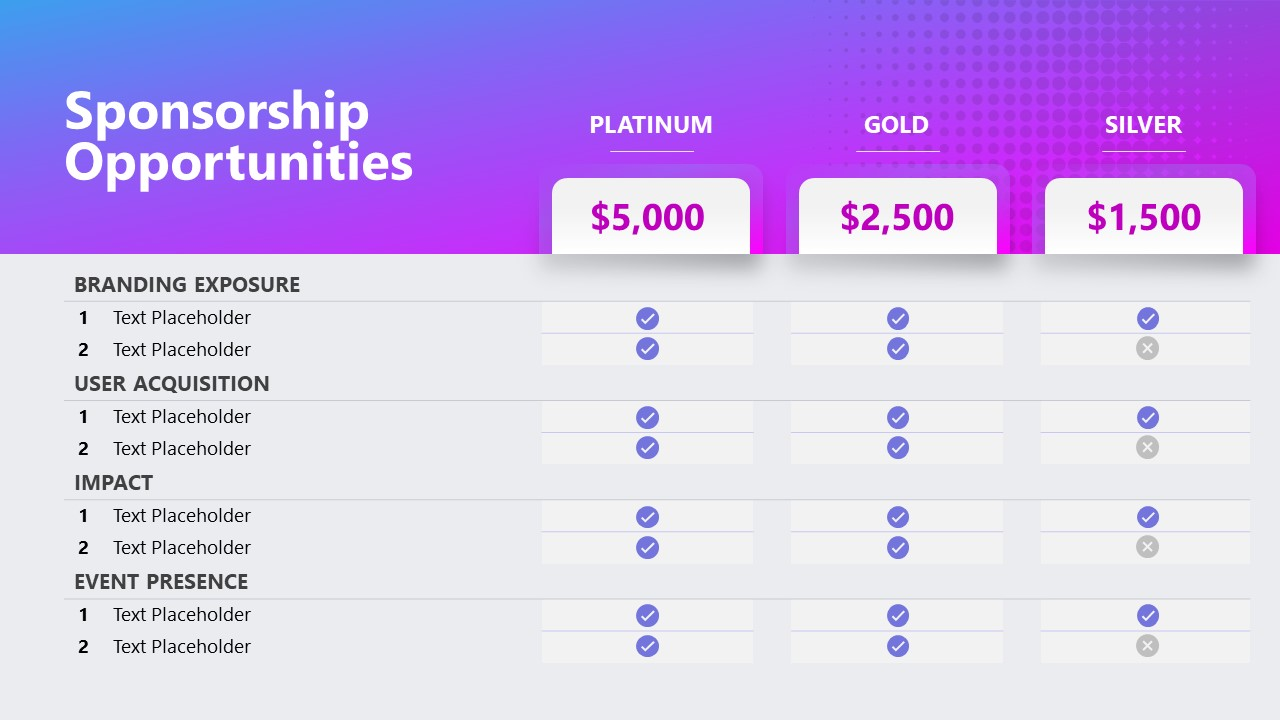
A sponsorship can be worth $5,000.
It can be worth $50,000.
It can be worth $500,000.
And here’s the uncomfortable part: the number is not determined by the size of the logo.
Sponsorship value is determined by what a sponsor can reasonably expect to gain from the relationship—and how difficult that opportunity would be to replicate somewhere else.
That distinction changes everything.
A conference with 800 attendees might command more sponsorship money than an event with 8,000 attendees. A niche executive audience can be more valuable than a massive general audience. A category-exclusive partnership can be worth substantially more than a package containing ten additional promotional placements.
When I evaluate sponsorship opportunities, I start with a simple question:
What business problem is this sponsorship helping the sponsor solve?
Not, “How much exposure do we have?”
Not, “How many people will see the logo?”
And certainly not, “What did we charge last year?”
The real work begins when you connect the sponsor’s objectives to measurable assets, audience quality, access, credibility, and activation potential.
That is how sponsorship value is determined.
Sponsorship Value Is More Than Exposure
Exposure matters.
But exposure by itself is a weak pricing model.
Imagine two sponsorship opportunities.
One gives a company its logo on a website receiving 100,000 monthly visitors.
The other gives a company direct access to 300 senior executives who are actively evaluating products in the sponsor’s category.
Which is worth more?
Usually, the second.
Why?
Because audience quality beats raw audience quantity when the business objective is specific.
Sponsors aren't necessarily buying eyeballs. They may be buying leads, relationships, credibility, hospitality, customer retention, employee engagement, thought leadership, geographic expansion, or category ownership.
Your job is to identify which of those outcomes your sponsorship can influence.
The Five Core Components of Sponsorship Value
A useful framework is to evaluate five dimensions:
- Audience
- Access
- Brand visibility
- Exclusivity
- Activation potential
Each one contributes to the overall value.
And they don't all carry equal weight.
1. Audience Quality Comes First
Start with the people.
Who attends, reads, watches, participates, or engages with your property?
Then go deeper.
How old are they? Where do they live? What industries do they represent? What positions do they hold? What purchasing authority do they have?
Most importantly:
Why does this audience matter to the sponsor?
A sponsor selling enterprise software may place enormous value on 500 qualified decision-makers.
A consumer brand may prefer 50,000 highly engaged consumers.
A regional bank may care more about households within a particular geographic market.
There is no universal audience value.
Build an Audience Value Profile
Instead of saying:
“We reach 25,000 people.”
Say:
“Our audience includes 25,000 consumers, with 62% falling within the sponsor's target demographic and 38% living within its priority markets.”
Now you're talking about business value.
That is a very different conversation.
2. Access Can Be More Valuable Than Advertising
This is one of the most overlooked elements in sponsorship pricing.
Sponsors often want access—not merely visibility.
That might mean:
- VIP receptions
- Executive roundtables
- Speaker introductions
- Private networking
- Product demonstrations
- Hosted experiences
- Customer hospitality
- Meet-and-greets
- Advisory sessions
- One-on-one introductions
A banner can't have a conversation.
A logo can't answer a question.
A carefully structured networking opportunity can.
That's why access should be treated as a premium asset rather than casually included in every sponsorship package.
3. Brand Visibility Creates Recognition
Visibility is still valuable. The mistake is assuming every impression has identical worth.
It doesn't.
Consider the difference between a logo appearing in a crowded sponsor grid and a brand being positioned as the exclusive provider of a strategically important experience.
Both generate visibility.
The second creates association.
And association is powerful.
If a technology company sponsors the event's innovation stage, for example, the brand begins to occupy a particular mental position: innovation, expertise, leadership.
That positioning can be more valuable than hundreds of additional logo placements.
Think in Terms of Context
Ask:
- Where does the brand appear?
- When does it appear?
- What is happening around it?
- Who sees it?
- What does the sponsor become associated with?
The context surrounding a sponsorship asset can dramatically affect its value.
4. Exclusivity Can Transform the Price
Exclusivity is one of the strongest levers available to a sponsorship seller.
Suppose you have four sponsors in the same category.
Each receives branding.
Each receives digital exposure.
Each receives event recognition.
Now imagine one sponsor receives exclusive rights within that category.
Suddenly, the opportunity changes.
The sponsor isn't simply buying exposure.
It is buying competitive separation.
That has economic value.
Category exclusivity should therefore carry a premium.
If three competing companies can purchase essentially the same visibility, you're selling advertising inventory.
If one company can own the category, you're selling strategic positioning.
Those are different products.
5. Activation Determines Whether Value Gets Realized
Here's where many sponsorship packages fall apart.
They sell benefits but don't help the sponsor use them.
A sponsor receives signage, social posts, tickets, booth space, and a logo on the website.
Then what?
The sponsorship becomes passive.
Strong sponsorships create opportunities for activation.
Activation might include:
- A branded customer experience
- A sampling program
- A contest
- An educational session
- A content series
- A product demonstration
- A hospitality lounge
- A lead-generation campaign
- A charitable initiative
- A post-event follow-up campaign
Activation gives the sponsor something to do with the audience.
And that can increase perceived value dramatically.
A Practical Sponsorship Value Matrix
Here is an illustrative way to evaluate sponsorship assets.
| Sponsorship Asset | Audience Reach | Strategic Value | Exclusivity Potential | Typical Value Level |
|---|---|---|---|---|
| Logo on website | High | Low | Low | $ |
| Social media recognition | Medium-High | Low-Medium | Low | $ |
| Event signage | Medium | Medium | Low-Medium | $$ |
| Exhibitor space | Medium | Medium-High | Medium | $$ |
| Speaking opportunity | Medium | High | Medium | $$$ |
| VIP hospitality | Low-Medium | High | High | $$$ |
| Category exclusivity | Variable | Very High | Very High | $$$$ |
| Naming rights | Very High | Very High | Very High | $$$$ |
| Executive networking | Low | Very High | High | $$$$ |
| Custom activation | Variable | Very High | Variable | $$$$ |
These aren't universal prices.
They are relative value indicators.
That distinction matters.
A $2,000 speaking opportunity at a small local gathering may be perfectly reasonable. The same speaking opportunity at a national industry event could be worth dramatically more.
Value depends on context.
How I Would Actually Calculate Sponsorship Value
I like to begin with an internal value scorecard.
Assign each major asset a value based on four questions:
Reach
How many relevant people will encounter the asset?
Relevance
How closely does the audience match the sponsor's target customer?
Scarcity
How difficult is the asset to obtain elsewhere?
Business Impact
How directly can the asset support the sponsor's objectives?
You can score each category from 1 to 10.
Then calculate a composite score.
For example:
| Factor | Score |
|---|---|
| Audience reach | 8 |
| Audience relevance | 10 |
| Brand visibility | 8 |
| Exclusivity | 9 |
| Access | 9 |
| Activation potential | 10 |
| Measurement potential | 8 |
| Total | 62/70 |
That score doesn't magically tell you to charge $62,000.
It does something more useful.
It forces you to understand why the opportunity deserves a particular price.
Then Look at the Sponsor's Economics
This is where sophisticated sponsorship pricing gets interesting.
Suppose a sponsor makes an average of $10,000 in gross profit from a new customer.
If your sponsorship can realistically generate 20 qualified opportunities, the economics are very different from a sponsorship that generates three.
You don't need to promise that the sponsor will make a specific return.
But you should understand the potential economics.
Ask:
- What is a typical customer worth?
- What is a qualified lead worth?
- What does customer acquisition normally cost?
- How important is brand awareness?
- Is the sponsor entering a new market?
- Is the sponsor launching a product?
- Does the sponsor need credibility?
- Does the sponsor need relationships with specific decision-makers?
The answers help you position the sponsorship.
And they prevent you from pricing based on guesswork.
My Biggest Sponsorship Pricing Lesson
I learned an important lesson after seeing sponsors react very differently to packages that looked almost identical on paper.
The difference wasn't the number of benefits.
It was the relevance of the benefits.
One package had more promotional inventory but fewer opportunities to connect with the sponsor's ideal customers.
Another package had fewer individual benefits but included meaningful access, category positioning, and a customized activation.
The second opportunity generated much more interest.
That experience changed how I think about sponsorship value.
A long list of benefits does not automatically create a valuable package.
Sometimes ten mediocre benefits are less valuable than three strategically chosen ones.
That is why I recommend creating an internal asset inventory before creating sponsorship packages.
List every property you can offer.
Then classify each asset by:
- Visibility
- Audience quality
- Exclusivity
- Access
- Scarcity
- Activation potential
- Production cost
- Measurement potential
Now you have something much more useful than a brochure.
You have a pricing system.
Don't Forget Scarcity
Scarcity is an economic principle that applies beautifully to sponsorship.
If you have unlimited social-media mentions, they're difficult to price at a premium.
If you have one presenting sponsor, that position is inherently scarce.
If you have one category-exclusive automotive partner, there is only one position available.
If you have 20 VIP tables, they're more scarce than general admission tickets.
The fewer opportunities available, the more carefully you should price them.
But there's a catch.
Artificial scarcity doesn't work if the asset isn't valuable.
Calling something “exclusive” doesn't make it valuable.
It has to be something the sponsor actually wants.
Measure Value After the Sponsorship
The strongest sponsorship programs don't stop measuring when the contract is signed.
They get smarter afterward.
Track:
- Impressions
- Attendance
- Qualified leads
- Meetings
- Engagement
- Content views
- Email performance
- Product interactions
- Hospitality participation
- Customer conversations
- Social mentions
- Conversion activity
- Sponsor satisfaction
Not every sponsorship needs the same metrics.
A branding partnership may emphasize awareness.
A lead-generation partnership may emphasize qualified opportunities.
A hospitality sponsorship may emphasize relationship development.
Measurement should follow the objective.
The Real Formula
If you want a simple framework, think about sponsorship value this way:
Sponsorship Value = Relevant Audience + Meaningful Access + Strategic Visibility + Exclusivity + Activation + Measurable Business Opportunity
Notice what's missing.
A giant logo isn't there.
Neither is a long list of promotional benefits.
And neither is “we've always charged this amount.”
Your sponsorship is worth what the opportunity means to the right sponsor.
That is why the same event can command dramatically different prices from different companies.
A sponsor selling a $30 product may value your audience one way.
A sponsor selling a $100,000 enterprise solution may value it completely differently.
Your job isn't to discover one magical sponsorship price.
Your job is to understand the economics of the opportunity.
The Bottom Line: Stop Selling Inventory
Here's the provocative part.
If your sponsorship proposal is primarily a list of things the sponsor gets, you're probably leaving money on the table.
Logos.
Banners.
Emails.
Tickets.
Posts.
Booths.
Those are assets.
They aren't the value itself.
The value is what those assets can help the sponsor accomplish.
That's the shift.
When you understand your audience, identify scarce assets, create meaningful access, build intelligent activation opportunities, and connect everything to sponsor objectives, your pricing becomes easier to defend.
You stop saying:
“We charge $25,000 because that's our Gold level.”
You start saying:
“This partnership gives you category exclusivity, direct access to your target decision-makers, premium brand association, and a customized lead-generation platform.”
That is a much stronger conversation.
And perhaps the most important lesson is this:
Don't price the sponsorship you have. Price the business opportunity you are creating.
That is where sponsorship value lives.
- Arts
- Business
- Computers
- Jocuri
- Health
- Home
- Kids and Teens
- Money
- News
- Personal Development
- Recreation
- Regional
- Reference
- Science
- Shopping
- Society
- Sports
- Бизнес
- Деньги
- Дом
- Досуг
- Здоровье
- Игры
- Искусство
- Источники информации
- Компьютеры
- Личное развитие
- Наука
- Новости и СМИ
- Общество
- Покупки
- Спорт
- Страны и регионы
- World

 English
 Russian
 French
 Spanish
 Portuguese
 Deutsch
 Turkish
 Dutch
Dutch
 Italiano
 Arabic
 Portuguese (Brazil)
 Greek
Greek