
What are nonwoven materials: types and applications
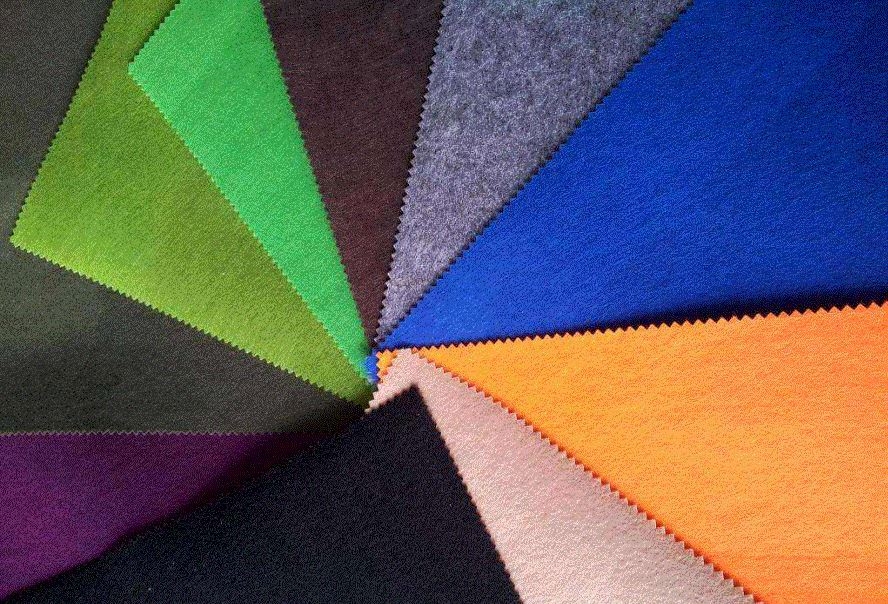
What is non-woven material
Non-woven fabrics have properties and characteristics that are difficult to obtain from natural fabrics:
- strength, elasticity, wear resistance;
- coating resistance to damage;
- breathability - allows air to pass through;
- drainage - do not retain moisture;
- ability to withstand a wide range of temperatures and weather conditions;
- resistance to some chemicals;
- high fire resistance;
- light protection
It is these features that force clothing manufacturers to use non-woven materials instead of conventional fabrics. But we are surrounded by much more things from such paintings than we think.
Nonwoven materials production technology
Such canvases appeared due to the need to dispose of fibrous waste that remains during the process of working with fabric or leather. They also helped a lot in times of shortage: during the Second World War, for example. People understood: this material is very convenient.
The technology of its production is very different from what we see in weaving. To get an item from any fabric, you need to go through several steps:
- Collect raw materials and prepare them for work;
- Make threads and prepare them;
- Weave the threads into a single fabric;
- Prepare the fabric for final finishing;
- Finish.
But nonwoven material has a simpler production cycle:
- Fiber production;
- Fabric formation - laying fibers in a given direction;
- Finishing work - drying, bonding, painting.
Because of this simplified technology, fabrics are cheaper and are produced faster than fabrics, but are not inferior in quality.
Types of nonwoven materials
Textiles are classified according to the method of bonding the fibers. And types of nonwoven materials are distinguished according to bonding methods. They are as follows:
- adhesive - fabric duplicating materials, bindings in printing, linoleum base;
- knitting-punching and thread-stitching - cloth, drape, batting;
- needle-punched, when the fibers are punched with special heated needles - insulation for clothing;
- felting - felt materials made from natural or mixed fibers;
- hydro-jet - disposable items;
- aeroforming—baby diapers;
- thermal - furniture fillers, inexpensive insulation materials.
If the threads of the fabric are connected using a machine, then the fibers of the non-woven fabric are fastened using a stream of water or air, temperature or glue.
Types of nonwoven materials
Canvases can be classified differently: by type of raw material. Fibers used in creating these materials:
- synthetics - polyester, nylon;
- natural - cotton and wool;
- artificial fibers - cellulose, viscose materials;
- mixed - synthetic with the addition of natural ones.
Based on their application, nonwoven materials are also divided into several types:
- technical fabrics;
- materials for medical and sanitary purposes;
- fabrics for the clothing industry.
The most popular non-woven fabrics:
- felt - created from wool fibers, used for making shoes, clothing and home textiles;
- batting - consists of cotton fibers, it is used to produce household materials;
- felt - the main raw material for this material is rabbit or goat fluff. Popular in toy production;
- spunbond - a fabric made of synthetic fibers, used in gardening as a covering material;
- knitwear - consists of different types of threads, widely used in tailoring.
Application of nonwoven materials
Due to the huge number of their advantages, various non-woven fabrics are widely used by people. And it's not just about creating clothes. There are other options for using such materials:
- hygiene products - mainly for women and children;
- dry and wet wipes;
- products necessary to support the healthcare sector: gowns, masks, bandages;
- work clothes and chemical protection suits;
- household items: tea bags, cleaning cloths, filters;
- “parts” of the car: airbags, molded liners.
Non-woven fabrics have been present in many areas of human life for many years. In industries, households, medicine and even road work. Such paintings have a long history - this is an indicator that they were studied and improved. Now their use has become an integral part of our lives: it is not expensive and very convenient.
- Arts
- Business
- Computers
- Giochi
- Health
- Home
- Kids and Teens
- Money
- News
- Personal Development
- Recreation
- Regional
- Reference
- Science
- Shopping
- Society
- Sports
- Бизнес
- Деньги
- Дом
- Досуг
- Здоровье
- Игры
- Искусство
- Источники информации
- Компьютеры
- Личное развитие
- Наука
- Новости и СМИ
- Общество
- Покупки
- Спорт
- Страны и регионы
- World

 English
 Russian
 French
 Spanish
 Portuguese
 Deutsch
 Turkish
 Dutch
Dutch
 Arabic
 Romaian
 Portuguese (Brazil)
 Greek
Greek