
The Rise of Robotics: Transforming Our World
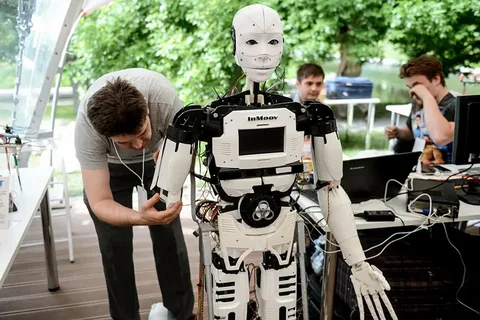
Robotics, a field at the intersection of engineering, computer science, and artificial intelligence, has made remarkable strides in recent years. As robots increasingly integrate into various sectors, they are reshaping industries, enhancing productivity, and even changing the way we interact with technology. This article explores the evolution of robotics, its current applications, and the future possibilities that lie ahead.
A Brief History of Robotics
The concept of automation dates back to ancient times, with myths and legends featuring mechanical beings. However, the modern field of robotics began in the 20th century. The term "robot" was first coined by Czech playwright Karel Čapek in his 1920 play "R.U.R." (Rossum's Universal Robots), which imagined artificial beings designed to serve humans.
The first industrial robot, Unimate, was developed in the 1950s by George Devol and later implemented in a General Motors factory in the 1960s. This marked the beginning of robots being used in manufacturing, a trend that has only grown over the decades.
Current Applications of Robotics
Today, robots are employed in a variety of sectors, including:
-
Manufacturing: Robots are ubiquitous in factories, performing tasks such as assembly, welding, painting, and packaging. Their precision and efficiency significantly reduce production costs and increase output.
-
Healthcare: Surgical robots, such as the da Vinci Surgical System, assist surgeons in performing minimally invasive procedures with enhanced accuracy. Robots are also used in rehabilitation and elderly care, helping patients regain mobility and independence.
-
Agriculture: Agricultural robots, or "agbots," automate tasks such as planting, harvesting, and monitoring crop health. This technology helps optimize resource use and improve yield, addressing food security challenges.
-
Logistics: Robotics plays a crucial role in warehousing and supply chain management. Automated guided vehicles (AGVs) and drones are used for inventory management and delivery, streamlining operations.
-
Service Industries: From hospitality robots serving food in restaurants to customer service bots answering queries, robotics is enhancing the customer experience in various sectors.
-
Exploration: Robots are instrumental in exploring environments that are hazardous or inaccessible to humans. Examples include Mars rovers and underwater drones that collect data for scientific research.
The Impact of Artificial Intelligence
The integration of artificial intelligence (AI) has propelled robotics into a new era. Machine learning algorithms enable robots to learn from their environment, adapt to new tasks, and improve their performance over time. This capability is particularly evident in areas like autonomous vehicles, where AI allows cars to navigate complex road conditions and make real-time decisions.
Ethical and Societal Considerations
As robotics technology advances, it raises important ethical and societal questions. Concerns about job displacement, privacy, and security are paramount. While robots can increase efficiency, they also pose challenges for the workforce. It is crucial for policymakers and industry leaders to address these issues and ensure that the benefits of robotics are shared equitably.
The Future of Robotics
The future of robotics holds immense potential. Key areas of development include:
-
Collaborative Robots (Cobots): Designed to work alongside humans, cobots enhance productivity while ensuring safety in shared workspaces.
-
Soft Robotics: Inspired by biological systems, soft robots are flexible and adaptable, making them suitable for tasks in delicate environments, such as healthcare and agriculture.
-
Human-Robot Interaction: Advances in natural language processing and emotional AI will lead to more intuitive and meaningful interactions between humans and robots, enhancing their roles in everyday life.
-
Sustainability: Robotics can contribute to sustainability efforts by optimizing resource use, reducing waste, and enabling cleaner manufacturing processes.
Conclusion
Robotics is rapidly evolving, impacting nearly every aspect of our lives. As technology continues to advance, the possibilities for robots are expanding, offering innovative solutions to complex challenges. By embracing this transformation and addressing the associated ethical concerns, we can harness the power of robotics to create a better, more efficient future.
- Arts
- Business
- Computers
- Jogos
- Health
- Início
- Kids and Teens
- Money
- News
- Personal Development
- Recreation
- Regional
- Reference
- Science
- Shopping
- Society
- Sports
- Бизнес
- Деньги
- Дом
- Досуг
- Здоровье
- Игры
- Искусство
- Источники информации
- Компьютеры
- Личное развитие
- Наука
- Новости и СМИ
- Общество
- Покупки
- Спорт
- Страны и регионы
- World

 English
 Russian
 French
 Spanish
 Deutsch
 Turkish
 Dutch
Dutch
 Italiano
 Arabic
 Romaian
 Portuguese (Brazil)
 Greek
Greek