
How Does Intrapreneurship Differ from Entrepreneurship?
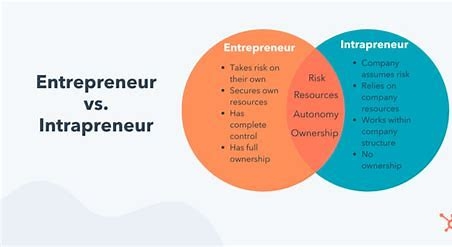
In today’s fast-paced and innovation-driven world, both entrepreneurship and intrapreneurship have emerged as powerful forces shaping the future of business. While they share similarities in fostering innovation and taking initiative, they differ significantly in their approach, context, and risk structure. Understanding the distinction between these two concepts is crucial for individuals considering their career paths, as well as organizations aiming to stay competitive.
Defining Entrepreneurship
Entrepreneurship involves the process of starting a new business from scratch. Entrepreneurs identify opportunities in the market, create business plans, secure funding, build teams, and launch products or services. They operate independently, which means they bear all the financial and operational risks, but they also reap all the rewards if the business succeeds.
Entrepreneurs are known for their ability to think creatively, tolerate risk, and persevere through uncertainty. Their ventures often bring disruptive innovation to the market, challenging existing norms and industries.
Defining Intrapreneurship
Intrapreneurship, on the other hand, occurs within the boundaries of an existing organization. Intrapreneurs are employees who are given the freedom and resources to develop new ideas, products, or services. While they act entrepreneurially, their innovation is supported and funded by the company they work for.
The key benefit of intrapreneurship is that individuals can innovate without the personal financial risk typically associated with starting a business. The organization often shares the risk and reward, while also providing access to infrastructure, mentorship, and market reach that a solo entrepreneur may not have.
Key Differences
| Aspect | Entrepreneurship | Intrapreneurship |
|---|---|---|
| Initiative | Starts own business | Innovates within an organization |
| Risk | Assumes full personal and financial risk | Shared risk with the organization |
| Resources | Self-funded or seeks external investors | Supported by company resources |
| Reward | Keeps all profits or losses | May receive bonuses, promotions, or recognition |
| Control | Has full control over business decisions | Limited by company policies and leadership |
| Flexibility | High degree of flexibility | Operates within company’s structure |
| Stability | Less stable in early stages | More stable due to organizational backing |
Why the Distinction Matters
Recognizing the differences between intrapreneurship and entrepreneurship helps in aligning personal goals with professional environments. Some people thrive in the structured support of an organization while still wanting to innovate—making them ideal intrapreneurs. Others may crave complete autonomy and are willing to take greater risks to bring their vision to life—making them better suited for entrepreneurship.
For companies, encouraging intrapreneurship can lead to greater innovation, employee satisfaction, and competitiveness without losing talent to the startup world.
- Arts
- Business
- Computers
- Jeux
- Health
- Domicile
- Kids and Teens
- Argent
- News
- Personal Development
- Recreation
- Regional
- Reference
- Science
- Shopping
- Society
- Sports
- Бизнес
- Деньги
- Дом
- Досуг
- Здоровье
- Игры
- Искусство
- Источники информации
- Компьютеры
- Личное развитие
- Наука
- Новости и СМИ
- Общество
- Покупки
- Спорт
- Страны и регионы
- World

 English
 Russian
 Spanish
 Portuguese
 Deutsch
 Turkish
 Dutch
Dutch
 Italiano
 Arabic
 Romaian
 Portuguese (Brazil)
 Greek
Greek