
How Do I Give Effective Feedback?
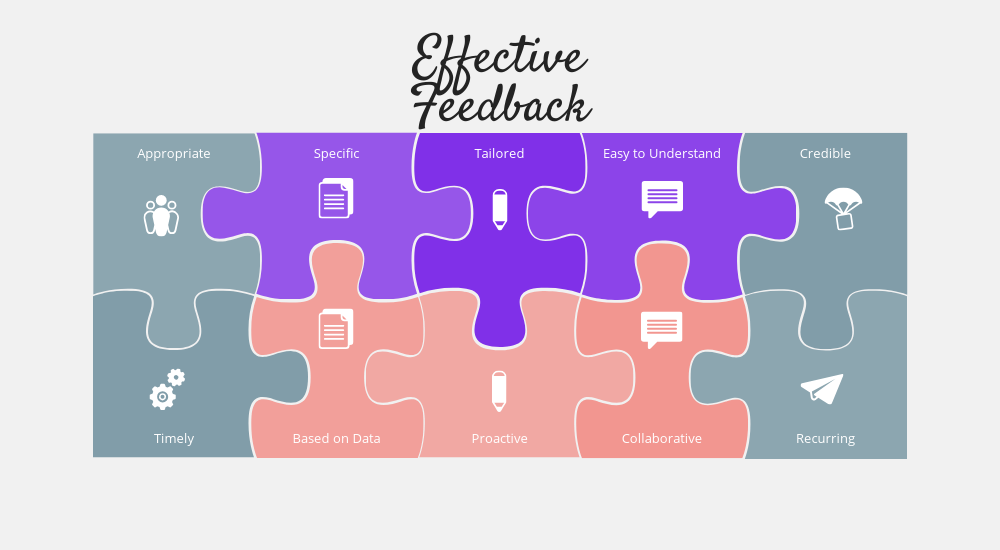
Giving effective feedback is an essential skill in both personal and professional relationships. When done well, feedback fosters growth, builds trust, and improves performance. However, when delivered poorly, it can create tension, confusion, and discouragement. Here’s a guide to giving feedback that’s constructive, clear, and impactful.
1. Be Specific
Avoid vague statements like “Good job” or “That wasn’t great.” Instead, point out exactly what was effective or needs improvement. For example, “Your presentation was well-organized, especially the way you explained the budget breakdown” gives the receiver a clear idea of what they did well.
2. Focus on Behavior, Not Personality
Feedback should address actions, not character. Saying “You interrupted me several times during the meeting” is more constructive than saying “You’re rude.” This keeps the feedback objective and less emotionally charged.
3. Use the “Sandwich” Method Cautiously
While it’s common to start with a positive, deliver the criticism, and end on a positive, overusing this technique can seem insincere. Instead, aim for balance and relevance. The key is to be honest without being harsh.
4. Be Timely
Feedback is most useful when given soon after the event. The closer in time, the more likely the person will recall the context and be able to act on the feedback effectively.
5. Ask for Permission
This shows respect and prepares the other person mentally. You might say, “Do you mind if I share some feedback about today’s meeting?” This makes the conversation feel collaborative rather than confrontational.
6. Offer Suggestions, Not Just Criticism
Highlight areas for improvement, but also suggest possible solutions. Instead of just saying “This report was confusing,” try “You could make the report clearer by using bullet points and subheadings.”
7. Tailor Your Approach
Everyone reacts differently to feedback. Know your audience—some people prefer directness, while others may need a softer approach. Tailoring your style makes the feedback more likely to be received positively.
8. Encourage Two-Way Communication
Invite the other person to share their perspective. This makes the process more engaging and helps build trust. For example, ask, “How did you feel the project went?” or “What would you do differently next time?”
9. Follow Up
After giving feedback, follow up to see how the person is doing. This shows that your intention is genuinely to support their growth and that you care about their progress.
10. Practice Empathy
Effective feedback is rooted in empathy. Put yourself in the other person’s shoes. Would you feel motivated or demoralized hearing this? That mindset shift can make your feedback more respectful and effective.
By applying these principles, you can turn feedback into a powerful tool for development and collaboration. Done thoughtfully, feedback becomes less about correction and more about connection and continuous improvement.
- Arts
- Business
- Computers
- Jocuri
- Health
- Home
- Kids and Teens
- Money
- News
- Personal Development
- Recreation
- Regional
- Reference
- Science
- Shopping
- Society
- Sports
- Бизнес
- Деньги
- Дом
- Досуг
- Здоровье
- Игры
- Искусство
- Источники информации
- Компьютеры
- Личное развитие
- Наука
- Новости и СМИ
- Общество
- Покупки
- Спорт
- Страны и регионы
- World

 English
 Russian
 French
 Spanish
 Portuguese
 Deutsch
 Turkish
 Dutch
Dutch
 Italiano
 Arabic
 Portuguese (Brazil)
 Greek
Greek
