
What Do I Wear to an Interview / Onsite?
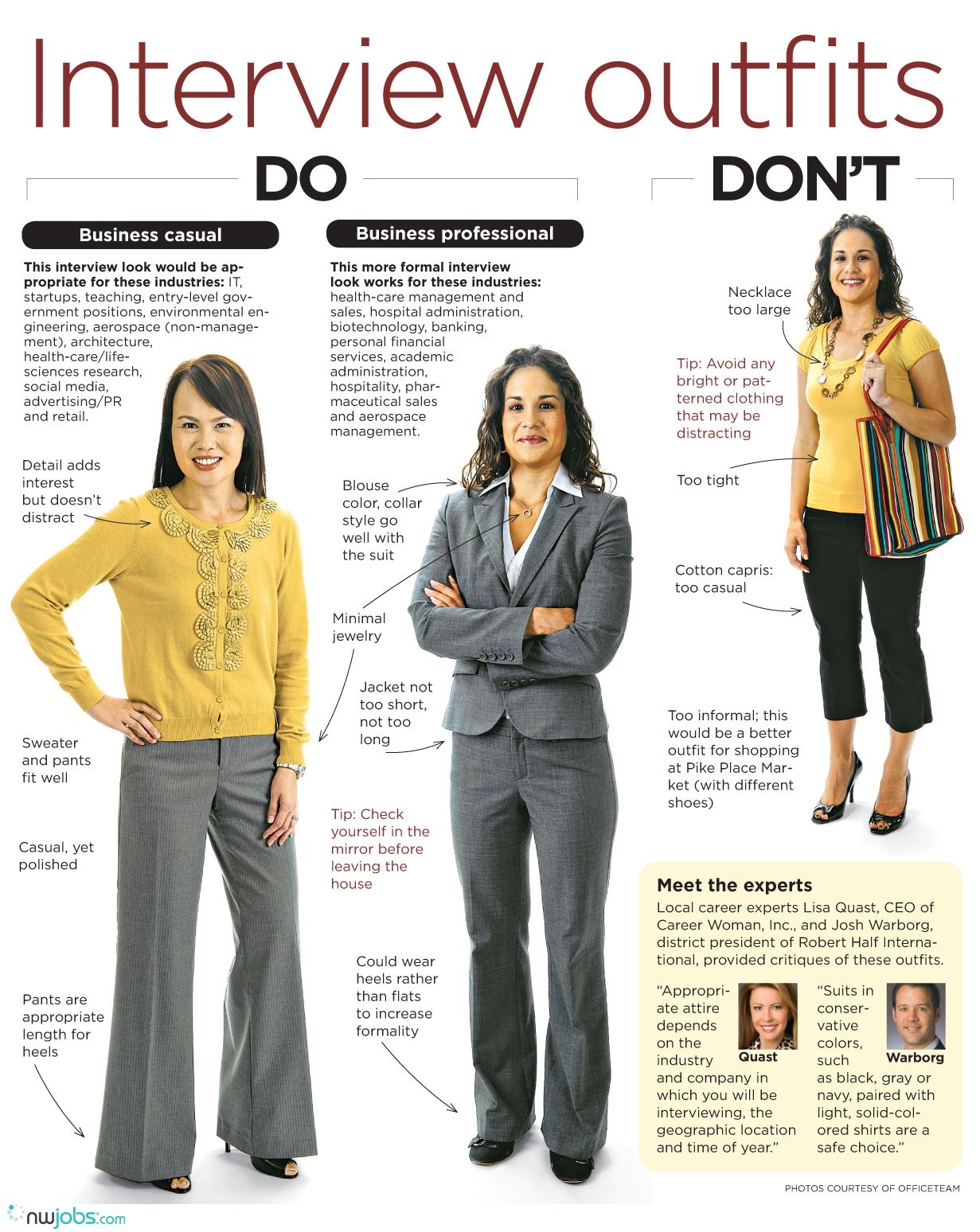
What you wear to an interview can significantly influence the first impression you make. While skills and experience ultimately determine hiring decisions, appearance communicates professionalism, cultural fit, and attention to detail.
Research the Company Culture First
The right interview outfit depends heavily on the company’s industry, size, and dress code.
Ways to find out:
-
Check the company’s website and social media for employee photos.
-
Ask your recruiter or HR contact directly.
-
Review the industry norm—finance and law are typically formal; tech startups may be casual.
General Guidelines by Dress Code
-
Formal / Business Professional
-
Men: Dark suit, white or light shirt, conservative tie, polished shoes.
-
Women: Suit with skirt or pants, blouse, closed-toe shoes, minimal accessories.
-
-
Business Casual
-
Men: Dress pants or chinos, button-up shirt or polo, optional blazer.
-
Women: Dress pants or skirt, blouse or knit top, flats or low heels.
-
-
Casual Workplaces
-
Neat, clean, and professional even if casual—no ripped jeans, flip-flops, or overly flashy attire.
-
Special Considerations for Onsite Interviews
-
Comfort matters: You may tour the facility or stand for long periods.
-
Layers are smart: Offices can vary in temperature.
-
Avoid heavy perfume or cologne: Scent sensitivity is common.
Small Details That Make a Big Difference
-
Clothes should be wrinkle-free and well-fitted.
-
Shoes should be clean and in good condition.
-
Grooming—hair, nails, and hygiene—should be neat and professional.
Example
For a marketing agency with a business casual vibe, you might choose tailored trousers, a crisp shirt, and a smart blazer—professional without being overly formal.
Conclusion:
Your interview outfit should show respect for the opportunity and reflect that you’ve taken the time to understand the company culture. When in doubt, err on the side of being slightly more formal.
- Arts
- Business
- Computers
- Juegos
- Health
- Home
- Kids and Teens
- Money
- News
- Personal Development
- Recreation
- Regional
- Reference
- Science
- Shopping
- Society
- Sports
- Бизнес
- Деньги
- Дом
- Досуг
- Здоровье
- Игры
- Искусство
- Источники информации
- Компьютеры
- Личное развитие
- Наука
- Новости и СМИ
- Общество
- Покупки
- Спорт
- Страны и регионы
- World

 English
 Russian
 French
 Portuguese
 Deutsch
 Turkish
 Dutch
Dutch
 Italiano
 Arabic
 Romaian
 Portuguese (Brazil)
 Greek
Greek