
What Is a Session?
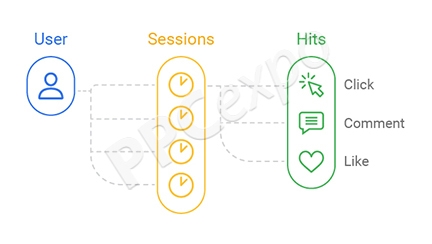
When analyzing website performance in Google Analytics, one of the most frequently encountered terms is “session.” It may seem like a simple concept, but understanding how sessions are defined and measured is critical for interpreting your analytics data correctly. Many decisions about marketing effectiveness, user engagement, and conversion rates depend on how sessions are counted.
This article will explain what a session is, how Google Analytics defines and measures it, why it matters, and some key caveats that every digital marketer should know.
Defining a Session
A session is a group of interactions that a single user has with your website within a given time frame. These interactions can include:
-
Pageviews
-
Events (like video plays, downloads, or button clicks)
-
Transactions (such as purchases)
-
Social interactions
Think of a session as a container that holds all of the user’s actions while they are actively engaged with your site.
How Google Analytics Measures Sessions
Google Analytics uses specific rules to determine when a session starts and ends:
-
Session Start:
A session begins the moment a user lands on your site (triggered by the Google Analytics tracking code). -
Session Timeout:
By default, a session ends after 30 minutes of inactivity. If the user doesn’t interact with your site for 30 minutes, and then clicks on a new page, a new session is counted.(You can customize the timeout between 1 minute and 4 hours depending on your needs.)
-
Session Ends at Midnight:
Sessions automatically reset at midnight. If a user is browsing your site from 11:55 PM to 12:05 AM, Google Analytics will count two sessions, not one. -
New Campaign Source:
If a user returns to your site via a different traffic source (e.g., first through Google search, then later through an email link), a new session is created—even if the 30-minute timeout has not been reached.
Example of Sessions in Action
-
Scenario 1: A user visits your site at 2:00 PM, browses several pages, and leaves at 2:15 PM. This is one session.
-
Scenario 2: The same user comes back at 4:00 PM through a new ad campaign. That’s another session, even though it’s the same user.
-
Scenario 3: A user lands on your site, reads one page, gets distracted for 40 minutes, then clicks another link. Google Analytics will count two sessions: one before the timeout and one after.
Why Sessions Matter
Sessions are essential because they help you understand user behavior in context. A session is not just about how many people visit your site—it tells you how long and how often users interact with your content.
Key uses of sessions include:
-
Measuring Traffic Volume: Total sessions show how much overall activity your site receives.
-
Comparing Time Periods: Are sessions increasing after launching a campaign or declining after a site change?
-
Analyzing Engagement: Combining session data with metrics like average session duration or pages per session helps assess how engaging your content is.
-
Attribution: Sessions help determine which campaigns, sources, or landing pages are driving conversions.
Sessions vs. Users vs. Pageviews
It’s easy to confuse sessions with other metrics:
-
Users: Represent individual visitors. A single user can have multiple sessions.
-
Sessions: Represent visits or periods of activity. A user who visits your site three times in a week generates three sessions.
-
Pageviews: Represent the number of pages viewed. One session might include many pageviews.
Example:
-
1 user visits your site 3 times (3 sessions) and views 15 pages total.
Common Misunderstandings About Sessions
-
“Sessions equal people.”
Incorrect—sessions measure visits, not individuals. One person can generate multiple sessions. -
“A session lasts as long as the user is on the site.”
Not always—sessions time out after 30 minutes of inactivity or reset at midnight. -
“All sessions are equally valuable.”
False—some sessions represent high-value behaviors (like purchases), while others reflect passive browsing.
Optimizing Around Sessions
To get the most value from session data:
-
Monitor session trends: Look for increases or decreases after marketing campaigns.
-
Track session quality: Pair with metrics like bounce rate, conversion rate, and duration.
-
Segment sessions: Use dimensions like traffic source, device type, or geography to understand different user groups.
-
Customize session length: If your site has longer or shorter expected engagement (e.g., streaming video vs. news articles), adjust the session timeout in settings.
Conclusion
A session in Google Analytics is much more than a simple “visit.” It represents a complete picture of how a user interacts with your website during a defined time period. Understanding how sessions work—and how they differ from users and pageviews—provides critical context for evaluating site performance and making data-driven decisions.
By paying attention to session trends, quality, and segmentation, you can uncover deeper insights into your audience and refine your digital strategy for better results.
- Arts
- Business
- Computers
- Juegos
- Health
- Home
- Kids and Teens
- Money
- News
- Personal Development
- Recreation
- Regional
- Reference
- Science
- Shopping
- Society
- Sports
- Бизнес
- Деньги
- Дом
- Досуг
- Здоровье
- Игры
- Искусство
- Источники информации
- Компьютеры
- Личное развитие
- Наука
- Новости и СМИ
- Общество
- Покупки
- Спорт
- Страны и регионы
- World

 English
 Russian
 French
 Portuguese
 Deutsch
 Turkish
 Dutch
Dutch
 Italiano
 Arabic
 Romaian
 Portuguese (Brazil)
 Greek
Greek
