
How Can I Segment Retention Analytics (Cohorts, Behavior, etc.)?
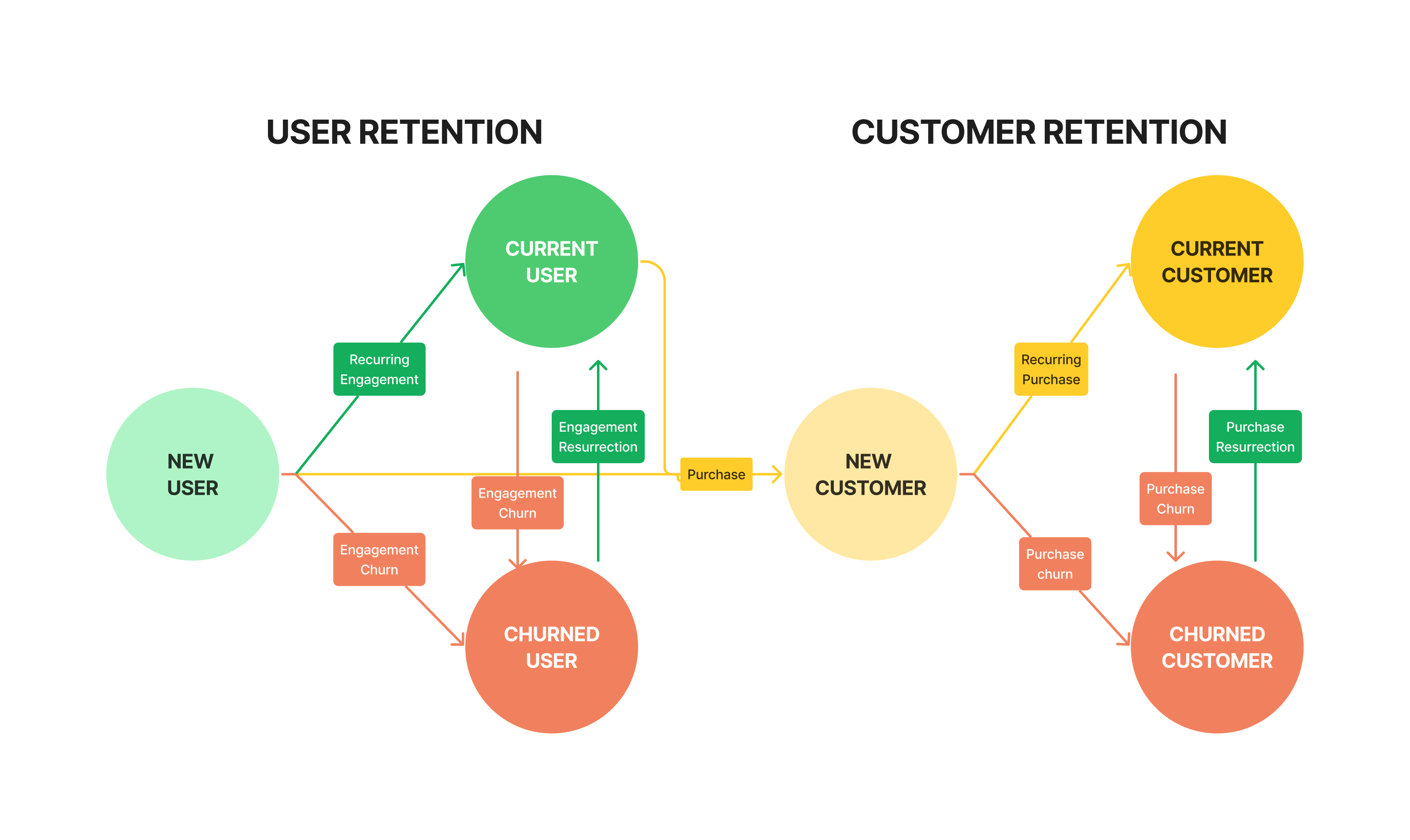
Tracking retention is one of the most important steps in understanding whether your product is delivering ongoing value. But looking at retention as a single metric (like a monthly retention rate) isn’t enough. To gain real insight, businesses must segment retention analytics—breaking users into meaningful groups that reveal patterns in engagement, churn, and loyalty.
This article explains how segmentation works, why it matters, and the most effective methods for analyzing retention.
Why Segment Retention Analytics?
Without segmentation, retention data can be misleading. For example:
-
A SaaS product may show a 70% retention rate at 6 months, but new users might be churning faster than long-term ones.
-
An e-commerce site may retain frequent shoppers but lose discount-driven customers.
Segmentation helps answer:
-
Which types of users stay longer?
-
When do customers churn?
-
What behaviors predict loyalty?
By breaking retention into cohorts and segments, businesses uncover actionable insights to improve onboarding, engagement, and monetization.
Common Approaches to Retention Segmentation
1. Cohort Analysis
Definition: Cohorts are groups of users who share a common characteristic—most often their start date.
-
Acquisition cohorts: Grouped by signup month, week, or campaign.
-
Behavioral cohorts: Grouped by shared actions (e.g., users who completed onboarding vs. those who didn’t).
Why It Matters: Cohort analysis shows how retention changes over time, allowing you to spot trends.
Example: If users from July 2023 have lower Day 30 retention than June 2023 users, something changed in acquisition quality or onboarding that month.
2. Behavioral Segmentation
Definition: Users grouped by what they do inside the product.
Examples:
-
Customers who use a core feature vs. those who don’t.
-
Users with high vs. low session frequency.
-
Shoppers who buy premium products vs. one-time discount buyers.
Why It Matters: Retention is often higher among users who engage with key features. Behavioral data highlights which actions drive long-term loyalty.
3. Demographic Segmentation
Definition: Grouping based on user characteristics such as:
-
Age
-
Gender
-
Location
-
Profession
Why It Matters: Different demographics often have different retention patterns. For instance, younger users might have lower loyalty in a finance app compared to older professionals.
4. Channel-Based Segmentation
Definition: Grouping users by acquisition source.
Examples:
-
Paid ads vs. organic search.
-
Social media vs. referrals.
-
Affiliate partners vs. email campaigns.
Why It Matters: Retention often varies significantly by acquisition channel. Some campaigns may bring volume but poor-quality users with low retention.
5. Revenue or Value-Based Segmentation
Definition: Grouping users by spending or value contribution.
-
High-value customers (VIPs, enterprise accounts).
-
Medium-value customers.
-
Low-value or free users.
Why It Matters: Retaining a high-value customer can be 10–20x more impactful than retaining a low-value one.
6. Lifecycle Stage Segmentation
Definition: Analyzing retention by where users are in their journey.
-
New users (first 30 days).
-
Engaged users (30–180 days).
-
Loyal or power users (6+ months).
Why It Matters: Strategies for reducing churn vary by lifecycle stage. Early churn may require onboarding improvements, while long-term churn may signal feature fatigue.
How to Conduct Retention Segmentation
-
Collect Data
Use tools like Google Analytics, Mixpanel, or Amplitude to capture user actions, sessions, and revenue data. -
Define Key Metrics
Decide which retention measures matter most:
-
Day 1, 7, 30 retention.
-
Customer Lifetime Value (LTV).
-
Net Revenue Retention (NRR).
-
Group Users into Segments
Apply one or more segmentation approaches (cohorts, behavior, demographics). -
Visualize Retention Curves
Retention charts (curves or tables) show how long different cohorts stick around. -
Interpret Results
Look for patterns:
-
Do users who finish onboarding stay longer?
-
Which acquisition channels bring the most loyal customers?
-
Act on Insights
Adjust acquisition campaigns, improve onboarding flows, or enhance feature adoption strategies based on what segmentation reveals.
Case Example: SaaS Platform
-
Observation: Overall retention = 70% at 90 days.
-
Segmentation:
-
Users acquired via referral = 85% retention.
-
Users acquired via Facebook ads = 50% retention.
-
-
Action: Shifted ad budget toward referral incentives, while redesigning Facebook ad targeting.
-
Result: Overall retention increased to 78% within 3 months.
Tools for Retention Segmentation
-
Google Analytics – Basic cohort and channel segmentation.
-
Mixpanel – Powerful cohort and behavioral analysis.
-
Amplitude – Deep product analytics with retention curves.
-
Tableau / Power BI – Custom dashboards for advanced segmentation.
Conclusion
Retention analytics are most powerful when segmented. By using cohorts, behavior, demographics, channels, and revenue groups, companies gain deeper insights into who stays, who leaves, and why.
Segmentation enables businesses to design targeted strategies for different user groups, optimize acquisition spending, and maximize long-term loyalty.
Instead of treating retention as a single number, break it down—and you’ll uncover the levers that drive sustainable growth.
- Arts
- Business
- Computers
- Spiele
- Health
- Startseite
- Kids and Teens
- Geld
- News
- Personal Development
- Recreation
- Regional
- Reference
- Science
- Shopping
- Society
- Sports
- Бизнес
- Деньги
- Дом
- Досуг
- Здоровье
- Игры
- Искусство
- Источники информации
- Компьютеры
- Личное развитие
- Наука
- Новости и СМИ
- Общество
- Покупки
- Спорт
- Страны и регионы
- World

 English
 Russian
 French
 Spanish
 Portuguese
 Turkish
 Dutch
Dutch
 Italiano
 Arabic
 Romaian
 Portuguese (Brazil)
 Greek
Greek