
What is Inflation?
What is Inflation?
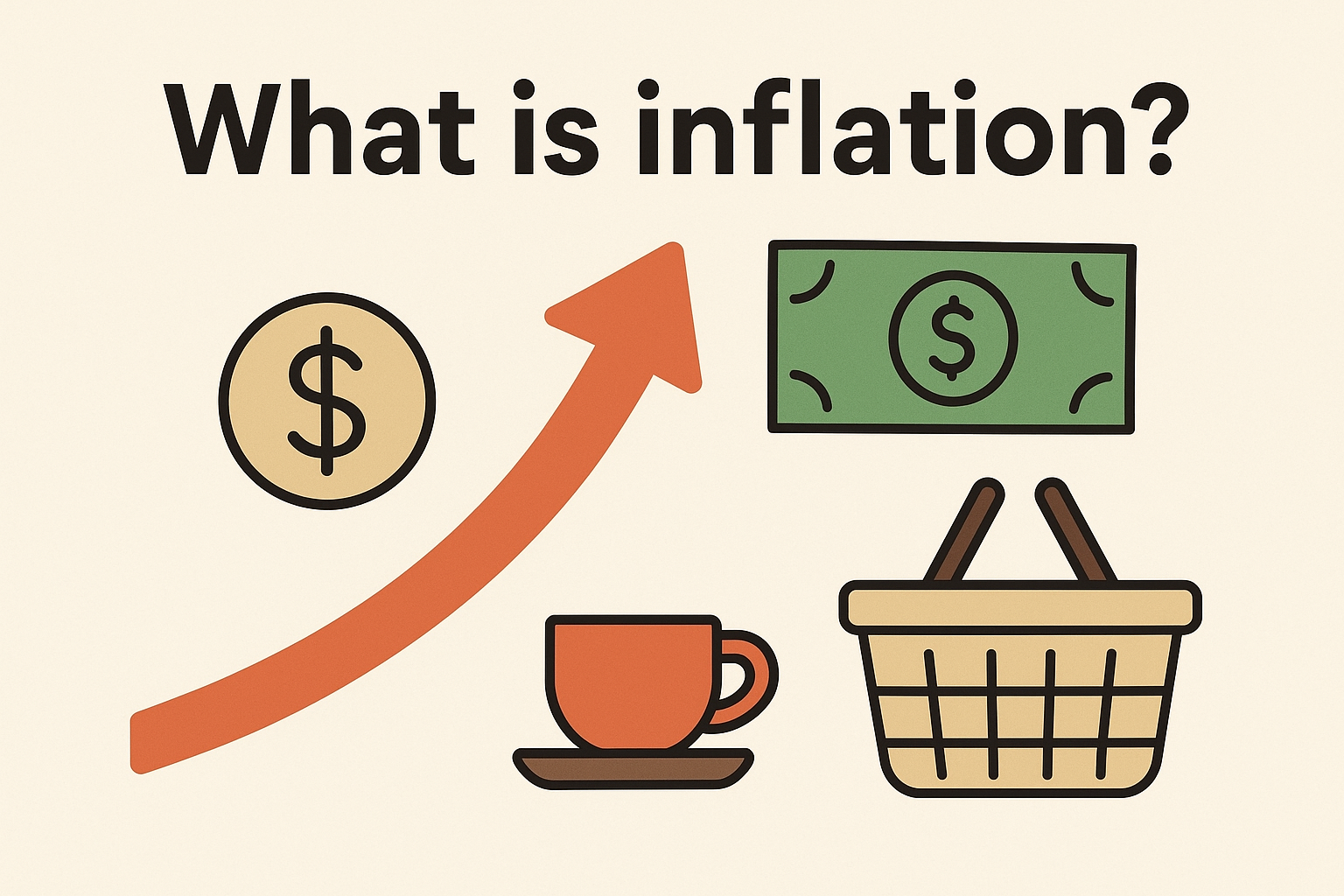
Inflation is a term you’ve probably heard in news headlines, economic reports, or even casual conversations about rising prices. At its core, inflation refers to the general increase in the prices of goods and services over time, which reduces the purchasing power of money. In other words, when inflation occurs, each unit of currency buys fewer goods and services than before.
How Inflation Works
Imagine you bought a cup of coffee for $2 last year. If the same coffee now costs $2.20, that’s a sign of inflation. While a small rise may seem harmless, when prices across many sectors consistently rise, the value of money erodes. Over time, this can affect savings, wages, and the overall cost of living.
Causes of Inflation
Economists generally classify the causes of inflation into a few categories:
-
Demand-Pull Inflation – When demand for goods and services outpaces supply, prices rise. For example, if more people want to buy cars than manufacturers can produce, car prices increase.
-
Cost-Push Inflation – When the costs of production (like wages, raw materials, or energy) rise, businesses often pass these costs on to consumers in the form of higher prices.
-
Built-In Inflation – When workers expect higher wages to keep up with rising living costs, businesses raise prices to cover increased labor expenses, creating a cycle of wage and price increases.
Measuring Inflation
Governments and central banks track inflation using indexes that reflect average changes in prices, such as:
-
Consumer Price Index (CPI) – Measures the cost of a “basket” of common household goods and services.
-
Producer Price Index (PPI) – Tracks the prices businesses receive for their goods and services.
These measures help policymakers gauge how inflation is affecting households and the economy at large.
Why Inflation Matters
A moderate level of inflation is normal in a healthy economy and can encourage spending and investment. However:
-
High inflation can erode savings, reduce purchasing power, and create uncertainty for businesses and consumers.
-
Deflation (the opposite of inflation, when prices consistently fall) can also harm the economy by discouraging spending and investment.
This is why central banks, like the U.S. Federal Reserve or the European Central Bank, aim to keep inflation at a stable, predictable level—usually around 2% annually.
Conclusion
Inflation is more than just a rise in prices—it reflects the balance of supply, demand, and the value of money in an economy. Understanding inflation helps individuals, businesses, and policymakers make informed financial decisions. Whether you’re saving, investing, or simply shopping for groceries, inflation plays a role in shaping the economic landscape we all live in.
Would you like me to adapt this into a simpler version for students or a more technical version with economic theories and historical examples?
- Arts
- Business
- Computers
- Jogos
- Health
- Início
- Kids and Teens
- Money
- News
- Personal Development
- Recreation
- Regional
- Reference
- Science
- Shopping
- Society
- Sports
- Бизнес
- Деньги
- Дом
- Досуг
- Здоровье
- Игры
- Искусство
- Источники информации
- Компьютеры
- Личное развитие
- Наука
- Новости и СМИ
- Общество
- Покупки
- Спорт
- Страны и регионы
- World

 English
 Russian
 French
 Spanish
 Portuguese
 Deutsch
 Turkish
 Dutch
Dutch
 Italiano
 Arabic
 Romaian
 Greek
Greek