
What Is a Sales Funnel and How Does It Work?
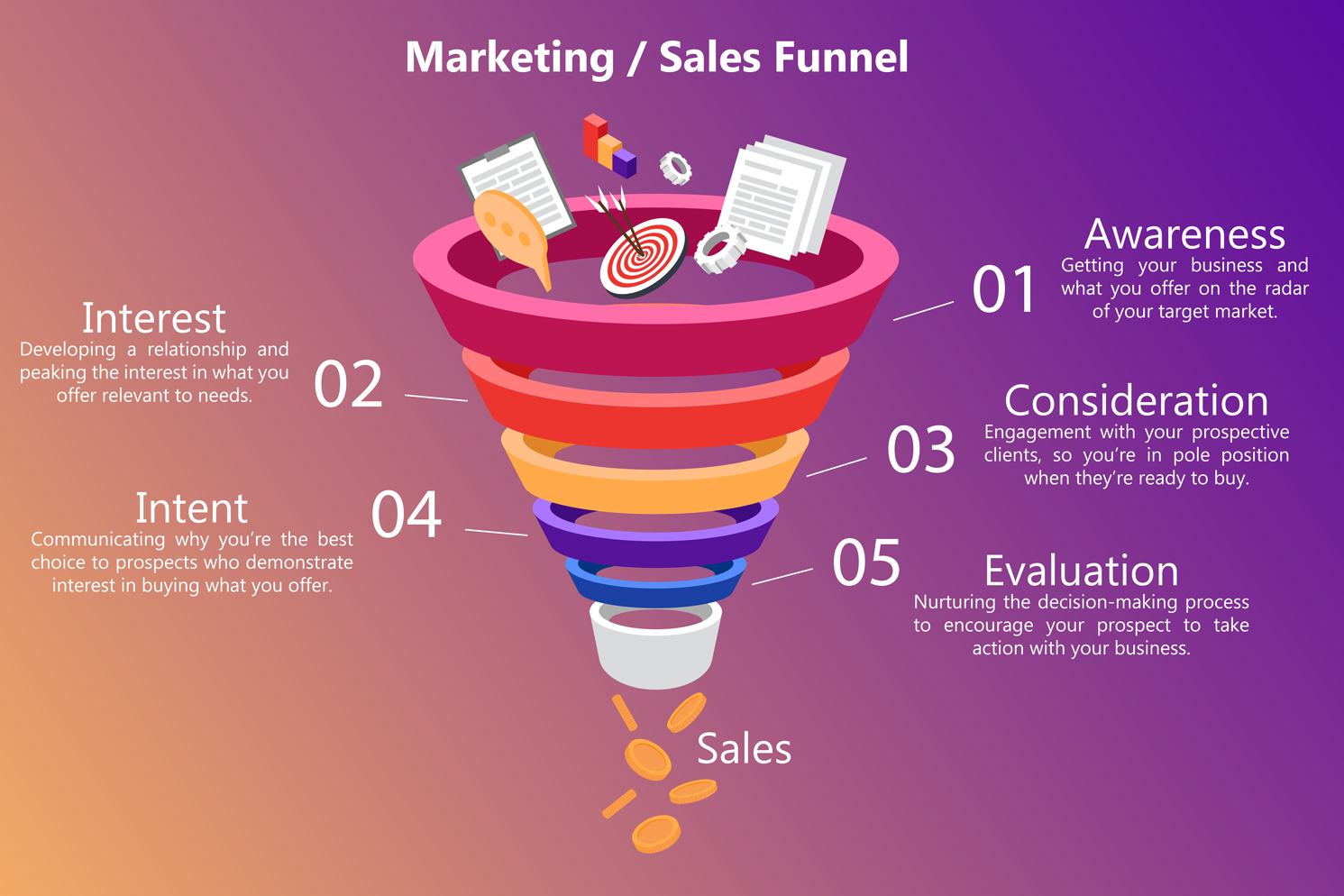
The sales funnel is one of the most important concepts in sales and marketing, yet it’s also one of the most misunderstood. Many businesses talk about funnels, but few truly understand how they work, how to build one properly, and how to align sales and marketing around it.
A well-designed sales funnel creates predictable revenue, improves conversion rates, and ensures prospects receive the right message at the right time. A poorly designed funnel leads to wasted leads, frustrated sales teams, and missed growth opportunities.
This article provides a complete, practical explanation of what a sales funnel is, how it works, its stages, examples, and how sales and marketing must align to make it effective.
1. What Is a Sales Funnel?
A sales funnel is a visual model that represents the journey a potential customer takes from first contact with your business to becoming a paying customer.
It’s called a “funnel” because:
-
many prospects enter at the top
-
fewer progress through each stage
-
only some convert into customers
The funnel shows how attention turns into revenue.
2. Why the Sales Funnel Matters
Without a sales funnel:
-
leads are handled randomly
-
sales efforts are inconsistent
-
forecasting is unreliable
-
marketing and sales blame each other
With a clear funnel:
-
teams know where prospects are
-
messaging becomes relevant
-
performance becomes measurable
Funnels create structure and predictability.
3. Sales Funnel vs Marketing Funnel
These terms are often confused.
-
Marketing funnel focuses on awareness and lead generation
-
Sales funnel focuses on conversion and closing
In modern businesses, the two overlap and must be aligned.
4. The Classic Sales Funnel Stages
While funnels vary by business, most follow this structure:
-
Awareness
-
Interest
-
Consideration
-
Decision
-
Action (purchase)
Some models simplify or expand these stages, but the logic remains the same.
5. Top of the Funnel (TOFU): Awareness
At the top of the funnel, prospects:
-
recognize a problem
-
discover your brand
-
are not ready to buy
Marketing dominates this stage.
5.1 TOFU Examples
-
blog posts
-
social media content
-
ads
-
SEO
-
videos
The goal is attention, not selling.
6. Middle of the Funnel (MOFU): Interest and Consideration
In the middle of the funnel, prospects:
-
research solutions
-
compare options
-
evaluate credibility
Education and trust-building are key.
6.1 MOFU Examples
-
webinars
-
case studies
-
email nurturing
-
demos
-
whitepapers
This is where leads become qualified.
7. Bottom of the Funnel (BOFU): Decision and Action
At the bottom of the funnel, prospects:
-
are ready to buy
-
evaluate pricing and fit
-
need reassurance
Sales takes the lead here.
7.1 BOFU Examples
-
sales calls
-
proposals
-
free trials
-
consultations
-
testimonials
The goal is conversion.
8. Sales Funnel vs Sales Pipeline
These are related but different.
-
Sales funnel = customer journey
-
Sales pipeline = internal sales process
The funnel shows buyer behavior.
The pipeline shows sales actions.
9. Modern Sales Funnel Models
Modern funnels are no longer linear.
Common updated models include:
-
flywheel model
-
lifecycle funnels
-
looped funnels
Customer retention and expansion are now part of the funnel.
10. Example of a B2B Sales Funnel
A B2B SaaS funnel might look like:
-
Website visitor
-
Content download
-
Lead (MQL)
-
Sales-qualified lead (SQL)
-
Demo
-
Proposal
-
Closed deal
Each stage has clear criteria.
11. Example of a B2C Sales Funnel
A B2C funnel might look like:
-
Social media ad
-
Landing page
-
Email signup
-
Product page
-
Checkout
-
Purchase
Shorter cycle, higher volume.
12. How Sales and Marketing Align Around the Funnel
Alignment means:
-
shared definitions
-
shared goals
-
shared metrics
Misalignment breaks the funnel.
13. Lead Definitions Matter
Sales and marketing must agree on:
-
what is a lead
-
what is an MQL
-
what is an SQL
Without agreement, leads fall through cracks.
14. Marketing’s Role in the Sales Funnel
Marketing is responsible for:
-
driving awareness
-
generating leads
-
nurturing early-stage prospects
Marketing fills the top and middle of the funnel.
15. Sales’ Role in the Sales Funnel
Sales is responsible for:
-
qualification
-
relationship building
-
closing deals
Sales owns the bottom of the funnel.
16. The Hand-off Between Marketing and Sales
This is a critical failure point.
A strong handoff includes:
-
clear qualification criteria
-
CRM tracking
-
feedback loops
Weak handoffs cause lost opportunities.
17. Funnel Conversion Rates
Each stage has a conversion rate.
Examples:
-
visitor → lead
-
lead → opportunity
-
opportunity → customer
Improving small conversions compounds revenue growth.
18. How to Analyze Funnel Performance
Analyze:
-
where prospects drop off
-
how long they stay in each stage
-
which sources convert best
Data reveals bottlenecks.
19. Funnel Leaks and Bottlenecks
Common funnel problems include:
-
poor lead quality
-
unclear messaging
-
slow follow-up
-
weak qualification
Fixing leaks often boosts revenue without more leads.
20. Sales Funnel and Buyer Psychology
Each stage matches buyer mindset:
-
awareness → curiosity
-
consideration → evaluation
-
decision → confidence
Messaging must match psychology.
21. Content Strategy for Each Funnel Stage
Effective funnels use:
-
educational content at the top
-
comparative content in the middle
-
persuasive content at the bottom
One-size-fits-all content fails.
22. Automation in the Sales Funnel
Automation helps:
-
nurture leads
-
score prospects
-
trigger follow-ups
Automation supports — not replaces — human sales.
23. CRM and Funnel Management
CRMs track:
-
stage movement
-
conversion rates
-
deal values
CRM visibility keeps funnels healthy.
24. Sales Funnel Metrics to Track
Important funnel metrics include:
-
lead volume
-
conversion rates
-
average deal size
-
sales cycle length
-
cost per acquisition
Metrics turn funnels into systems.
25. Common Sales Funnel Mistakes
❌ focusing only on top-of-funnel
❌ ignoring nurturing
❌ pushing sales too early
❌ poor alignment between teams
Funnels require balance.
26. How to Build a Sales Funnel Step-by-Step
-
Define your customer
-
Map buyer journey
-
Define funnel stages
-
Assign ownership
-
Create content and processes
-
Measure and optimize
Funnels evolve over time.
27. Sales Funnel Optimization Strategies
Optimize by:
-
improving qualification
-
shortening response times
-
refining messaging
-
testing offers
Small improvements compound.
28. Funnels for Long Sales Cycles
Long cycles require:
-
deeper nurturing
-
multiple touchpoints
-
trust-building
Funnels must support patience.
29. Funnels Don’t End at the Sale
Modern funnels include:
-
onboarding
-
retention
-
upsells
-
referrals
Revenue grows after the first sale.
30. Final Takeaway
A sales funnel is not just a diagram —
it’s a revenue system.
When designed well, it:
-
aligns sales and marketing
-
improves conversion
-
creates predictability
-
supports growth
The strongest companies don’t chase leads —
they build funnels that convert them.
Understand the journey.
Align the teams.
Measure everything.
That’s how sales funnels truly work.
- Arts
- Business
- Computers
- Oyunlar
- Health
- Home
- Kids and Teens
- Money
- News
- Personal Development
- Recreation
- Regional
- Reference
- Science
- Shopping
- Society
- Sports
- Бизнес
- Деньги
- Дом
- Досуг
- Здоровье
- Игры
- Искусство
- Источники информации
- Компьютеры
- Личное развитие
- Наука
- Новости и СМИ
- Общество
- Покупки
- Спорт
- Страны и регионы
- World

 English
 Russian
 French
 Spanish
 Portuguese
 Deutsch
 Dutch
Dutch
 Italiano
 Arabic
 Romaian
 Portuguese (Brazil)
 Greek
Greek