
What Is Supply and Demand?
What Is Supply and Demand?
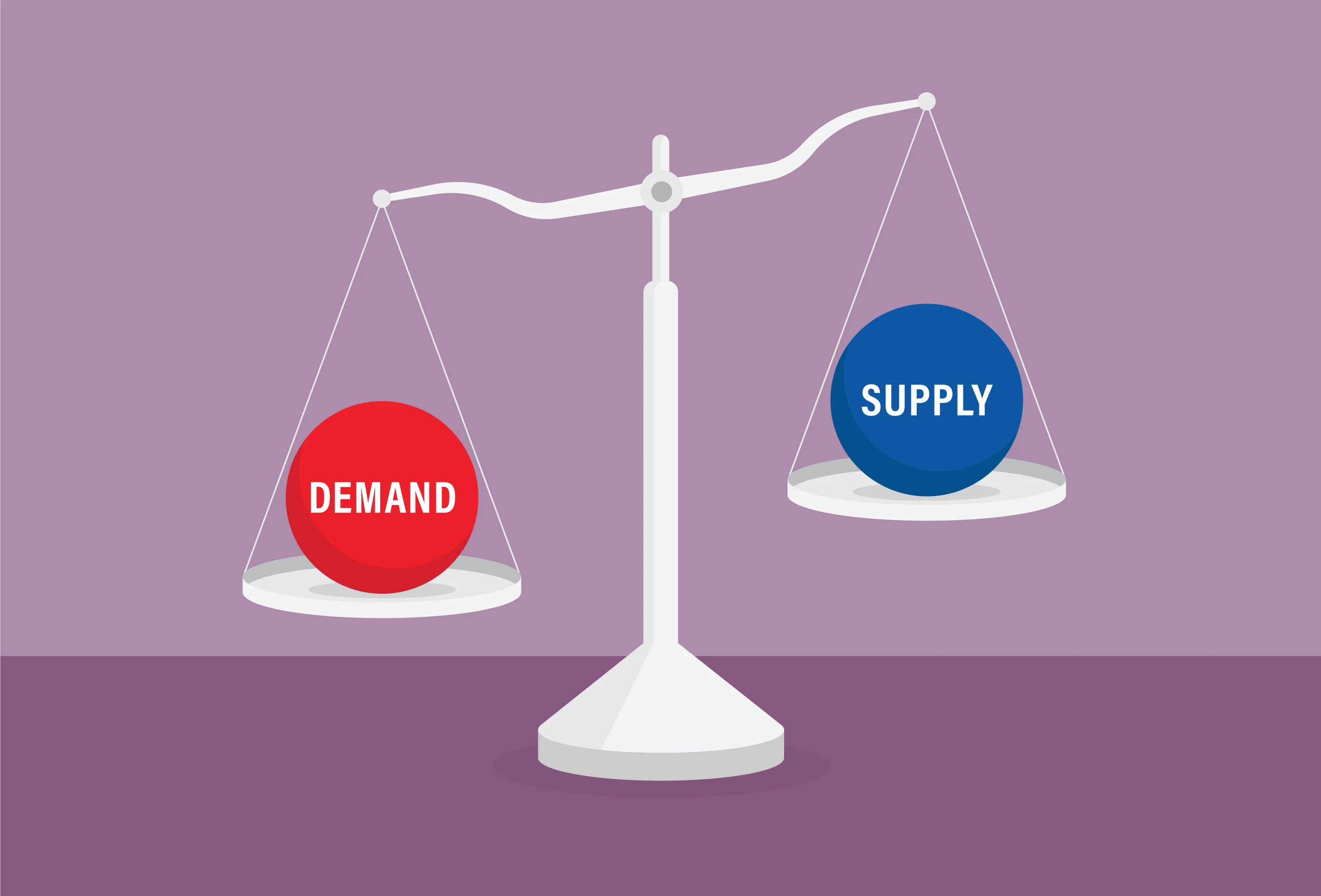
Supply and demand is one of the most basic and important ideas in economics. It explains how prices are set in markets and why they change over time. Whether you are buying food, choosing a phone plan, or understanding why concert tickets are expensive, supply and demand is at work. At its core, this concept describes the relationship between how much of a product or service is available and how much people want it.
Understanding Demand
Demand refers to how much of a good or service consumers are willing and able to buy at different prices, during a certain period of time. In general, when prices are low, people want to buy more. When prices are high, people usually buy less. This relationship is known as the law of demand.
For example, imagine the price of ice cream drops on a hot summer day. Because it is cheaper, more people will buy ice cream. If the price rises sharply, some people may decide it is not worth it and skip the purchase. Demand is not just about desire; it also depends on whether consumers can actually afford the product.
Several factors can change demand, including:
-
Income: When people earn more money, they often buy more goods.
-
Preferences and tastes: Trends, advertising, or cultural changes can make a product more or less popular.
-
Prices of related goods: If the price of a substitute (like tea instead of coffee) rises, demand for the other good may increase.
-
Expectations: If people expect prices to rise in the future, they may buy more now.
When any of these factors change, demand can shift even if the price stays the same.
Understanding Supply
Supply refers to how much of a good or service producers are willing and able to sell at different prices, over a certain period of time. Generally, higher prices encourage producers to supply more, while lower prices discourage production. This is called the law of supply.
For instance, if the price of smartphones increases, manufacturers have a strong incentive to produce more phones to earn higher profits. If prices fall too low, some producers may reduce production or leave the market because it is no longer profitable.
Supply is influenced by several factors, such as:
-
Production costs: If raw materials or labor become more expensive, supply may decrease.
-
Technology: Better technology can make production cheaper and faster, increasing supply.
-
Number of sellers: More producers usually mean a higher total supply.
-
Government policies: Taxes, subsidies, and regulations can affect how much producers are willing to sell.
-
Expectations: If producers expect prices to rise, they might hold back supply now.
Like demand, supply can shift when these factors change.
The Supply and Demand Curve
Economists often use graphs to show supply and demand. The demand curve slopes downward, showing that as price falls, quantity demanded increases. The supply curve slopes upward, showing that as price rises, quantity supplied increases.
The point where the supply and demand curves intersect is called the equilibrium. At this point:
-
The quantity supplied equals the quantity demanded.
-
The market price is stable.
-
There is no shortage or surplus.
This equilibrium price is sometimes called the “market-clearing price” because it balances buyers and sellers.
Shortages and Surpluses
When the price in a market is not at equilibrium, imbalances occur.
A shortage happens when the price is too low, and quantity demanded is greater than quantity supplied. For example, if movie tickets are priced very cheaply, more people may want tickets than the theater can provide.
A surplus occurs when the price is too high, and quantity supplied exceeds quantity demanded. For instance, if a store sets the price of winter coats too high, many coats may remain unsold.
These imbalances usually create pressure for prices to change. Shortages push prices up, while surpluses push prices down, moving the market back toward equilibrium.
How Supply and Demand Affect Prices
Prices act as signals in a market. When a product becomes scarce and demand is high, prices rise. This encourages producers to make more and consumers to use less. When a product is abundant and demand is low, prices fall, encouraging consumers to buy more and producers to cut back.
A real-world example is gasoline. If supply is reduced due to production issues while demand remains high, prices increase. Over time, higher prices may reduce demand and encourage producers to increase supply, helping stabilize the market.
Why Supply and Demand Matter
Supply and demand help explain how resources are allocated in an economy. They show why some goods are cheap and others are expensive, and why prices change over time. Governments, businesses, and individuals all use this concept to make decisions.
Businesses use supply and demand to set prices and plan production. Governments consider it when creating policies like taxes or price controls. Consumers benefit by understanding when it might be a good time to buy or wait.
Conclusion
Supply and demand is a simple idea with powerful effects. It explains how buyers and sellers interact, how prices are determined, and how markets respond to changes. While real-world markets can be complex, the basic principles of supply and demand provide a strong foundation for understanding how economies work. By learning this concept, people can better understand everyday economic choices and the forces shaping the world around them.
- Arts
- Business
- Computers
- Jogos
- Health
- Início
- Kids and Teens
- Money
- News
- Personal Development
- Recreation
- Regional
- Reference
- Science
- Shopping
- Society
- Sports
- Бизнес
- Деньги
- Дом
- Досуг
- Здоровье
- Игры
- Искусство
- Источники информации
- Компьютеры
- Личное развитие
- Наука
- Новости и СМИ
- Общество
- Покупки
- Спорт
- Страны и регионы
- World

 English
 Russian
 French
 Spanish
 Deutsch
 Turkish
 Dutch
Dutch
 Italiano
 Arabic
 Romaian
 Portuguese (Brazil)
 Greek
Greek
