
What Is Opportunity Cost?
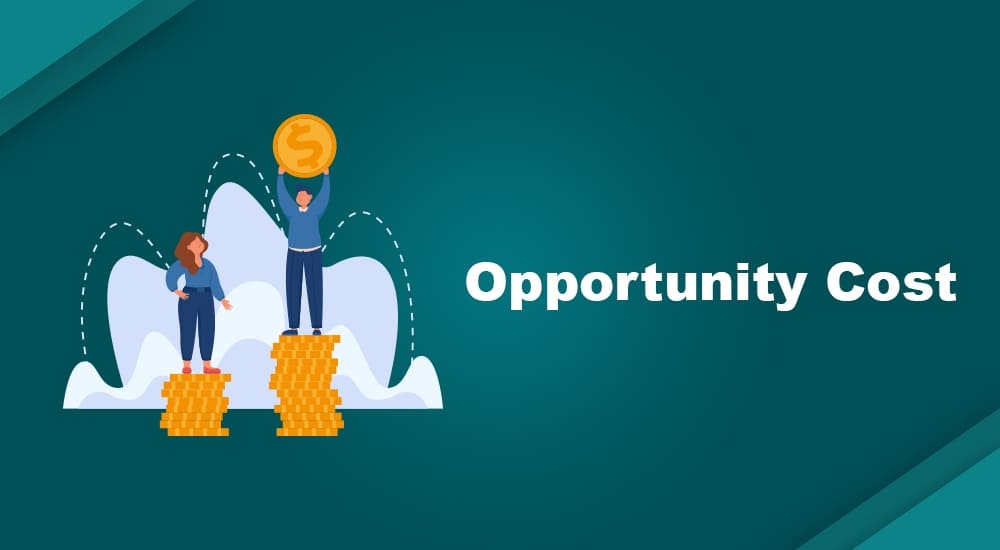
What Is Opportunity Cost?
Every choice we make comes with a trade-off. When you decide how to spend your time, money, or effort, you are implicitly giving up the next best alternative. Economists call the value of that forgone alternative opportunity cost. Understanding opportunity cost helps explain everyday decisions—from studying for an exam to starting a business—and is a core idea in economics and rational decision-making.
A Simple Definition
Opportunity cost is the value of the best alternative you give up when you choose one option over another.
The key words are best alternative. Opportunity cost is not the value of everything you give up, only the most valuable option you did not choose.
For example, if you spend an evening watching a movie instead of studying, the opportunity cost is not “studying, exercising, and sleeping early.” It is the single most valuable thing you would have done instead—perhaps better exam preparation.
Why Opportunity Cost Matters
Resources are limited. Time, money, and energy cannot be used for everything at once. Because of scarcity, choices are unavoidable, and opportunity cost is the lens that reveals the real cost of those choices.
People often focus only on what they pay directly, such as money. Opportunity cost reminds us that the true cost also includes what we sacrifice.
This concept helps:
-
Individuals make better personal decisions
-
Businesses allocate resources efficiently
-
Governments evaluate public policies
-
Students understand economic trade-offs
Everyday Examples of Opportunity Cost
1. Time Decisions
Suppose you have two hours after school. You can either:
-
Work a part-time job and earn $30, or
-
Hang out with friends
If you choose to work, the opportunity cost is the enjoyment and social time you would have had with friends. If you choose to socialize, the opportunity cost is the $30 you could have earned.
2. Money Decisions
You have $1,000 saved. You can:
-
Spend it on a new phone, or
-
Invest it and earn a 5% return in a year
If you buy the phone, the opportunity cost is not just the $1,000, but also the future $50 you could have earned from investing.
3. Education Choices
Going to college has opportunity costs. Tuition and fees are obvious, but there is also the income you could have earned by working full-time instead. Economists include this forgone income as part of the cost of education.
Opportunity Cost in Business
Businesses constantly face opportunity cost decisions because their resources—capital, labor, and time—are limited.
Example: Production Choice
A factory can produce either:
-
1,000 bicycles, or
-
500 electric scooters
If the factory chooses bicycles, the opportunity cost is 500 electric scooters. Managers compare profits to decide which option creates more value.
Example: Investment Decisions
A company has funds to invest in only one project. Choosing Project A means giving up the potential returns from Project B. The opportunity cost is the profit Project B would have generated.
Smart businesses aim to choose options with the lowest opportunity cost or the highest net benefit.
Explicit vs. Implicit Costs
Opportunity costs can be divided into two types:
1. Explicit Costs
These are direct, out-of-pocket payments.
-
Rent
-
Wages
-
Equipment purchases
2. Implicit Costs
These are non-monetary costs, such as:
-
The salary an entrepreneur gives up to start a business
-
The income from renting out a property that the owner uses personally
Opportunity cost includes both explicit and implicit costs, even though implicit costs do not involve cash payments.
Opportunity Cost vs. Sunk Cost
Opportunity cost is often confused with sunk cost, but they are different.
-
Opportunity cost looks forward: what you give up by making a choice now.
-
Sunk cost looks backward: costs already incurred that cannot be recovered.
Example:
If you paid for a concert ticket but feel sick on the day of the concert, the money spent is a sunk cost. The decision should depend on opportunity cost—what you gain from resting versus attending—not on money already spent.
Good decision-making ignores sunk costs and focuses on opportunity costs.
Opportunity Cost and Marginal Thinking
Economists often think in terms of marginal decisions, meaning small changes rather than all-or-nothing choices.
Example:
You already study two hours per day. Should you study a third hour?
The opportunity cost of that extra hour might be:
-
Less sleep, or
-
Less relaxation
If the benefit of the extra study hour (better grades) is greater than the opportunity cost, then studying more makes sense.
Opportunity Cost and Comparative Advantage
Opportunity cost also explains comparative advantage, a key idea in trade.
Even if one person is better at producing everything, they should specialize in what they give up the least to produce.
Example:
-
Alex can produce either 10 essays or 5 videos per day.
-
Sam can produce either 6 essays or 6 videos per day.
Alex’s opportunity cost of 1 video is 2 essays.
Sam’s opportunity cost of 1 video is 1 essay.
Sam has a lower opportunity cost for videos and should specialize in videos, while Alex should focus on essays. This leads to better outcomes for both.
Common Mistakes People Make
-
Ignoring opportunity cost
People often focus only on visible costs, like price tags. -
Considering too many alternatives
Only the next best alternative matters, not every possible option. -
Letting emotions dominate decisions
Emotional attachment can hide the real trade-offs involved.
Learning to identify opportunity cost leads to clearer, more rational choices.
Conclusion
Opportunity cost is a powerful idea that reveals the true cost of decisions. It reminds us that choosing one path means giving up another and that the real sacrifice is the best alternative we do not take.
Whether deciding how to spend time, invest money, run a business, or shape public policy, opportunity cost encourages thoughtful comparison of benefits and trade-offs. By understanding and applying this concept, individuals and organizations can make smarter decisions in a world of limited resources.
- Arts
- Business
- Computers
- Giochi
- Health
- Home
- Kids and Teens
- Money
- News
- Personal Development
- Recreation
- Regional
- Reference
- Science
- Shopping
- Society
- Sports
- Бизнес
- Деньги
- Дом
- Досуг
- Здоровье
- Игры
- Искусство
- Источники информации
- Компьютеры
- Личное развитие
- Наука
- Новости и СМИ
- Общество
- Покупки
- Спорт
- Страны и регионы
- World

 English
 Russian
 French
 Spanish
 Portuguese
 Deutsch
 Turkish
 Dutch
Dutch
 Arabic
 Romaian
 Portuguese (Brazil)
 Greek
Greek
