
How Has Brexit Affected Trade?
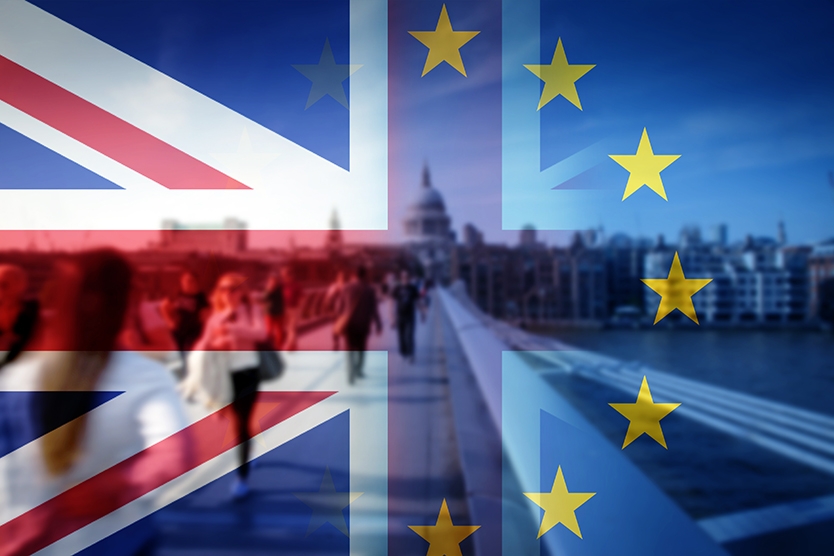
How Has Brexit Affected Trade?
Imports, Exports, Tariffs, and Customs Checks
When the United Kingdom left the European Union, one of the biggest and most immediate changes was to the way it trades with the rest of the world. Before Brexit, the UK was part of the EU’s single market and customs union, which allowed goods to move freely between the UK and EU countries with very few formalities. After Brexit, that system ended.
Since January 2021, the UK and the EU have traded under a new relationship set out in the Trade and Cooperation Agreement (TCA). This has reshaped imports, exports, tariffs, and customs procedures in important ways.
This article explains how Brexit has affected trade in practical terms.
Trade before Brexit
While the UK was an EU member, trade with other EU countries worked almost like trade within a single country. There were:
-
no customs declarations,
-
no routine border checks on goods,
-
no tariffs between EU members,
-
and common rules for products and standards.
This made the EU the UK’s largest and most important trading partner, both for imports and exports.
Brexit ended this system.
Imports and exports after Brexit
A fall in EU–UK trade at first
After the UK left the single market at the end of 2020, trade with the EU became more complex almost overnight. Many businesses were unprepared for the new paperwork and regulatory requirements.
As a result, both UK exports to the EU and imports from the EU fell sharply in the early months of 2021. Some smaller firms, in particular, stopped selling to the EU entirely because the costs and administrative burden were too high.
Although trade volumes later recovered to some extent, the structure of UK trade has changed. The EU is still one of the UK’s most important trading partners, but its share of UK trade has declined compared with the period before Brexit.
Exporting to the EU is now harder
For UK exporters, the main change is that selling to the EU is no longer frictionless. Companies must now deal with:
-
customs paperwork,
-
product and safety certifications,
-
and proof that their goods meet EU standards.
For many firms, especially small and medium-sized businesses, this has increased costs and delivery times. Some companies have decided that exporting small quantities of goods to the EU is no longer profitable.
Sectors such as food, drink, chemicals, and manufacturing have been particularly affected, because they face strict regulatory and safety requirements.
Importing from the EU has also changed
UK importers now face similar administrative requirements when bringing goods in from the EU. Businesses must submit customs declarations and make sure imported products comply with UK rules.
In practice, many UK firms report that importing from the EU is slower and more expensive than before, even when tariffs are not charged.
This has contributed to higher operating costs for UK businesses and, in some cases, higher prices for consumers.
Tariffs: why most goods still face zero tariffs
One of the most common misunderstandings about Brexit is that it automatically created tariffs between the UK and the EU.
In fact, under the Trade and Cooperation Agreement, most goods can still be traded between the UK and the EU with zero tariffs and zero quotas.
However, this only applies if goods meet so-called rules of origin.
Rules of origin
Rules of origin determine where a product is considered to be made. To qualify for zero tariffs, a product must contain a sufficient proportion of UK or EU content.
If a UK exporter uses a large amount of materials or components from outside the UK and the EU, the final product may not qualify for tariff-free access when exported to the EU.
For example, a product assembled in the UK using many non-EU and non-UK parts may be treated as a third-country product and face tariffs when exported.
This has created real challenges for manufacturers with complex international supply chains.
When tariffs do apply
Tariffs can still be applied if:
-
the goods do not meet rules of origin,
-
the paperwork proving origin is missing or incorrect,
-
or the product is being traded with countries that do not have a trade agreement with the UK.
In those cases, businesses must pay customs duties in the same way as they would when trading with any other non-EU country.
Customs checks and border procedures
Perhaps the most visible change to trade after Brexit is the introduction of customs checks and border controls.
Customs declarations
Every shipment moving between the UK and the EU now normally requires:
-
an export declaration,
-
an import declaration,
-
commodity codes,
-
and detailed information about the goods.
Before Brexit, none of this was required for EU trade.
For businesses that move goods frequently, this has created new costs for software, staff training, and customs agents.
Physical checks and inspections
Some goods are also subject to physical inspections at the border. These include:
-
food and agricultural products,
-
live animals,
-
and certain regulated products such as chemicals.
These checks are designed to ensure that goods meet health, safety, and environmental standards.
For perishable products such as fresh seafood, delays at the border can be especially damaging. Many exporters have reported that new checks have made delivery times less predictable.
The UK’s phased introduction of checks
The UK did not introduce all its new border checks on EU goods immediately in 2021. Instead, it phased them in over several years. This was done to give businesses more time to adapt and to reduce disruption at ports.
However, even with phased implementation, the overall result has still been more paperwork, more inspections, and higher administrative costs than before Brexit.
Northern Ireland and special trading arrangements
Trade involving Northern Ireland is a special case.
To avoid a hard border on the island of Ireland, Northern Ireland continues to follow many EU goods rules. This means that goods moving from Great Britain into Northern Ireland are subject to different procedures than goods moving within Great Britain.
The Windsor Framework, agreed after Brexit, was designed to reduce friction for goods that are staying in Northern Ireland, while still protecting the EU single market.
Although this has eased some of the earlier problems, it has also created a more complex internal trading system within the UK itself, with different rules for Great Britain and Northern Ireland.
Impact on UK businesses
Brexit has affected businesses in different ways depending on their size and sector.
Large multinational companies are often better able to absorb the extra costs and bureaucracy by setting up new logistics systems or by moving parts of their operations into the EU.
Smaller businesses, by contrast, have found the new trading environment more difficult. Many lack the resources to manage customs procedures or deal with regulatory changes across two separate markets.
Some firms have reduced their EU sales, while others have focused more on the UK market or on non-EU countries.
Has trade with the rest of the world replaced EU trade?
One of the political arguments for Brexit was that the UK would be able to expand trade with countries outside the EU.
Since leaving the EU, the UK has signed several new trade agreements and rolled over many existing ones. However, in practice, trade with distant markets has not fully replaced the loss of easy access to the EU’s nearby and very large market.
Geography still matters in trade. Transport costs, delivery times, and established business relationships continue to make the EU a particularly important trading partner for the UK.
Overall assessment
Brexit has not stopped trade between the UK and the EU, but it has made that trade more complicated, more expensive, and slower.
-
Imports and exports have become less straightforward, especially for smaller firms.
-
Tariffs are usually avoided, but only if businesses can meet complex rules of origin requirements.
-
Customs checks and paperwork are now a permanent part of UK–EU trade.
-
Northern Ireland operates under a special system that reduces some barriers but increases internal UK complexity.
The most significant change is not the introduction of widespread tariffs, but the loss of frictionless trade. For many businesses, the added administrative burden and regulatory divergence have been more damaging than customs duties themselves.
In short, Brexit has transformed the UK from being part of a single, highly integrated European trading system into a separate trading nation dealing with its largest partner in much the same way as it deals with other foreign markets. This shift has reshaped how British companies import, export, and compete in international trade.
- Arts
- Business
- Computers
- Игры
- Health
- Главная
- Kids and Teens
- Деньги
- News
- Personal Development
- Recreation
- Regional
- Reference
- Science
- Shopping
- Society
- Sports
- Бизнес
- Деньги
- Дом
- Досуг
- Здоровье
- Игры
- Искусство
- Источники информации
- Компьютеры
- Личное развитие
- Наука
- Новости и СМИ
- Общество
- Покупки
- Спорт
- Страны и регионы
- World

 English
 French
 Spanish
 Portuguese
 Deutsch
 Turkish
 Dutch
Dutch
 Italiano
 Arabic
 Romaian
 Portuguese (Brazil)
 Greek
Greek
