
What Is the Northern Ireland Protocol?
What Is the Northern Ireland Protocol?
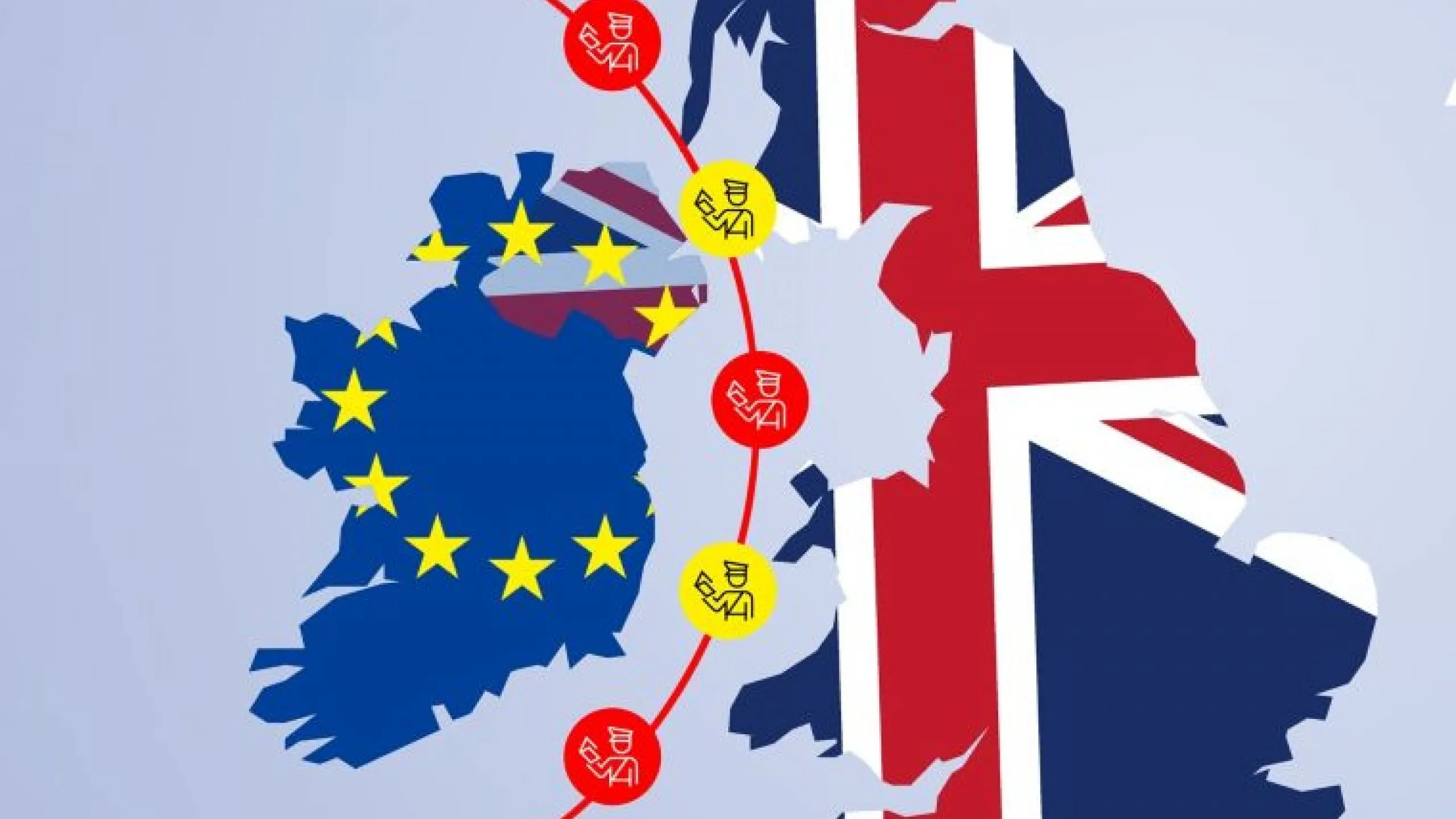
The Northern Ireland Protocol is a key part of the Brexit divorce agreement between the United Kingdom (UK) and the European Union (EU) that governs how trade and regulatory rules apply in Northern Ireland after Brexit. It was designed to address one of the most difficult political and economic problems created when the UK left the EU: how to manage the border between Northern Ireland, which is part of the UK, and the Republic of Ireland, which remains in the EU.
The Background: Brexit and the Irish Border Problem
Before Brexit, both the UK and Ireland were part of the EU Single Market and Customs Union. This meant that goods could cross the border between Northern Ireland and the Republic of Ireland without customs checks, paperwork, tariffs or regulatory barriers. This frictionless border wasn’t just economically convenient — it was a central part of maintaining peace following decades of conflict. The Good Friday Agreement (1998) strengthened cooperation on both sides of the border and made avoiding a “hard border” a political priority.
When the UK voted to leave the EU in 2016, it created a serious challenge: if the rest of the UK no longer followed EU rules but Ireland stayed inside, how could goods cross the border without controls? Reintroducing customs checks and border infrastructure could threaten both economic linkages and political stability. The solution agreed by the UK and EU was the Northern Ireland Protocol.
What the Protocol Actually Does
Two Key Goals
-
Keep the border between Northern Ireland and the Republic of Ireland open with no physical checkpoints.
-
Protect the integrity of the EU Single Market by ensuring that goods entering that market meet EU standards.
To achieve this, the Protocol created special rules:
-
Northern Ireland remains legally part of the UK customs territory. The UK government is responsible for customs in Northern Ireland.
-
But Northern Ireland also follows many EU rules for goods. This includes parts of the EU customs code and Single Market standards for products.
This “dual regime” means that:
-
Goods moving between Northern Ireland and the Republic of Ireland continue to flow freely with no customs checks.
-
Some checks and paperwork are required when goods move from Great Britain (England, Scotland, Wales) into Northern Ireland to prove they meet EU standards or that they are not going into the EU market.
In practical terms, this avoids a “hard border” on the island of Ireland, but introduces some controls in the Irish Sea — between Great Britain and Northern Ireland — on goods that might be destined for the EU.
Why It Was Needed
The core problem the Protocol addresses is this: a border that avoids customs controls between Northern Ireland and the Republic of Ireland would normally require that both sides follow the same trading rules. Once the UK left the EU, the rest of the UK wanted to change its rules independently of the EU. Without the Protocol, EU law would have to apply to the entire UK–Irish land border to avoid checks — and the UK government rejected that. So the Protocol’s compromise was to have no hard border on the island of Ireland, but some regulatory alignment and checks between GB and NI.
How It Works in Practice
Here’s how the Protocol operates day-to-day:
Trade Between Northern Ireland and the EU
-
No customs declarations or tariffs are required for goods moving between Northern Ireland and the Republic of Ireland. This helps maintain economic integration on the island.
Trade Between Northern Ireland and Great Britain
-
Some goods moving from Great Britain into Northern Ireland must provide paperwork showing they meet EU standards or are intended to stay in Northern Ireland.
-
Checks focus on sanitary and phytosanitary (SPS) rules, product standards, and customs paperwork because these protect the EU market.
To ease this process, the UK and EU agreed a set of practical measures under the Windsor Framework (2023), which simplified some checks and introduced a system of “green” and “red” lanes.
-
Green lane: for goods that stay in Northern Ireland — far fewer checks.
-
Red lane: for goods likely to go into the EU — full EU checks apply.
Political and Economic Effects
Supporters Say
Supporters argue that the Protocol protects the peace process and maintains an open Irish land border. It also gives Northern Ireland unique access to both the UK market and the EU Single Market for goods, which some economists see as an opportunity for trade and investment.
Critics Say
Critics — especially many Unionists who want Northern Ireland firmly integrated in the UK — argue that the Protocol effectively creates a border in the Irish Sea, treating Northern Ireland differently from the rest of the UK. They claim this disrupts trade with Great Britain and weakens Northern Ireland’s place in the UK internal market.
Practical problems in the early implementation phase — including paperwork, checks, and supply chain adjustments — frustrated businesses, especially smaller ones trading between Great Britain and Northern Ireland.
The Windsor Framework: Adjusting the Protocol
Because of political tensions and practical difficulties, the UK and EU agreed the Windsor Framework in 2023 to improve how the Protocol works. It did not replace the Protocol but adjusted its operation with:
-
Both sides agreeing to a more flexible approach to checks.
-
A mechanism (the “Stormont Brake”) giving local representatives a say on new EU laws affecting Northern Ireland.
-
Customs simplifications for goods moving from Great Britain to Northern Ireland. These changes sought to address concerns about trade friction and democratic representation, though debates about the Protocol’s long-term future continue.
Ongoing Debates and the Future
Political Impact
The Protocol has influenced Northern Irish politics. Some major Unionist parties boycotted regional institutions until changes were made, arguing that it undermined Northern Ireland’s status within the UK. Meanwhile, parties with a more pro-EU stance have been more accepting. These divisions reflect broader questions about identity, sovereignty and the legacy of Brexit.
Economic Impact
Trade patterns continue to shift in response to new rules. While Northern Ireland still benefits from access to both markets, some businesses have faced extra costs and administrative burdens.
Conclusion
The Northern Ireland Protocol is a technical but politically significant agreement meant to solve the problem of how to manage borders and trade after Brexit without undermining the peace and economic integration achieved on the island of Ireland. It achieves a delicate balance: keeping the Irish land border open while protecting the EU Single Market, but this has required special arrangements for Northern Ireland that differ from the rest of the UK.
Thanks to adjustments like the Windsor Framework, the protocol continues to evolve, with ongoing debate about how best to support peace, economic stability and political cohesion in the region.
- Arts
- Business
- Computers
- Игры
- Health
- Главная
- Kids and Teens
- Деньги
- News
- Personal Development
- Recreation
- Regional
- Reference
- Science
- Shopping
- Society
- Sports
- Бизнес
- Деньги
- Дом
- Досуг
- Здоровье
- Игры
- Искусство
- Источники информации
- Компьютеры
- Личное развитие
- Наука
- Новости и СМИ
- Общество
- Покупки
- Спорт
- Страны и регионы
- World

 English
 French
 Spanish
 Portuguese
 Deutsch
 Turkish
 Dutch
Dutch
 Italiano
 Arabic
 Romaian
 Portuguese (Brazil)
 Greek
Greek