
How Has Brexit Affected the British Pound?
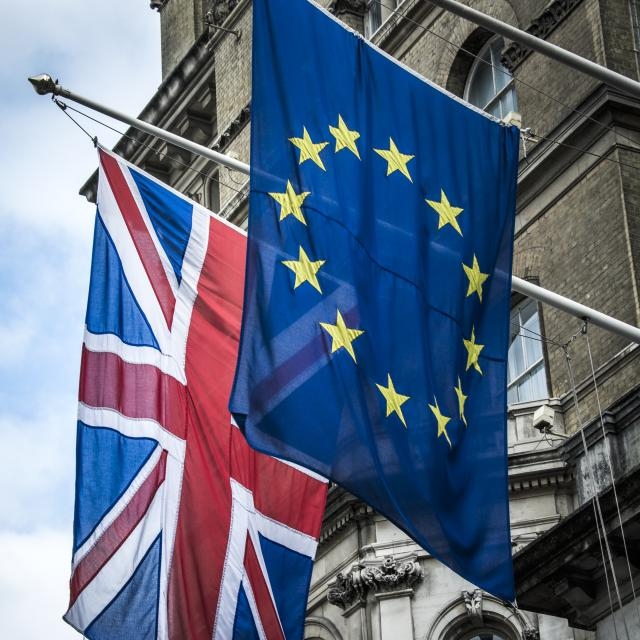
How Has Brexit Affected the British Pound?
Since the United Kingdom voted to leave the European Union in June 2016, the British pound — also called sterling — has been under intense scrutiny. Exchange rates are influenced by a huge range of factors, including interest rate expectations, inflation, trade, investment flows and economic growth. But Brexit — one of the most significant political and economic shifts the UK has faced in decades — has played a major role in shaping market expectations and sterling’s path.
This article explores how Brexit has affected the pound since the referendum, what the effects tell us about the UK economy, and why sterling has behaved the way it has in the years that followed.
1. Immediate reaction: sharp depreciation and market uncertainty
On 23 June 2016, the UK voted to leave the EU. Almost immediately, markets reacted strongly. The uncertainty about future economic and trading relationships caused a significant sell-off in the pound: sterling experienced one of its biggest intra-day drops in decades, falling sharply against major currencies such as the US dollar and the euro.
This reaction was largely driven by uncertainty — investors dislike surprises and adjust portfolios when they expect future economic disruption. In this case, traders demanded fewer pounds, pushing its price down in foreign exchange markets.
Economists have estimated that the pound's value fell around 7 % on the day of the referendum and remained around 14 % lower over the following year compared with before the vote.
2. Long-term trend: weaker sterling than “pre-Brexit” levels
In the years since the vote, sterling has generally traded at lower levels than before 2016. For example, against the US dollar and euro, the pound has often struggled to return to the highs seen in the mid-2010s — such as around $1.50 USD or €1.40 EUR — levels last seen before the referendum.
Analysts from major financial institutions like Goldman Sachs have noted that structural changes in the UK’s economic relationship with its biggest trading partner — the EU — make it unlikely that sterling will quickly regain those pre-Brexit peaks.
There are a few reasons for this:
-
Economic growth prospects: Slower trade growth and post-Brexit regulatory changes have weighed on UK economic performance relative to peers.
-
Investment flows and financial markets: A reduction in demand for assets denominated in pounds, partly because of Brexit-related uncertainty, has reduced “hot money” flows into the currency.
-
Trade and current account dynamics: Since the UK imports more than it exports, a weaker currency increases the cost of imports, influencing inflation and prices.
3. Volatility and uncertainty: ups and downs along the way
Sterling’s story since Brexit hasn’t been one of simple decline — it’s been volatile. Large news events, political negotiations, changes in government leadership and economic policy have all caused swings in the pound’s value.
For example:
-
Negotiation milestones sometimes brought temporary strength when markets felt progress was being made.
-
Political uncertainty or threats of a “no-deal” outcome often pushed the pound lower.
-
Internal political shifts — such as changes in prime ministers — have also affected sterling.
These swings reflect the fact that currency markets are highly sensitive to expectations about future policy, trade costs, and economic growth. When traders adjust their views on these variables, the pound can move sharply in response.
4. Trade competitiveness: depreciation can have mixed effects
A weaker pound has a classic economic effect: it makes UK exports cheaper abroad and imports more expensive at home. In theory, this can help trade balances because foreign buyers pay less for British goods and services.
Some economists argue that sterling’s post-Brexit depreciation could benefit UK exports in the long term by improving price competitiveness. However, the reality is more complex. Trade performance since Brexit has struggled — exports did not grow strongly relative to other advanced economies even with the weaker currency, partly because new non-tariff barriers and customs checks raised costs.
At the same time, more expensive imports have pushed up prices in the UK, contributing to inflationary pressures. This is especially noticeable in sectors that rely heavily on imported raw materials and goods.
5. Inflation and monetary policy interplay
After the Brexit vote, inflation in the UK rose in part because imports became more expensive as the pound fell. Central banks, including the Bank of England, closely monitor inflation and adjust interest rates accordingly. If inflation is high, the central bank may raise rates to cool price increases; if inflation is low but growth is weak, it may cut rates.
These interest rate moves also affect the currency. Higher rates tend to attract foreign capital and support the currency; lower rates make holding that currency less attractive, putting downward pressure on its value.
In recent years, monetary policy has been driven by inflation and growth concerns — issues that were partly influenced by Brexit but also by broader global trends (like the COVID-19 pandemic and geopolitical events). This makes it challenging to disentangle Brexit’s direct effects from other forces — but the linkage between exchange rate, inflation, and interest rates remains central to understanding sterling’s performance.
6. Recent developments and expectations
Even now, years after the formal exit from the EU, sterling markets react to new developments:
-
News about UK fiscal policy, growth prospects or debt levels can push the currency up or down. For example, concerns about slowing UK economic growth and potential tax increases were linked to a weaker pound in late 2025.
-
Compared with other major currencies, the pound has at times underperformed when investor confidence in the UK outlook weakens.
Looking forward, analysts tend to agree that sterling can strengthen if economic relationships — especially with the EU — improve, and if UK growth prospects rise. However, many also believe that returning to the very strong pre-Brexit levels is unlikely without significant changes in economic conditions or policy.
7. Broader economic context
It’s important to see Brexit’s effects on sterling in the broader economic context. Factors such as global interest rates, inflation rates in other countries, geopolitical tensions, and global trade dynamics all influence currency markets.
For example, the UK’s inflation compared with that in the United States or Eurozone affects the relative strength of sterling. Likewise, loose fiscal policy or high government borrowing can weaken confidence in a currency, while strong investment inflows can support it.
Thus, while Brexit has been a significant driver of Pound volatility and long-term value changes, it interacts with many other forces shaping global finance.
Conclusion
Brexit’s impact on the British pound has been significant but nuanced:
-
Immediately after the referendum, sterling fell sharply as markets digested uncertainty.
-
In the long term, sterling has often traded below pre-Brexit levels against major currencies, reflecting structural adjustments and ongoing economic relationships outside the EU.
-
Volatility has been a consistent feature, driven by political news and negotiations.
-
Trade competitiveness and inflation effects show that currency depreciation has both positive and negative sides.
Overall, Brexit reshaped expectations about the UK economy in ways that have had lasting effects on the pound — but it acted in concert with broader global trends and economic shifts. Sterling’s future will continue to reflect how investors see the UK’s economic path in an interconnected world.
- Arts
- Business
- Computers
- Jeux
- Health
- Domicile
- Kids and Teens
- Argent
- News
- Personal Development
- Recreation
- Regional
- Reference
- Science
- Shopping
- Society
- Sports
- Бизнес
- Деньги
- Дом
- Досуг
- Здоровье
- Игры
- Искусство
- Источники информации
- Компьютеры
- Личное развитие
- Наука
- Новости и СМИ
- Общество
- Покупки
- Спорт
- Страны и регионы
- World

 English
 Russian
 Spanish
 Portuguese
 Deutsch
 Turkish
 Dutch
Dutch
 Italiano
 Arabic
 Romaian
 Portuguese (Brazil)
 Greek
Greek
