
What Is Late-Stage Capitalism?
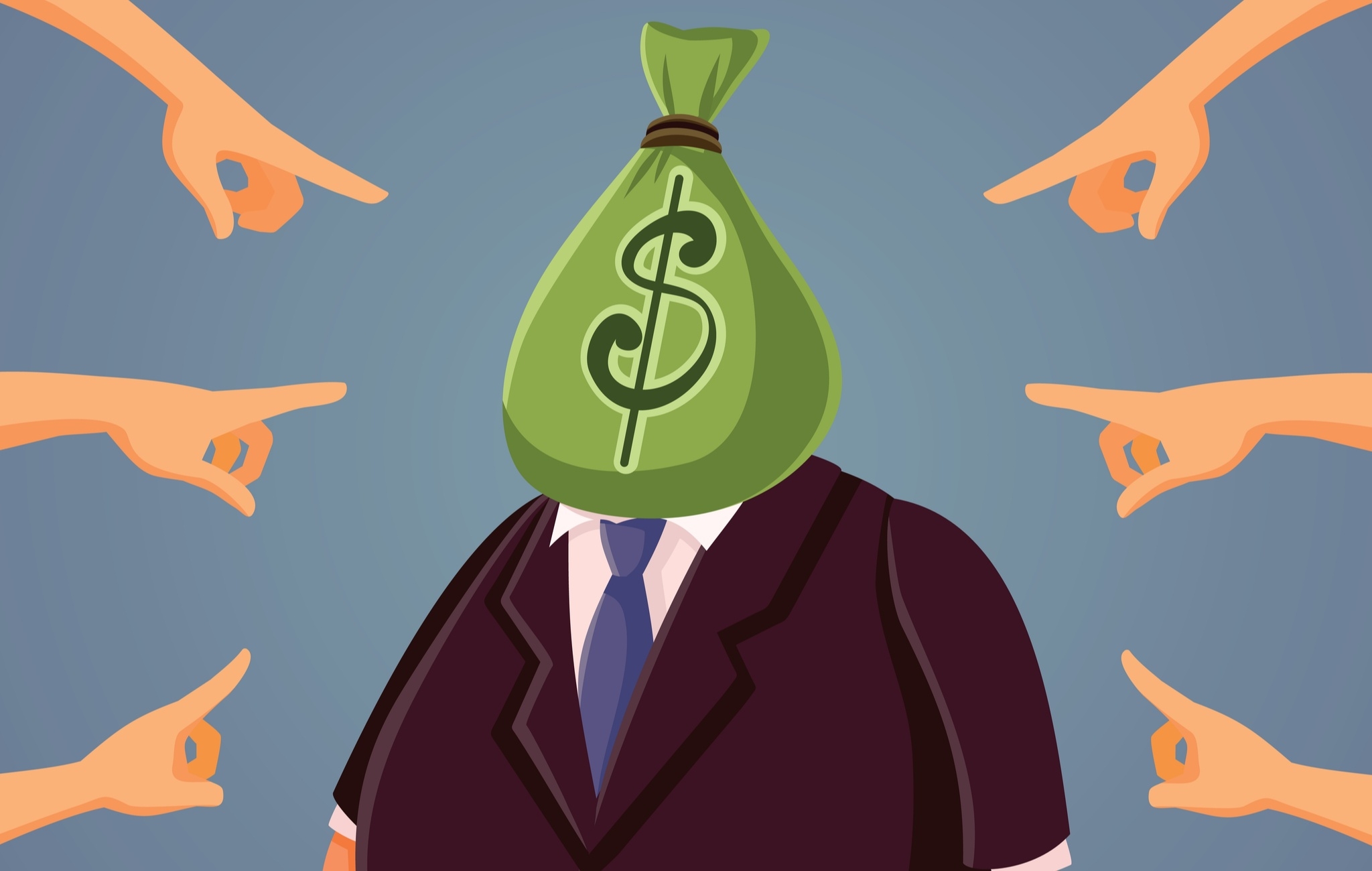
What Is Late-Stage Capitalism?
“Late-stage capitalism” is a phrase you often see online, in news commentary, and in political debates. People use it to describe a feeling that today’s economic system—especially in wealthy countries—has become unfair, unstable, or distorted. But what does the term actually mean?
Late-stage capitalism is not a formal economic stage with a clear start date. It is a critical idea, mainly used by scholars, activists, and commentators to describe how capitalism behaves when it becomes highly developed, highly concentrated, and deeply embedded in almost every part of society.
To understand the idea, it helps to first understand what capitalism itself is.
A quick reminder: what is capitalism?
Capitalism is an economic system where:
-
most businesses and resources are privately owned,
-
companies compete in markets,
-
people sell their labor for wages,
-
and goods and services are produced mainly for profit.
In many countries, capitalism has produced enormous economic growth, new technologies, and higher average living standards over time. At the same time, it has always created inequality between owners of capital (companies, property, investments) and workers.
Late-stage capitalism focuses on what happens when this system matures and intensifies.
Where did the term come from?
The phrase comes from ideas in Marxist and critical economic theory. The basic thought is that capitalism has internal tensions—especially between profit and human needs—and that these tensions become sharper the longer the system operates.
The word “late-stage” does not mean that capitalism is guaranteed to end soon. Instead, it suggests that capitalism has entered a phase where its problems are more visible and harder to hide.
In popular culture, the term is often used more loosely, sometimes even humorously, to describe strange or frustrating economic realities, such as paying for basic digital features, extreme corporate branding, or the feeling that everything is becoming a product.
The core idea
Late-stage capitalism describes a period in which:
-
wealth and power are highly concentrated,
-
large corporations dominate markets and politics,
-
profit is prioritized over social and environmental well-being,
-
and everyday life becomes more commercialized.
Supporters of the concept argue that capitalism, when pushed far enough, tends to undermine the social stability it depends on.
Key features often associated with late-stage capitalism
Although different writers describe it in different ways, several themes appear again and again.
1. Extreme inequality
One of the most common claims is that late-stage capitalism produces very large gaps between rich and poor.
As companies grow larger and investors gain more control, a rising share of wealth goes to people who already own assets—such as stocks, real estate, and businesses—while wages grow more slowly. This can lead to a society where economic success depends less on work and more on ownership.
Critics argue that this weakens social mobility and creates frustration among people who feel that hard work no longer leads to security.
2. Corporate concentration and monopolies
In early capitalism, competition between many small and medium-sized firms was common. In late-stage capitalism, critics point to the growing dominance of very large corporations.
When a few companies control major industries—such as technology, food, logistics, or media—they can:
-
influence prices,
-
shape working conditions,
-
and push out smaller competitors.
This concentration can reduce real competition, even if markets still appear competitive on the surface.
3. The commercialization of everyday life
Another major idea is that more and more parts of life are turned into things that can be bought and sold.
Examples often include:
-
personal data being sold by digital platforms,
-
attention and online behavior being monetized,
-
social relationships being mediated by profit-driven platforms,
-
and public services being privatized.
Critics argue that this changes how people relate to each other. Activities that were once based on community, care, or shared responsibility become market transactions.
4. Precarious and insecure work
Late-stage capitalism is also linked to changes in labor.
Instead of long-term employment with stable benefits, many people experience:
-
short-term contracts,
-
freelance or “gig” work,
-
unpredictable schedules,
-
and weaker worker protections.
Supporters of flexible labor markets say this can create opportunity and freedom. Critics argue that it mainly shifts risk away from companies and onto workers, making it harder to plan a stable life.
5. Financialization of the economy
Another feature often mentioned is the growing importance of finance compared to producing real goods and services.
In this view, modern capitalism relies heavily on:
-
investment markets,
-
speculative trading,
-
and complex financial products.
Companies may focus more on boosting share prices and investor returns than on long-term innovation, employee well-being, or product quality.
Critics believe this short-term focus can weaken the real economy and make financial crises more likely.
6. Political influence of wealth
Late-stage capitalism is also said to blur the line between economic and political power.
Large corporations and wealthy individuals can influence public policy through:
-
lobbying,
-
campaign donations,
-
and control over major media platforms.
This raises concerns that governments may respond more to corporate interests than to the needs of ordinary citizens.
7. Environmental strain
Finally, many people connect late-stage capitalism with environmental damage.
Capitalism depends on continuous economic growth and increasing consumption. Critics argue that, in a world with limited natural resources, this growth model becomes unsustainable. Environmental costs are often treated as side effects rather than central concerns.
From this perspective, climate change and ecological crises are not accidents but predictable outcomes of a system built around maximizing profit.
How people use the term today
In academic and political discussions, late-stage capitalism is usually a serious analytical idea.
Online, however, the term has become more casual and emotional. People may use it to describe situations that feel unfair, absurd, or dehumanizing—such as paying for basic necessities while seeing massive corporate profits, or being surrounded by advertising in almost every digital and physical space.
In this sense, the phrase captures a shared feeling that the economic system no longer serves most people as well as it once seemed to.
Is late-stage capitalism a proven theory?
No. It is a critical interpretation, not a scientific law.
Many economists and political thinkers reject the idea that today’s capitalism is fundamentally “late” or nearing collapse. They argue that capitalism has repeatedly adapted to crises through reforms, regulation, and technological change.
Supporters of market economies point out that:
-
global poverty has declined over the long term,
-
life expectancy has increased,
-
and technological innovation continues to expand opportunities.
From this view, today’s problems are serious but solvable within a capitalist system, through better regulation, stronger social safety nets, and improved labor protections.
What the debate is really about
At its core, late-stage capitalism is less about predicting the end of capitalism and more about questioning its direction.
The debate asks:
-
Who benefits most from economic growth?
-
How much inequality is acceptable?
-
Should essential services be driven by profit?
-
And how should societies balance markets with social responsibility?
People who use the term are often expressing concern that the current version of capitalism places too much value on profit and too little on human well-being, democratic control, and environmental sustainability.
In short
Late-stage capitalism is a critical label for modern capitalism in a highly developed, corporate-dominated, and financially driven form. It highlights rising inequality, concentrated power, insecure work, deep commercialization, and environmental pressure.
Whether one agrees with the term or not, it reflects a widespread unease about how today’s economic system shapes daily life—and a growing conversation about how economies might be restructured to serve people more fairly in the future.
- Arts
- Business
- Computers
- Giochi
- Health
- Home
- Kids and Teens
- Money
- News
- Personal Development
- Recreation
- Regional
- Reference
- Science
- Shopping
- Society
- Sports
- Бизнес
- Деньги
- Дом
- Досуг
- Здоровье
- Игры
- Искусство
- Источники информации
- Компьютеры
- Личное развитие
- Наука
- Новости и СМИ
- Общество
- Покупки
- Спорт
- Страны и регионы
- World

 English
 Russian
 French
 Spanish
 Portuguese
 Deutsch
 Turkish
 Dutch
Dutch
 Arabic
 Romaian
 Portuguese (Brazil)
 Greek
Greek
