
What Is the Difference Between Commerce and Trade?
What Is the Difference Between Commerce and Trade?
In everyday conversation, people often use the words commerce and trade as if they mean the same thing. While they are closely related, they are not identical. Understanding the difference between commerce and trade is important for students of business, economics, and anyone interested in how goods and services move from producers to consumers.
Simply put, trade is a part of commerce, while commerce is a much broader concept. This article explains both terms clearly and shows how they differ.
Meaning of Trade
Trade refers specifically to the buying and selling of goods and services between individuals, firms, or countries.
When a seller transfers goods or services to a buyer in exchange for money or something of value, a trade takes place. The main focus of trade is the actual transaction.
For example:
-
A shop selling clothes to customers
-
A farmer selling crops to a wholesaler
-
One country selling machinery to another country
All of these activities are examples of trade.
In short, trade answers the question:
“Who sells what to whom?”
Key points about trade
-
It deals only with exchange
-
It focuses on buyers and sellers
-
It happens when a sale or purchase is made
Meaning of Commerce
Commerce is a wider term. It includes all the activities that help trade take place smoothly and efficiently.
Commerce does not only involve buying and selling. It also covers everything that supports, organizes, and facilitates those transactions.
Commerce answers a broader question:
“How do goods and services move from the producer to the final consumer?”
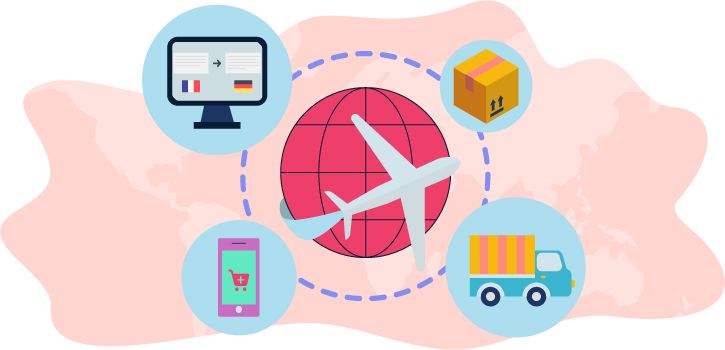
To make trade possible, many services and systems are needed, such as:
-
transportation of goods
-
storage of products
-
banking and payment systems
-
insurance
-
advertising and marketing
-
communication services
All of these activities together form commerce.
The Relationship Between Commerce and Trade
The easiest way to understand their relationship is:
Trade is the core activity, and commerce is the system that supports that activity.
Without trade, commerce would have no purpose.
Without commerce, trade would be slow, risky, and inefficient.
They are closely connected, but they are not the same.
Main Difference in Scope
The most important difference between commerce and trade is their scope.
-
Trade has a narrow scope.
It is limited to buying and selling. -
Commerce has a wide scope.
It includes trade as well as all supporting activities.
So, every act of trade is part of commerce, but not every activity in commerce is trade.
Difference in Nature of Activities
Trade involves direct exchange.
Commerce involves support services and systems.
For example:
-
When a company sells a phone to a customer, that is trade.
-
When the phone is transported from the factory to the shop, insured against damage, advertised to customers, and paid for using banking services, those activities belong to commerce.
Trade focuses on the deal.
Commerce focuses on making the deal possible and practical.
Types of Trade
Trade itself can be divided into two main types.
1. Internal (or domestic) trade
This takes place within the boundaries of one country.
Examples include wholesale trade and retail trade.
2. External (or international) trade
This involves buying and selling between different countries.
It includes exports and imports.
In both cases, the basic activity is still the same: exchange of goods or services.
Main Components of Commerce
Commerce consists of two major parts:
1. Trade
As discussed earlier, this is the buying and selling activity.
2. Aids to trade
These are the services that support trade. Common aids include:
-
Transport – moves goods from one place to another
-
Warehousing – stores goods until they are needed
-
Banking and finance – helps in making payments and providing credit
-
Insurance – reduces business risk
-
Advertising and marketing – informs customers about products
-
Communication – helps buyers and sellers connect
These services do not involve selling goods directly, but trade would be very difficult without them.
Difference in Main Objective
The objective of trade is simple and direct:
To complete an exchange and earn profit from selling goods or services.
The objective of commerce is broader:
To create a smooth, safe, and efficient system for distribution and exchange.
Commerce focuses on improving the flow of goods and services from producers to consumers.
Difference in Participants
In trade, the main participants are:
-
buyers
-
sellers
-
traders (such as wholesalers and retailers)
In commerce, the participants include:
-
traders
-
transport companies
-
banks and financial institutions
-
insurance providers
-
advertising agencies
-
warehouse operators
So, commerce involves a much wider range of people and organizations than trade alone.
Difference in Risk and Responsibility
Trade mainly involves risks related to:
-
changes in price
-
customer demand
-
competition
Commerce includes additional risks and responsibilities, such as:
-
damage to goods during transport
-
storage losses
-
financial risks
-
communication and coordination problems
This shows again that commerce covers a wider business environment than trade.
Difference in Time and Process
Trade is usually a shorter and more visible activity. It is easy to notice when a sale is made.
Commerce is a continuous and long-term process. It begins even before goods are produced and continues until the product reaches the final consumer and payment is completed.
Simple Comparison Table
| Basis | Trade | Commerce |
|---|---|---|
| Meaning | Buying and selling of goods and services | All activities that help trade |
| Scope | Narrow | Wide |
| Main focus | Exchange | Distribution and support services |
| Nature | Direct transaction | Supporting and organizing activities |
| Relationship | Part of commerce | Includes trade |
Why the Difference Matters
Understanding the difference between commerce and trade is important because it helps explain how modern economies work.
If we look only at trade, we see only the final exchange.
But commerce shows the entire system that connects producers, markets, and consumers.
For example, a business may have excellent products to sell, but without proper transportation, banking facilities, or marketing, its trade performance may remain weak. Commerce ensures that trade can operate smoothly and competitively.
Conclusion
The difference between commerce and trade lies mainly in their scope and function.
Trade refers to the act of buying and selling goods and services.
Commerce refers to the broader set of activities that support and enable this buying and selling.
In simple words:
Trade is the heart of business activity, while commerce is the body that supports and sustains it.
Both are essential. Trade creates exchange, and commerce builds the system that allows that exchange to grow, expand, and reach people everywhere.
- Arts
- Business
- Computers
- Juegos
- Health
- Home
- Kids and Teens
- Money
- News
- Personal Development
- Recreation
- Regional
- Reference
- Science
- Shopping
- Society
- Sports
- Бизнес
- Деньги
- Дом
- Досуг
- Здоровье
- Игры
- Искусство
- Источники информации
- Компьютеры
- Личное развитие
- Наука
- Новости и СМИ
- Общество
- Покупки
- Спорт
- Страны и регионы
- World

 English
 Russian
 French
 Portuguese
 Deutsch
 Turkish
 Dutch
Dutch
 Italiano
 Arabic
 Romaian
 Portuguese (Brazil)
 Greek
Greek
