
What are non-tariff barriers in commercial policy?
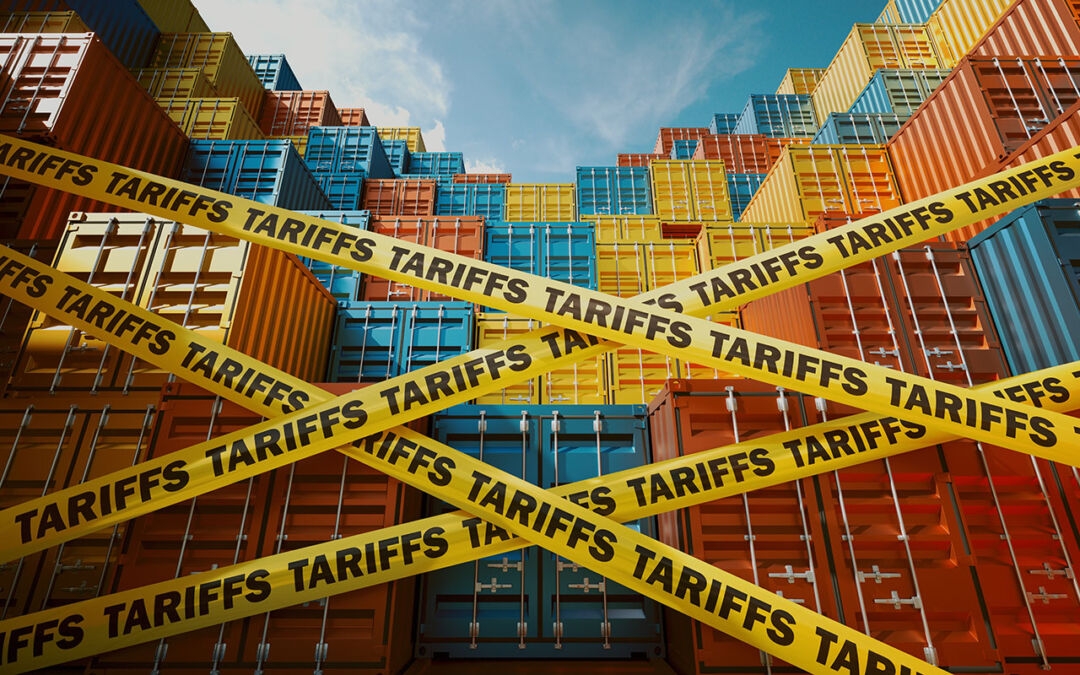
Non-tariff barriers (NTBs) are policy measures—other than ordinary customs duties—that governments use to influence the flow of goods and services across borders. In modern commercial policy, they are often more important than tariffs because global tariff levels have fallen steadily over the last decades, especially under multilateral trade rules coordinated by the World Trade Organization.
This article explains what non-tariff barriers are and focuses on three of the most common and influential types: quotas, licensing, and standards.
1. What are non-tariff barriers in commercial policy?
In simple terms, non-tariff barriers are rules, procedures, or administrative measures that restrict, control, or discourage imports and exports without directly charging a tax on trade.
Unlike tariffs—which increase the price of foreign products at the border—non-tariff barriers usually work by:
-
limiting how much can be traded,
-
controlling who is allowed to trade, or
-
setting technical or legal requirements that products must meet.
Governments use these measures for different reasons:
-
to protect domestic industries from foreign competition,
-
to safeguard public health, safety, and the environment,
-
to ensure product quality and consumer protection, and
-
sometimes to pursue strategic or political goals.
Non-tariff barriers therefore have a dual character. Some are genuinely necessary and socially useful, while others mainly function as hidden protectionism.
2. Quotas
Definition
A quota is a direct quantitative restriction on trade. It sets a maximum physical amount or value of a good that may be imported (or exported) during a specific period of time.
For example, a government may allow only a certain number of tons of sugar, steel, or vehicles to be imported each year.
How quotas work
Once the quota limit is reached, no further imports are legally allowed until the next quota period begins. The restriction is therefore absolute.
Quotas can take several forms:
-
Global quotas – a fixed total quantity regardless of origin.
-
Country-specific quotas – separate limits for different exporting countries.
-
Seasonal quotas – limits that apply only during certain months.
Economic effects
Quotas usually:
-
reduce the supply of foreign goods in the domestic market,
-
raise domestic prices, and
-
protect domestic producers from competition.
However, unlike tariffs, quotas do not generate revenue for the government. Instead, the economic benefit often goes to whoever receives the right to import under the quota (import license holders or foreign exporters).
Quotas also create:
-
market distortions,
-
incentives for lobbying and corruption, and
-
inefficiencies in production and consumption.
Because of these negative effects, quotas are widely regarded as one of the most restrictive forms of non-tariff barriers.
3. Licensing
Definition
Import or export licensing requires firms to obtain official permission from a public authority before they can trade a product.
In other words, even if a product is not prohibited and no quota formally exists, a trader cannot import or export it without an approved license.
Types of licensing
There are two main forms:
-
Automatic licensing
Licenses are granted in all cases, but traders must complete administrative procedures.
The purpose is usually statistical monitoring or customs control rather than restriction. -
Non-automatic licensing
Licenses are granted selectively and often in limited numbers.
This type is clearly restrictive and is commonly used to control trade flows or administer quotas.
How licensing acts as a non-tariff barrier
Licensing becomes a trade barrier when:
-
application procedures are complex or slow,
-
decisions are discretionary rather than rule-based,
-
information about requirements is unclear, or
-
authorities delay or deny approvals without transparent justification.
Even when no explicit quota exists, restrictive licensing can produce the same economic result as a quota by limiting who is allowed to import and how much can realistically be traded.
Policy motivation
Governments use licensing to:
-
control sensitive goods (such as pharmaceuticals, chemicals, or strategic materials),
-
enforce safety and security rules,
-
manage foreign exchange or balance-of-payments problems, and
-
protect domestic industries.
Licensing therefore lies in a grey area between legitimate regulation and protectionist control.
4. Standards
Definition
Standards are technical, safety, health, or environmental requirements that products must satisfy before they can be sold in a market.
They may relate to:
-
product composition and design,
-
labeling and packaging,
-
testing procedures,
-
production methods, or
-
performance and safety characteristics.
Many standards are developed by national authorities or international organizations such as the International Organization for Standardization.
Why standards exist
Unlike quotas, standards are usually introduced for legitimate public policy objectives, including:
-
protecting consumers’ health and safety,
-
preventing environmental damage,
-
ensuring product reliability and quality, and
-
providing accurate information to buyers.
In modern economies, standards are essential for trust in markets.
How standards become trade barriers
Standards become non-tariff barriers when:
-
domestic and foreign producers are subject to different rules,
-
certification and testing must be repeated in the importing country even when equivalent tests were already performed abroad,
-
conformity procedures are excessively costly, or
-
technical requirements are designed in ways that favor domestic technology or production methods.
A foreign firm may be able to produce a high-quality product but still be excluded from the market because adapting the product to local technical rules is too expensive or time-consuming.
This makes standards one of the most subtle and complex forms of non-tariff barriers.
Technical barriers and sanitary measures
In trade policy analysis, standards are often divided into:
-
technical regulations (covering product characteristics and labeling), and
-
sanitary and phytosanitary measures (covering food safety and animal and plant health).
Both are widely recognized as necessary, but both can also be misused for protectionist purposes.
5. Comparison of quotas, licensing, and standards
Although all three instruments are non-tariff barriers, they operate in different ways.
-
Quotas directly restrict the quantity of trade.
-
Licensing controls access to the right to trade.
-
Standards regulate the characteristics and compliance conditions of products.
In terms of restrictiveness:
-
quotas are usually the most transparent and restrictive,
-
licensing is more flexible but can be equally restrictive in practice, and
-
standards are the least visible but often the most difficult for exporters to manage.
6. Non-tariff barriers and the modern trade system
As tariffs have declined worldwide, non-tariff barriers have become the main instruments shaping market access.
International trade rules, especially under the World Trade Organization framework, attempt to ensure that:
-
licensing systems are transparent and predictable,
-
quotas are limited and justified, and
-
standards are based on scientific evidence and international norms whenever possible.
The key principle is not to eliminate regulation, but to ensure that regulations are not more trade-restrictive than necessary to achieve their public policy objectives.
7. Economic and political implications
From an economic perspective, non-tariff barriers can:
-
raise prices for consumers,
-
reduce product variety,
-
limit competition and innovation, and
-
increase costs for exporting firms, particularly small and medium-sized enterprises.
From a political perspective, they are attractive because they:
-
are less visible to the public than tariffs,
-
can be justified using health, safety, or environmental arguments, and
-
allow governments to respond to domestic interest groups without openly violating trade commitments.
This explains why non-tariff barriers have grown in importance in commercial policy.
8. Conclusion
Non-tariff barriers are now central to the regulation of international trade. Among them, quotas, licensing, and standards represent three distinct ways in which governments shape market access.
-
Quotas impose direct numerical limits on trade.
-
Licensing determines who is allowed to trade and under what conditions.
-
Standards regulate product characteristics and production requirements.
While all three can serve legitimate public goals, they also carry the risk of being used as hidden protectionist tools. The main challenge for modern commercial policy is therefore not to remove regulation altogether, but to design non-tariff measures that protect society while preserving fair and open international trade.
- Arts
- Business
- Computers
- Jogos
- Health
- Início
- Kids and Teens
- Money
- News
- Personal Development
- Recreation
- Regional
- Reference
- Science
- Shopping
- Society
- Sports
- Бизнес
- Деньги
- Дом
- Досуг
- Здоровье
- Игры
- Искусство
- Источники информации
- Компьютеры
- Личное развитие
- Наука
- Новости и СМИ
- Общество
- Покупки
- Спорт
- Страны и регионы
- World

 English
 Russian
 French
 Spanish
 Portuguese
 Deutsch
 Turkish
 Dutch
Dutch
 Italiano
 Arabic
 Romaian
 Greek
Greek