
What Is Comparative Economics?
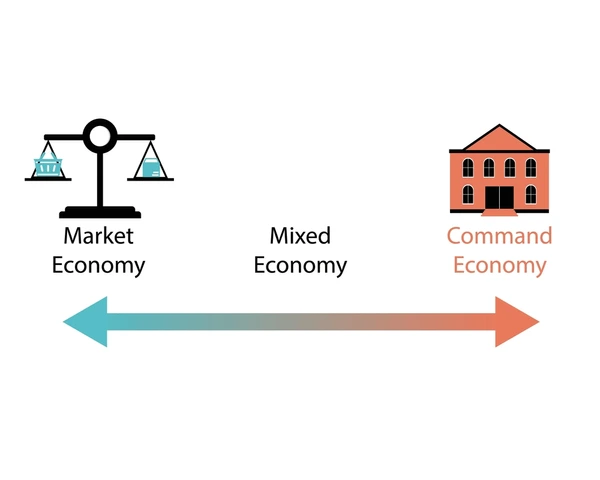
What Is Comparative Economics?
Comparative economics is a branch of economics that studies and compares different economic systems. Its main goal is to understand how societies organize production, distribution, and consumption—and how different institutional arrangements shape economic outcomes such as growth, inequality, stability, and innovation.
Instead of asking only “How does one economy work?”, comparative economics asks a broader and more practical question: How do different types of economies work relative to one another, and what can we learn from their differences?
A simple definition
Comparative economics is the systematic comparison of economic systems, institutions, and policies across countries or historical periods in order to evaluate their performance and understand why they differ.
In other words, it is about comparing how economies are organized and how well those arrangements perform.
What does “economic system” mean?
An economic system refers to the set of rules and institutions that determine:
-
who owns resources (land, factories, capital),
-
how production decisions are made,
-
how goods and services are allocated,
-
and how incomes are distributed.
For example, some economies rely heavily on private ownership and markets, while others use stronger government control and planning. Many modern economies mix both approaches.
Comparative economics studies these systems side by side.
Where did comparative economics come from?
Historically, the field developed from debates about capitalism and socialism, especially in the twentieth century. Early economic thinkers such as Adam Smith emphasized the role of markets and individual decision-making, famously discussed in his book The Wealth of Nations.
Later, Karl Marx offered a very different view of how economies should be organized, focusing on class relations and collective ownership.
These contrasting ideas helped motivate a systematic comparison of economic systems. During the Cold War, comparative economics became especially important because scholars tried to understand the differences between capitalist and socialist economies.
Today, the field has expanded far beyond that original debate.
What exactly does comparative economics study?
Comparative economics looks at several major dimensions of economic organization.
1. Ownership and property rights
A key question is who owns productive assets:
-
private individuals and firms,
-
the state,
-
or some combination of both.
Ownership structures influence incentives, investment decisions, and productivity.
2. Coordination mechanisms
Another major focus is how economic activity is coordinated:
-
through markets and prices,
-
through government planning and regulation,
-
or through hybrid systems.
Comparative economists examine how these mechanisms affect efficiency, innovation, and responsiveness to consumer needs.
3. Institutions and governance
Institutions are the formal and informal rules that shape behavior—such as courts, regulatory agencies, financial systems, and political structures.
Comparative economics studies how differences in institutions help explain why similar policies can work well in one country but poorly in another.
4. Performance and outcomes
The field also compares outcomes, such as:
-
economic growth,
-
income inequality,
-
poverty reduction,
-
employment,
-
and economic stability.
This is where comparative economics becomes especially useful for real-world decision-making.
How is comparative economics different from regular economics?
Standard economic theory often builds models that apply broadly to any economy. These models focus on how rational agents behave under certain assumptions.
Comparative economics, by contrast, is more institutional and contextual. It asks:
-
How do different legal systems matter?
-
How do political structures affect economic reforms?
-
Why do similar market reforms produce different results in different countries?
In short, comparative economics pays more attention to how real-world systems are structured, not only how individuals respond to prices.
What kinds of economies are compared?
Comparative economics does not classify countries into only two simple categories. Instead, it recognizes a wide spectrum of systems, such as:
-
market-oriented economies with limited government intervention,
-
social market economies with strong welfare states,
-
state-led or developmental economies,
-
and economies in transition from one system to another.
Modern research often focuses on how mixed systems differ in their institutional design rather than on pure theoretical models.
Methods used in comparative economics
Comparative economists rely on a variety of methods:
-
cross-country statistical analysis,
-
historical comparison,
-
case studies of institutional reforms,
-
and policy evaluation.
Data and reports from organizations such as the World Bank and the International Monetary Fund are often used to compare performance indicators and institutional features across countries.
However, good comparative work does not rely only on numbers. Understanding legal systems, political constraints, and social norms is just as important.
Why is comparative economics important?
Comparative economics plays a central role in policy design and reform.
1. Learning from other countries
Governments frequently look to other countries when designing policies on:
-
healthcare,
-
education,
-
labor markets,
-
or financial regulation.
Comparative economics helps identify which institutional arrangements are transferable and which depend strongly on local conditions.
2. Understanding reform outcomes
When countries attempt major reforms—such as privatization, trade liberalization, or pension reform—results often vary widely.
Comparative economics helps explain why:
-
some reforms succeed,
-
some fail,
-
and some produce unexpected side effects.
3. Avoiding one-size-fits-all solutions
One of the main lessons of comparative economics is that economic institutions work as systems. Changing one part without considering others can undermine the whole structure.
This perspective discourages simple policy imitation and encourages careful institutional design.
Comparative economics in a globalized world
Globalization has increased economic interdependence, but it has not made economies identical. Different countries still rely on different combinations of:
-
market competition,
-
government intervention,
-
social protection,
-
and financial regulation.
Comparative economics helps explain why these diverse models continue to coexist—and why they can all remain competitive under certain conditions.
It also plays an important role in studying emerging and developing economies, especially when analyzing paths of industrialization, innovation strategies, and institutional development.
A short example
Consider two countries that both introduce stronger competition policies to reduce monopoly power. One has an independent judiciary and transparent regulatory agencies. The other has weak enforcement and political interference.
Even though the policy reform looks similar on paper, comparative economics would predict very different results—because the institutional environment is different. This illustrates how the field goes beyond simple policy comparison and focuses on deeper structural factors.
Key strengths of comparative economics
The main strengths of the field are:
-
its attention to institutions and governance,
-
its ability to explain cross-country differences in outcomes,
-
and its practical relevance for policy design.
It helps bridge the gap between abstract economic theory and the complex realities of real economies.
Limitations and challenges
Comparative economics also faces difficulties:
-
institutions are hard to measure precisely,
-
countries differ along many dimensions at the same time,
-
and it is often difficult to establish clear cause-and-effect relationships.
As a result, careful interpretation and strong theoretical grounding are essential.
Conclusion
Comparative economics is the study of how different economic systems and institutional arrangements perform in practice. By comparing ownership structures, coordination mechanisms, governance frameworks, and policy outcomes across countries and over time, it helps explain why economies develop along different paths.
More importantly, comparative economics provides a realistic foundation for designing reforms. It reminds policymakers, researchers, and students that economic performance is not driven only by markets or policies in isolation—but by the broader institutional systems in which they operate.
- Arts
- Business
- Computers
- Jeux
- Health
- Domicile
- Kids and Teens
- Argent
- News
- Personal Development
- Recreation
- Regional
- Reference
- Science
- Shopping
- Society
- Sports
- Бизнес
- Деньги
- Дом
- Досуг
- Здоровье
- Игры
- Искусство
- Источники информации
- Компьютеры
- Личное развитие
- Наука
- Новости и СМИ
- Общество
- Покупки
- Спорт
- Страны и регионы
- World

 English
 Russian
 Spanish
 Portuguese
 Deutsch
 Turkish
 Dutch
Dutch
 Italiano
 Arabic
 Romaian
 Portuguese (Brazil)
 Greek
Greek