
What Is the Difference Between B2B and B2C Customer Experience?
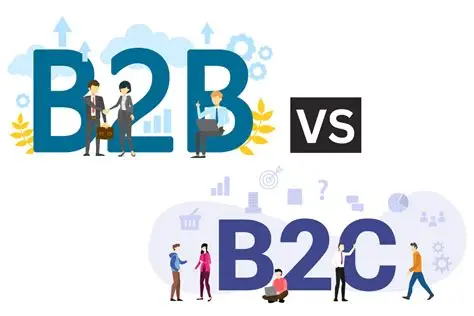
Customer experience (CX) is a critical component of business success, but the strategies and priorities for CX can differ significantly between B2B (business-to-business) and B2C (business-to-consumer) contexts. Understanding these differences is essential for tailoring experiences, improving satisfaction, and driving loyalty in each market segment.
While both B2B and B2C aim to create positive interactions, the nature of the customer relationship, the complexity of the buying process, and the decision-making dynamics are distinct. This article provides a detailed comparison of B2B and B2C CX, highlighting differences, strategies, real-world examples, and best practices for maximizing impact in each environment.
Understanding B2B Customer Experience
In B2B contexts, businesses sell products or services to other businesses. The customer experience focuses on long-term relationships, complex buying processes, and value-driven interactions.
Key Characteristics of B2B CX:
-
Longer Sales Cycles: B2B purchases often involve multiple decision-makers and extended evaluation periods.
-
Complex Solutions: Products or services may be customized, technical, or require integration with existing systems.
-
Relationship-Driven: Maintaining strong personal relationships is essential for loyalty and repeat business.
-
High Stakes: Transactions are typically higher in value, and errors can have significant operational or financial consequences.
-
Multiple Touchpoints: Sales teams, account managers, support teams, and implementation specialists all influence CX.
B2B CX Focus Areas:
-
Providing dedicated account management and consultative support
-
Offering detailed product information, demos, and technical documentation
-
Delivering personalized solutions tailored to the client’s business needs
-
Ensuring reliability, accuracy, and professional service at every interaction
B2B CX is highly relational and emphasizes trust, expertise, and the ability to deliver measurable business outcomes.
Understanding B2C Customer Experience
In B2C contexts, businesses sell products or services directly to individual consumers. CX in B2C focuses on emotional engagement, convenience, and immediate satisfaction.
Key Characteristics of B2C CX:
-
Shorter Sales Cycles: Many B2C purchases are low-risk, impulsive, or immediate.
-
Emotional Decision-Making: Customers are often influenced by brand perception, convenience, and personal preferences.
-
High Volume: B2C businesses typically serve a larger customer base.
-
Multiple Channels: Experiences span online, in-store, mobile, social media, and customer support interactions.
-
Personalized Engagement: Mass personalization and targeted marketing are critical to stand out.
B2C CX Focus Areas:
-
Simplifying purchase processes with seamless checkout and intuitive interfaces
-
Offering personalized promotions, product recommendations, and loyalty rewards
-
Creating engaging content and brand experiences that resonate emotionally
-
Delivering fast, efficient customer service and easy returns
B2C CX emphasizes delight, convenience, and consistent, enjoyable interactions at scale.
Key Differences Between B2B and B2C CX
| Aspect | B2B Customer Experience | B2C Customer Experience |
|---|---|---|
| Decision-Making | Multiple stakeholders, rational evaluation | Individual or small group, often emotional decisions |
| Sales Cycle | Long, complex, relationship-driven | Short, simple, transaction-focused |
| Relationship | Emphasis on trust and long-term partnership | Focus on convenience and emotional connection |
| Customization | Highly tailored products and services | Standardized or lightly personalized offerings |
| Volume | Fewer customers, higher value | High volume, lower value per transaction |
| Support | Dedicated account managers, technical expertise | Self-service options, chatbots, call centers |
| Metrics | Customer retention, account growth, ROI | CSAT, NPS, repeat purchase, lifetime value |
| Touchpoints | Sales, account management, implementation, support | Marketing, website/app, in-store, social media, customer service |
| Experience Goal | Solve business problems, improve efficiency | Delight, convenience, brand loyalty |
| Feedback | Formal surveys, reviews, strategic discussions | Reviews, ratings, social listening, surveys |
Strategies for B2B Customer Experience
1. Develop Strong Relationships
-
Assign account managers to key clients
-
Conduct regular check-ins and business reviews
-
Offer consultative support and expertise
2. Provide Educational Content
-
Whitepapers, webinars, and case studies
-
Technical documentation and product demos
-
Training for client teams
3. Streamline Onboarding and Support
-
Dedicated implementation support
-
Clear processes and timelines
-
24/7 access to technical assistance when required
4. Personalize Solutions
-
Tailor products and services to client-specific needs
-
Offer flexible pricing or package options
-
Adjust service levels based on client priorities
5. Measure and Monitor KPIs
-
Account growth and retention rates
-
Customer satisfaction (CSAT) at the account level
-
ROI delivered to the client
Strategies for B2C Customer Experience
1. Optimize Digital Touchpoints
-
User-friendly websites and mobile apps
-
Seamless checkout and payment options
-
Personalized recommendations and offers
2. Engage Emotionally
-
Compelling storytelling and content marketing
-
Rewards programs and loyalty initiatives
-
Social media engagement and community building
3. Provide Efficient Support
-
AI chatbots for common inquiries
-
Self-service portals and FAQs
-
Easy returns and refunds
4. Personalize at Scale
-
Email, app, and website personalization
-
Targeted promotions and segmented marketing campaigns
-
Customer segmentation to anticipate needs
5. Measure and Monitor KPIs
-
Net Promoter Score (NPS) for brand advocacy
-
Customer Satisfaction Score (CSAT) for individual interactions
-
Customer Effort Score (CES) for ease of engagement
Real-World Examples
B2B Example: Salesforce
Salesforce provides a strong B2B experience through:
-
Dedicated account managers for enterprise clients
-
Extensive training and certification programs
-
Tailored solutions for diverse industries
-
Continuous monitoring of client success metrics
B2C Example: Amazon
Amazon exemplifies B2C CX with:
-
Personalized product recommendations
-
Streamlined checkout and delivery processes
-
Real-time order tracking and proactive notifications
-
Easy returns and responsive customer service
Key Takeaways
-
B2B CX is relationship-driven, highly personalized, and focused on solving complex business problems.
-
B2C CX prioritizes emotional engagement, convenience, and seamless interactions at scale.
-
Both require continuous feedback, measurement, and improvement to maintain satisfaction and loyalty.
-
Strategies and tools must be adapted to the context—what works for B2B may not translate directly to B2C, and vice versa.
By understanding these differences, companies can design experiences that meet the specific expectations of their customers, strengthen relationships, and drive business outcomes.
- Arts
- Business
- Computers
- الألعاب
- Health
- الرئيسية
- Kids and Teens
- مال
- News
- Personal Development
- Recreation
- Regional
- Reference
- Science
- Shopping
- Society
- Sports
- Бизнес
- Деньги
- Дом
- Досуг
- Здоровье
- Игры
- Искусство
- Источники информации
- Компьютеры
- Личное развитие
- Наука
- Новости и СМИ
- Общество
- Покупки
- Спорт
- Страны и регионы
- World

 English
 Russian
 French
 Spanish
 Portuguese
 Deutsch
 Turkish
 Dutch
Dutch
 Italiano
 Romaian
 Portuguese (Brazil)
 Greek
Greek