
What Is Econometrics?
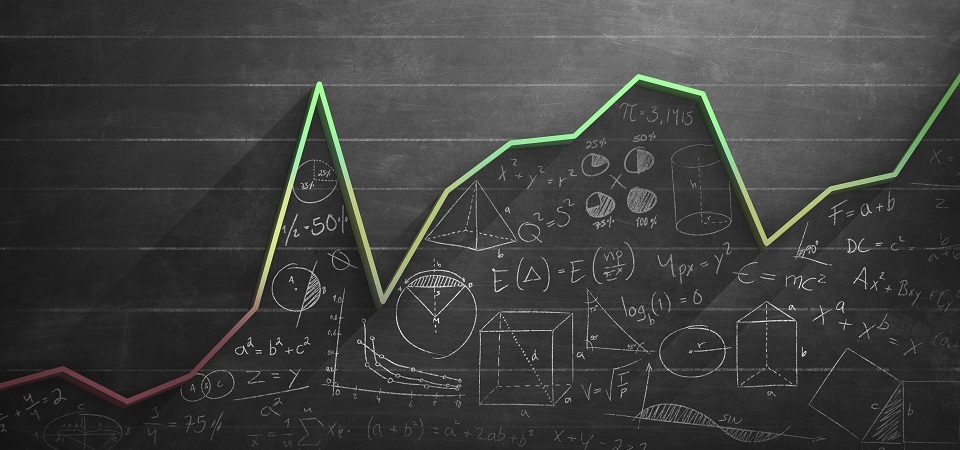
What Is Econometrics?
Econometrics is a branch of economics that uses statistical methods, mathematical models, and data analysis to understand economic relationships, test theories, and make predictions. At its core, econometrics transforms abstract economic ideas into measurable and testable frameworks. It bridges the gap between theory and reality, allowing economists to evaluate how economies actually function using real-world data.
The Essence of Econometrics
Economics often begins with theories—ideas about how individuals, firms, and governments behave. For example, a basic theory might suggest that when prices rise, demand falls. While intuitive, such claims need evidence. This is where econometrics comes in. It provides the tools to quantify relationships, verify hypotheses, and determine whether observed patterns align with theoretical expectations.
Econometrics is not just about crunching numbers. It is about asking precise questions, collecting relevant data, and applying appropriate methods to extract meaningful conclusions. It combines three main components:
-
Economic theory (the “what” and “why”)
-
Mathematics (the structure and logic)
-
Statistics (the analysis and inference)
Together, these elements form a powerful toolkit for understanding complex economic systems.
A Simple Example
Consider the relationship between education and income. Economic theory suggests that higher education leads to higher earnings. Econometrics allows us to test this idea by analyzing data on individuals’ years of schooling and their wages.
Using statistical techniques such as regression analysis, econometricians can estimate how much income increases with each additional year of education. More importantly, they can control for other factors—like experience, location, or gender—to isolate the effect of education itself.
This ability to separate different influences is one of the key strengths of econometrics.
Key Methods in Econometrics
Econometrics relies on a wide range of methods, but a few are particularly fundamental:
1. Regression Analysis
Regression is the backbone of econometrics. It examines how one variable (the dependent variable) changes in response to one or more other variables (independent variables). For example, economists might model how consumption depends on income, interest rates, and inflation.
Regression helps answer questions like:
-
How strong is the relationship?
-
Is it statistically significant?
-
Can we use it to predict future outcomes?
2. Time Series Analysis
Time series data track variables over time, such as GDP, unemployment, or stock prices. Econometric techniques help identify trends, cycles, and seasonal patterns. They are also used for forecasting future values.
3. Panel Data Analysis
Panel data combine cross-sectional and time series data, following the same individuals, firms, or countries over time. This allows for deeper insights, as it captures both variation across entities and changes over time.
4. Causal Inference
One of the most challenging aspects of econometrics is distinguishing correlation from causation. Just because two variables move together does not mean one causes the other. Econometricians use advanced techniques—such as instrumental variables, natural experiments, and randomized controlled trials—to identify causal relationships.
Why Econometrics Matters
Econometrics plays a crucial role in both academic research and practical decision-making. Its applications are vast and impactful.
1. Policy Evaluation
Governments rely on econometric analysis to assess the effectiveness of policies. For example, does increasing the minimum wage reduce employment? Do tax cuts stimulate economic growth? Econometrics helps answer these questions with evidence rather than speculation.
2. Business Decision-Making
Companies use econometrics to forecast demand, set prices, evaluate marketing strategies, and manage risk. For instance, a firm might analyze past sales data to predict how consumers will respond to a new product.
3. Financial Markets
In finance, econometric models are used to analyze asset prices, estimate risk, and develop trading strategies. Investors rely on these models to make informed decisions in uncertain environments.
4. Development Economics
Econometrics is especially important in understanding poverty, inequality, and economic development. By analyzing data from different regions and populations, economists can identify which interventions—such as education programs or microfinance—are most effective.
Challenges in Econometrics
Despite its power, econometrics is not without challenges. Real-world data are often messy, incomplete, or biased. Some common issues include:
-
Measurement errors: Data may not accurately reflect the true values of variables.
-
Omitted variables: Important factors may be left out of a model, leading to misleading results.
-
Endogeneity: When explanatory variables are correlated with the error term, it becomes difficult to establish causality.
-
Multicollinearity: When independent variables are highly correlated with each other, it can distort estimates.
Addressing these challenges requires careful model design, robust methods, and critical thinking. Econometrics is as much an art as it is a science.
The Evolution of Econometrics
Econometrics has evolved significantly over time. Early economists relied on simple models and limited data. Today, advances in computing power and data availability have transformed the field.
The rise of “big data” has opened new possibilities. Econometricians can now analyze massive datasets, from online transactions to satellite imagery. Machine learning techniques are increasingly integrated with traditional econometric methods, enhancing predictive accuracy and uncovering complex patterns.
However, the core goal remains the same: to use data to understand economic phenomena and inform decision-making.
Econometrics vs. Statistics
While econometrics and statistics are closely related, they are not identical. Statistics is a general discipline focused on data analysis across various fields. Econometrics, on the other hand, is specifically tailored to economic questions.
What sets econometrics apart is its emphasis on economic theory. Models are not built solely to fit data but to reflect underlying economic relationships. This theoretical foundation guides the choice of variables, model structure, and interpretation of results.
Skills Required for Econometrics
To work in econometrics, one needs a combination of skills:
-
Mathematical proficiency: Understanding algebra, calculus, and linear algebra.
-
Statistical knowledge: Familiarity with probability, estimation, and hypothesis testing.
-
Programming skills: Ability to use software like R, Python, Stata, or MATLAB.
-
Economic intuition: A strong grasp of economic principles and reasoning.
-
Critical thinking: The ability to question assumptions and interpret results carefully.
These skills enable econometricians to move beyond simple analysis and tackle complex, real-world problems.
Real-World Impact
Econometrics has had a profound impact on how we understand and manage economies. It has reshaped policymaking, improved business strategies, and deepened our understanding of human behavior.
For example:
-
It has helped central banks design monetary policies to control inflation.
-
It has guided education reforms by identifying effective teaching methods.
-
It has improved public health interventions by analyzing the spread of diseases.
In each case, econometrics provides evidence-based insights that lead to better outcomes.
Conclusion
Econometrics is a vital tool in modern economics. By combining theory, mathematics, and data, it allows us to test ideas, uncover relationships, and make informed decisions. It transforms economics from a largely theoretical discipline into an empirical science grounded in real-world evidence.
In a world increasingly driven by data, the importance of econometrics continues to grow. Whether in government, business, or academia, its methods are essential for understanding complex systems and addressing some of the most pressing challenges of our time.
Ultimately, econometrics is not just about numbers—it is about using data to tell meaningful stories about how economies work and how they can be improved.
- Arts
- Business
- Computers
- Παιχνίδια
- Health
- Κεντρική Σελίδα
- Kids and Teens
- Money
- News
- Personal Development
- Recreation
- Regional
- Reference
- Science
- Shopping
- Society
- Sports
- Бизнес
- Деньги
- Дом
- Досуг
- Здоровье
- Игры
- Искусство
- Источники информации
- Компьютеры
- Личное развитие
- Наука
- Новости и СМИ
- Общество
- Покупки
- Спорт
- Страны и регионы
- World

 English
 Russian
 French
 Spanish
 Portuguese
 Deutsch
 Turkish
 Dutch
Dutch
 Italiano
 Arabic
 Romaian
 Portuguese (Brazil)