
What Is Time Series Data in Econometrics?
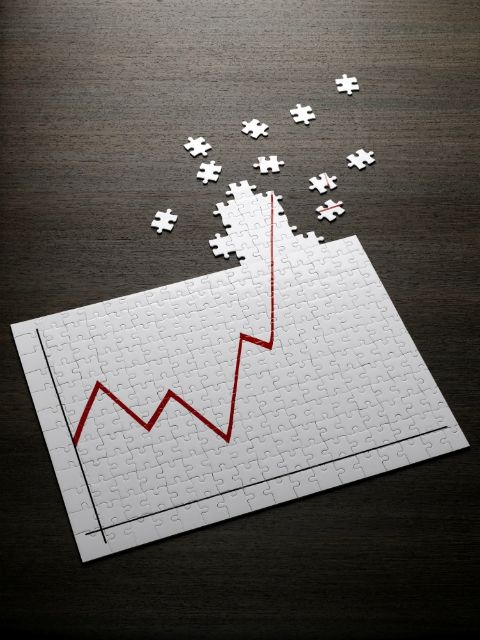
What Is Time Series Data in Econometrics?
Time series data is one of the most important types of data used in econometrics. It refers to a sequence of observations collected over time, typically at regular intervals such as daily, monthly, quarterly, or annually. Unlike cross-sectional data, which captures information at a single point in time, time series data allows economists and researchers to analyze how variables evolve, interact, and respond to changes over time.
This article explores the concept of time series data in econometrics, its characteristics, components, applications, and the challenges involved in analyzing it.
1. Definition of Time Series Data
In econometrics, time series data consists of observations on a variable (or multiple variables) ordered chronologically. Each data point corresponds to a specific time period, making the temporal order essential for analysis.
Examples of time series data include:
-
Daily stock prices of a company
-
Monthly unemployment rates
-
Quarterly GDP growth
-
Annual inflation rates
The key feature is that the sequence matters. The value at time t may depend on its past values, which introduces unique analytical considerations.
2. Key Characteristics of Time Series Data
Time series data differs from other data types in several important ways:
a. Temporal Dependence
Observations are often correlated over time. For example, today’s stock price is likely related to yesterday’s price.
b. Ordered Structure
The chronological order of observations is critical. Rearranging the data destroys its meaning.
c. Frequency
Time series can be collected at different frequencies:
-
High-frequency: seconds, minutes (e.g., financial tick data)
-
Medium-frequency: daily, weekly
-
Low-frequency: monthly, quarterly, yearly
d. Dynamic Behavior
Time series data captures changes and movements over time, making it suitable for studying trends, cycles, and patterns.
3. Components of Time Series Data
A time series is often decomposed into several components to better understand its structure:
a. Trend
The long-term movement in the data. It shows the general direction (upward or downward) over time.
Example: A steady increase in GDP over decades.
b. Seasonal Component
Regular patterns that repeat over fixed periods, such as months or quarters.
Example: Retail sales increasing during holidays.
c. Cyclical Component
Fluctuations that occur over longer periods and are usually linked to economic cycles (booms and recessions).
d. Irregular (Random) Component
Unpredictable variations caused by random shocks or unforeseen events, such as natural disasters or political instability.
Understanding these components helps economists model and forecast time series more effectively.
4. Types of Time Series Data
Time series data can be categorized based on structure and dimensionality:
a. Univariate Time Series
Involves a single variable observed over time.
Example: Inflation rate over 20 years.
b. Multivariate Time Series
Includes multiple variables observed over time.
Example: GDP, inflation, and interest rates tracked simultaneously.
Multivariate time series is particularly useful in econometrics because economic variables often influence each other.
5. Stationarity in Time Series
A central concept in time series econometrics is stationarity.
A time series is said to be stationary if its statistical properties—such as mean, variance, and autocorrelation—remain constant over time.
Why Stationarity Matters
Many econometric models assume stationarity. Non-stationary data can lead to misleading results, such as spurious relationships.
Types of Non-Stationarity
-
Trend non-stationarity: Mean changes over time
-
Seasonal non-stationarity: Patterns repeat but vary across periods
Making Data Stationary
Common techniques include:
-
Differencing (subtracting previous values)
-
Detrending
-
Seasonal adjustment
6. Autocorrelation and Lag Structure
Time series data often exhibits autocorrelation, meaning past values influence current values.
Autocorrelation
This is the correlation between a variable and its own past values.
Lag
A lag refers to a previous time period. For example:
-
Lag 1: previous period
-
Lag 2: two periods ago
Econometric models frequently include lagged variables to capture dynamic relationships.
7. Common Time Series Models in Econometrics
Several models are used to analyze time series data:
a. Autoregressive (AR) Models
These models express the current value as a function of its past values.
b. Moving Average (MA) Models
These models use past error terms (shocks) to explain current values.
c. ARMA and ARIMA Models
-
ARMA (Autoregressive Moving Average): Combines AR and MA components
-
ARIMA (Autoregressive Integrated Moving Average): Extends ARMA to handle non-stationary data
d. Vector Autoregression (VAR)
Used for multivariate time series, where multiple variables influence each other over time.
These models are widely used for forecasting and policy analysis.
8. Applications of Time Series Data in Econometrics
Time series data plays a crucial role in many economic and financial applications:
a. Forecasting
Economists use time series models to predict future values, such as:
-
Inflation rates
-
GDP growth
-
Exchange rates
b. Policy Analysis
Governments and central banks analyze time series data to evaluate the impact of economic policies.
c. Financial Market Analysis
Investors and analysts use time series data to study stock prices, volatility, and market trends.
d. Business Decision-Making
Firms rely on time series data for:
-
Sales forecasting
-
Demand planning
-
Inventory management
9. Challenges in Analyzing Time Series Data
Despite its usefulness, time series data presents several challenges:
a. Non-Stationarity
Many economic time series are non-stationary, requiring transformation before analysis.
b. Structural Breaks
Sudden changes in the data-generating process (e.g., financial crises) can distort models.
c. Missing Data
Gaps in data can complicate analysis and reduce accuracy.
d. Overfitting
Using too many parameters can lead to models that fit past data well but perform poorly in forecasting.
e. Endogeneity
In multivariate settings, variables may influence each other simultaneously, making causal interpretation difficult.
10. Time Series vs. Cross-Sectional Data
It is helpful to distinguish time series data from other data types:
| Feature | Time Series Data | Cross-Sectional Data |
|---|---|---|
| Dimension | Time | Individuals/units |
| Structure | Ordered | Unordered |
| Dependency | Often autocorrelated | Usually independent |
| Example | GDP over years | Income across households |
There is also panel data, which combines both time series and cross-sectional dimensions.
Conclusion
Time series data is a cornerstone of econometrics, enabling researchers to analyze how economic variables change over time. Its defining feature—the temporal ordering of observations—introduces both opportunities and challenges. By understanding its components, properties like stationarity, and appropriate modeling techniques, economists can extract valuable insights and make informed forecasts.
From predicting economic growth to analyzing financial markets, time series data remains an essential tool for both theoretical research and practical decision-making. However, careful handling is required to address issues such as non-stationarity, autocorrelation, and structural changes, ensuring reliable and meaningful results.
- Arts
- Business
- Computers
- Spellen
- Health
- Home
- Kids and Teens
- Money
- News
- Personal Development
- Recreation
- Regional
- Reference
- Science
- Shopping
- Society
- Sports
- Бизнес
- Деньги
- Дом
- Досуг
- Здоровье
- Игры
- Искусство
- Источники информации
- Компьютеры
- Личное развитие
- Наука
- Новости и СМИ
- Общество
- Покупки
- Спорт
- Страны и регионы
- World

 English
 Russian
 French
 Spanish
 Portuguese
 Deutsch
 Turkish
 Italiano
 Arabic
 Romaian
 Portuguese (Brazil)
 Greek
Greek