
Why Knowledge Capital Is Important in the Digital Economy
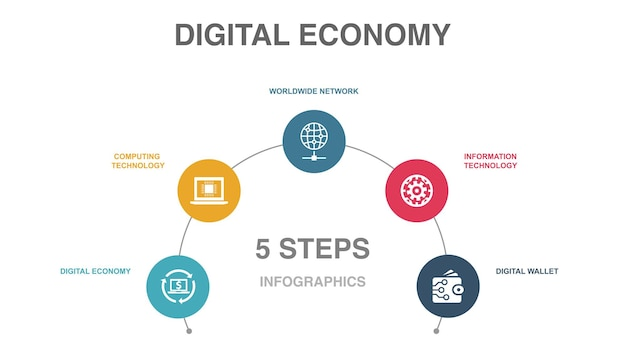
The global economy has undergone a profound transformation over the past few decades, shifting from an industrial-based system to a digital, knowledge-driven one. In this new landscape, traditional factors of production—land, labor, and physical capital—are no longer sufficient to explain economic growth or organizational success. Instead, knowledge capital has emerged as a central pillar of value creation. Knowledge capital refers to the intangible assets embedded within an organization, including expertise, skills, intellectual property, processes, data, and organizational know-how.
As digital technologies continue to evolve, knowledge capital is not just important—it is essential. It determines how effectively organizations innovate, compete, and adapt in an increasingly complex and fast-paced environment. This article explores why knowledge capital plays such a critical role in the digital economy, examining its characteristics, benefits, and strategic implications.
The Shift to a Knowledge-Based Economy
Historically, economic success was tied to physical resources and manufacturing capabilities. Industrial-era companies focused on optimizing production, reducing costs, and scaling output. However, the rise of the internet, cloud computing, artificial intelligence, and global connectivity has fundamentally changed how value is created.
In the digital economy:
- Information flows faster than ever before
- Innovation cycles are shorter
- Competitive advantages are more temporary
- Intangible assets outweigh tangible ones in value
Organizations now compete based on what they know rather than what they own. Knowledge capital has become the most valuable resource because it fuels innovation, enhances productivity, and enables differentiation.
Characteristics of Knowledge Capital
To understand its importance, it’s useful to examine what makes knowledge capital unique:
1. Intangibility
Unlike machinery or buildings, knowledge cannot be physically touched or easily measured. It exists in employees’ minds, organizational systems, and digital platforms.
2. Non-rivalry
Knowledge can be used by multiple people simultaneously without being depleted. For example, a piece of software code can be reused across many applications.
3. Scalability
Digital knowledge assets can be scaled rapidly at minimal cost. A single innovation can reach millions of users globally.
4. Cumulative Growth
Knowledge builds on itself. The more an organization learns, the more it can innovate and create new knowledge.
5. Dependency on Human Capital
Knowledge capital is closely tied to people—their skills, creativity, and experience.
Driving Innovation and Creativity
One of the most important roles of knowledge capital is its ability to drive innovation. In the digital economy, innovation is not optional—it is a necessity for survival.
Organizations rich in knowledge capital can:
- Develop new products and services
- Improve existing processes
- Identify emerging market trends
- Experiment with new business models
For example, companies that invest heavily in research and development (R&D) generate intellectual property such as patents and proprietary technologies. These innovations create barriers to entry and sustain competitive advantage.
Knowledge capital also fosters creative problem-solving. Employees who possess diverse expertise can collaborate to generate new ideas, leading to breakthroughs that would not be possible in rigid, hierarchical systems.
Enhancing Competitive Advantage
In traditional industries, competitive advantage often came from access to raw materials or economies of scale. In contrast, digital-era advantage comes from:
- Unique knowledge
- Proprietary data
- Specialized expertise
- Organizational learning capabilities
Knowledge capital enables firms to differentiate themselves in crowded markets. For instance:
- A company with advanced data analytics capabilities can better understand customer behavior
- A firm with strong technical expertise can build superior digital products
- Organizations with efficient knowledge-sharing systems can respond faster to change
Because knowledge is difficult to replicate, it creates sustainable competitive advantages. Competitors may copy products, but they cannot easily replicate the underlying expertise and organizational culture that produced them.
Enabling Digital Transformation
Digital transformation—the integration of digital technologies into all aspects of business—relies heavily on knowledge capital. It requires:
- Technical skills (e.g., software development, cybersecurity)
- Strategic understanding of digital tools
- Organizational learning and adaptability
Without sufficient knowledge capital, digital transformation efforts often fail. Organizations must invest in training, upskilling, and knowledge management systems to fully leverage digital technologies.
Moreover, digital transformation generates new knowledge through data collection and analysis. This creates a feedback loop where knowledge capital both enables and is enhanced by digitalization.
Supporting Data-Driven Decision-Making
The digital economy is characterized by vast amounts of data. However, data alone is not valuable unless it is transformed into actionable insights. Knowledge capital plays a crucial role in this process.
Organizations use knowledge capital to:
- Interpret data accurately
- Identify patterns and trends
- Make informed strategic decisions
- Reduce uncertainty and risk
For example, data scientists and analysts convert raw data into meaningful insights that guide business strategies. Without the expertise to analyze data, organizations cannot fully benefit from digital technologies.
Increasing Organizational Agility
Agility—the ability to adapt quickly to change—is essential in the digital economy. Markets evolve rapidly, customer preferences shift, and new technologies emerge constantly.
Knowledge capital enhances agility by:
- Enabling faster learning and adaptation
- Supporting continuous improvement
- Facilitating knowledge sharing across teams
- Encouraging innovation and experimentation
Organizations with strong knowledge capital can pivot quickly, seize new opportunities, and respond effectively to disruptions.
Reducing Costs and Improving Efficiency
Knowledge capital contributes to operational efficiency in several ways:
- Streamlining processes through best practices
- Automating tasks using digital knowledge systems
- Reducing errors through expertise and training
- Improving resource allocation
For example, well-documented processes and knowledge-sharing platforms reduce the need for repetitive problem-solving. Employees can access existing knowledge instead of reinventing solutions.
This leads to:
- Lower operational costs
- Higher productivity
- Faster execution
Facilitating Global Collaboration
The digital economy is inherently global. Teams often work across different countries and time zones. Knowledge capital enables effective collaboration in this environment.
Key elements include:
- Shared knowledge platforms
- Collaborative tools
- Standardized processes
- Organizational culture that promotes knowledge sharing
When knowledge is accessible and well-managed, teams can collaborate seamlessly regardless of location. This expands the talent pool and enhances innovation.
Creating Value in Intangible Assets
In modern businesses, intangible assets often account for the majority of a company’s value. These include:
- Intellectual property (patents, trademarks)
- Brand reputation
- Customer relationships
- Organizational knowledge
Knowledge capital underpins all these assets. For example:
- Strong knowledge systems improve customer service
- Innovative capabilities enhance brand reputation
- Intellectual property generates revenue streams
Investors increasingly evaluate companies based on their knowledge assets rather than physical holdings.
Challenges in Managing Knowledge Capital
Despite its importance, managing knowledge capital is not easy. Organizations face several challenges:
1. Knowledge Loss
When employees leave, they take valuable knowledge with them.
2. Knowledge Silos
Information may be trapped within departments, limiting collaboration.
3. Measurement Difficulties
Knowledge capital is intangible and hard to quantify.
4. Rapid Obsolescence
Knowledge can quickly become outdated in fast-changing industries.
To address these challenges, organizations must implement effective knowledge management strategies.
Strategies for Building Knowledge Capital
Organizations can strengthen their knowledge capital through:
1. Continuous Learning
Investing in employee training and development.
2. Knowledge Management Systems
Using digital platforms to store and share knowledge.
3. Collaboration Culture
Encouraging open communication and teamwork.
4. Innovation Investment
Supporting research and development initiatives.
5. Talent Acquisition
Hiring skilled individuals with specialized expertise.
These strategies ensure that knowledge capital is continuously developed and leveraged.
The Role of Technology
Technology plays a critical role in enhancing knowledge capital. Tools such as:
- Artificial intelligence
- Cloud computing
- Big data analytics
- Collaboration platforms
help organizations capture, store, and utilize knowledge more effectively.
For example:
- AI can analyze large datasets to generate insights
- Cloud platforms enable global knowledge sharing
- Digital tools facilitate real-time collaboration
Technology amplifies the impact of knowledge capital, making it more accessible and scalable.
Future Outlook
As the digital economy continues to evolve, the importance of knowledge capital will only increase. Emerging trends include:
- Greater reliance on AI and automation
- Increased importance of data literacy
- Growing need for interdisciplinary skills
- Expansion of remote and hybrid work
Organizations that prioritize knowledge capital will be better positioned to thrive in this dynamic environment.
Conclusion
Knowledge capital is the foundation of success in the digital economy. It drives innovation, enhances competitiveness, supports digital transformation, and enables organizations to adapt to rapid change. Unlike traditional assets, knowledge capital grows with use and can be leveraged across multiple domains.
However, its intangible nature makes it challenging to manage. Organizations must adopt strategic approaches to build, share, and protect their knowledge assets. By investing in people, technology, and processes, they can unlock the full potential of knowledge capital.
In a world where information is abundant but insight is scarce, those who effectively harness knowledge capital will lead the future.
- Arts
- Business
- Computers
- Spiele
- Health
- Startseite
- Kids and Teens
- Geld
- News
- Personal Development
- Recreation
- Regional
- Reference
- Science
- Shopping
- Society
- Sports
- Бизнес
- Деньги
- Дом
- Досуг
- Здоровье
- Игры
- Искусство
- Источники информации
- Компьютеры
- Личное развитие
- Наука
- Новости и СМИ
- Общество
- Покупки
- Спорт
- Страны и регионы
- World

 English
 Russian
 French
 Spanish
 Portuguese
 Turkish
 Dutch
Dutch
 Italiano
 Arabic
 Romaian
 Portuguese (Brazil)
 Greek
Greek
