
What Is GDP and Why Does It Matter?
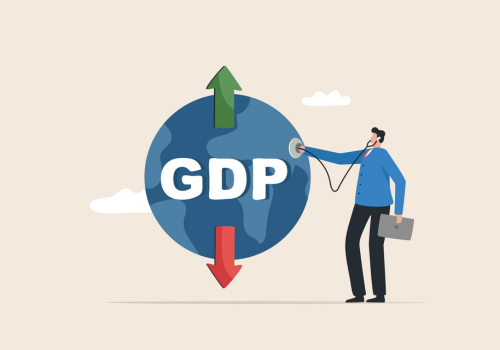
What Is GDP and Why Does It Matter?
Gross Domestic Product, commonly known as GDP, is one of the most widely used measures of a country’s economic performance. It appears in news headlines, government reports, and financial analyses, often treated as the ultimate indicator of how well an economy is doing. But what exactly is GDP, how is it calculated, and why does it matter so much? Understanding GDP is essential for grasping how economies function and how policies affect everyday life.
What Is GDP?
GDP represents the total monetary value of all final goods and services produced within a country’s borders over a specific period, usually a quarter or a year. “Final goods and services” means products that are ready for consumption—like a car sold to a consumer or a haircut provided by a barber—rather than intermediate goods used to produce something else.
At its core, GDP answers a simple question: How much economic activity is taking place in a country?
How Is GDP Calculated?
There are three primary approaches to calculating GDP, and in theory, they should all yield the same result:
1. The Production (or Output) Approach
This method sums the value added at each stage of production across all industries. Value added is the difference between a firm’s output and the cost of its inputs.
2. The Income Approach
This approach totals all the income earned by individuals and businesses in the economy, including wages, profits, rent, and taxes (minus subsidies).
3. The Expenditure Approach
The most commonly used method, it calculates GDP using the formula:
GDP = C + I + G + (X − M)
Where:
-
C (Consumption): Spending by households on goods and services
-
I (Investment): Business investments in capital, such as machinery or buildings
-
G (Government Spending): Public spending on goods and services
-
X (Exports): Goods and services sold abroad
-
M (Imports): Goods and services purchased from other countries
The term (X − M) is known as net exports.
Nominal vs. Real GDP
GDP can be measured in two ways:
-
Nominal GDP reflects current market prices, without adjusting for inflation.
-
Real GDP adjusts for inflation, providing a more accurate picture of economic growth over time.
Real GDP is generally preferred when comparing economic performance across different periods because it isolates changes in production rather than price fluctuations.
Why Does GDP Matter?
GDP is more than just a number—it has wide-ranging implications for governments, businesses, and individuals.
1. Indicator of Economic Health
GDP growth is often seen as a sign of a healthy economy. When GDP is rising, businesses are producing more, employment tends to increase, and incomes generally grow. Conversely, falling GDP may indicate a recession, where economic activity slows and unemployment rises.
2. Policy Decisions
Governments and central banks rely heavily on GDP data when making decisions. For example:
-
If GDP growth is too slow, governments may increase spending or cut taxes to stimulate the economy.
-
If the economy is overheating (growing too quickly), policymakers may take steps to cool it down, such as raising interest rates.
3. Investment and Business Planning
Businesses use GDP trends to guide decisions about expansion, hiring, and investment. A growing economy encourages companies to invest more, while a shrinking one may lead to cost-cutting.
Similarly, investors monitor GDP to assess market conditions and make informed choices about where to allocate capital.
4. International Comparisons
GDP allows comparisons between countries. Larger economies tend to have higher GDPs, but economists often look at GDP per capita (GDP divided by population) to assess living standards. This helps determine how wealth is distributed among citizens.
GDP and Standard of Living
While GDP per capita is often used as a proxy for living standards, it is not a perfect measure. A higher GDP per capita generally indicates more economic resources per person, but it doesn’t account for income inequality, access to healthcare, or environmental quality.
For example, two countries with similar GDP per capita might have very different standards of living if one has a more equal distribution of income or better public services.
Limitations of GDP
Despite its importance, GDP has several well-known limitations:
1. It Ignores Income Inequality
GDP measures total output but does not show how income is distributed. Economic growth can occur alongside rising inequality, meaning that many people may not benefit from the increase in GDP.
2. It Excludes Non-Market Activities
GDP does not account for unpaid work, such as household labor or volunteer services, even though these contribute significantly to well-being.
3. It Overlooks Environmental Costs
Economic activity that harms the environment—like pollution or deforestation—can increase GDP in the short term, even though it may reduce long-term sustainability and quality of life.
4. It Doesn’t Measure Well-Being
GDP focuses on production, not happiness or quality of life. Factors like health, education, leisure time, and personal security are not directly reflected in GDP figures.
Alternatives and Complements to GDP
Because of its limitations, economists and policymakers often use additional indicators alongside GDP:
-
Human Development Index (HDI): Combines income, education, and life expectancy
-
Genuine Progress Indicator (GPI): Adjusts GDP by considering environmental and social factors
-
Gross National Happiness (GNH): Focuses on well-being rather than economic output
These measures aim to provide a more comprehensive view of societal progress.
GDP in Everyday Life
Even if you don’t follow economic data closely, GDP affects your daily life in subtle ways:
-
Job Opportunities: A growing economy typically creates more jobs
-
Wages: Strong GDP growth can lead to higher incomes
-
Public Services: Government revenues often rise with GDP, enabling more spending on infrastructure, education, and healthcare
-
Prices and Stability: Economic performance influences inflation and financial stability
Conclusion
GDP is a fundamental tool for understanding economic activity. It provides a snapshot of how much a country produces and serves as a key guide for policymakers, businesses, and investors. While it is not a perfect measure—failing to capture inequality, environmental impact, and overall well-being—it remains an essential starting point for analyzing economic performance.
To truly understand an economy, GDP should be considered alongside other indicators that reflect the broader quality of life. Still, its central role in shaping decisions and perceptions ensures that GDP will remain one of the most important concepts in economics for years to come.
- Arts
- Business
- Computers
- Oyunlar
- Health
- Home
- Kids and Teens
- Money
- News
- Personal Development
- Recreation
- Regional
- Reference
- Science
- Shopping
- Society
- Sports
- Бизнес
- Деньги
- Дом
- Досуг
- Здоровье
- Игры
- Искусство
- Источники информации
- Компьютеры
- Личное развитие
- Наука
- Новости и СМИ
- Общество
- Покупки
- Спорт
- Страны и регионы
- World

 English
 Russian
 French
 Spanish
 Portuguese
 Deutsch
 Dutch
Dutch
 Italiano
 Arabic
 Romaian
 Portuguese (Brazil)
 Greek
Greek