
What is John Maynard Keynes theory?
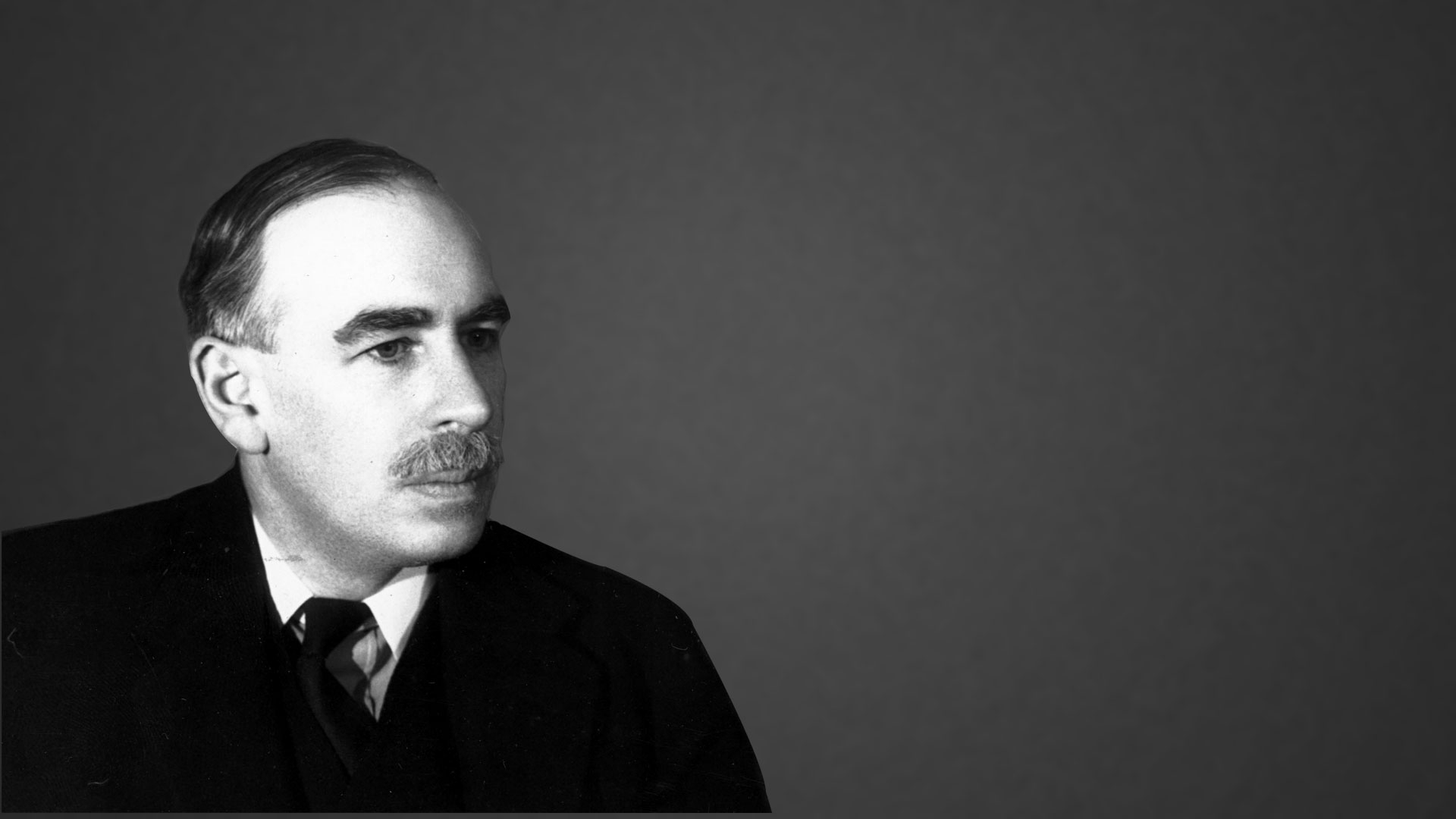
What Is John Maynard Keynes’ Theory?
A Crisis, a Break, and an Uncomfortable Idea
The story does not begin with theory. It begins with collapse.
Factories idle. Workers linger in queues that do not move. Prices fall, yet nothing becomes more affordable because income has evaporated. The old assurances—self-correcting markets, flexible prices, thrift rewarded—start to sound less like principles and more like incantations. It is in this setting that John Maynard Keynes intervened, not merely as an economist but as a dissenter from orthodoxy.
What he proposed was unsettling: economies can settle into prolonged periods of underperformance, not because of rigidities alone, but because of a deficiency in aggregate demand. In other words, the problem is not that markets fail to clear temporarily—it is that they can clear at the wrong level.
That insight would ripple outward, reshaping policy, redefining the state’s role, and provoking a century-long argument about the limits of markets.
The Core Idea: Demand Drives Output
At the heart of Keynes’ theory lies a deceptively simple claim: total spending in the economy—aggregate demand—determines output and employment in the short run.
Not supply. Not productive capacity. Not even the moral virtues of saving.
Demand.
This inversion matters. Classical economics had treated supply as the anchor—production creates income, and income generates demand. Keynes flips the sequence. When households and firms choose not to spend, production contracts. Income falls further. A feedback loop emerges, not toward equilibrium, but toward stagnation.
The Components of Aggregate Demand
Keynes breaks aggregate demand into four moving parts:
-
Consumption (household spending)
-
Investment (business spending on capital)
-
Government spending
-
Net exports
The instability, in his view, arises primarily from investment. Firms do not invest according to some stable function of interest rates; they invest based on expectations—fragile, often irrational, and prone to sudden reversals.
He called these impulses “animal spirits.” It was not a compliment.
The Multiplier: Small Shocks, Large Consequences
Keynes did not stop at diagnosing the problem. He introduced a mechanism that magnifies it: the multiplier effect.
An initial increase in spending—say, government investment in infrastructure—does not simply add to output once. It reverberates. Workers hired for the project spend their wages, which becomes income for others, who then spend in turn.
The process compounds.
k = \frac{1}{1 - MPC}
Where k is the multiplier and MPC is the marginal propensity to consume.
The implication is stark. If households spend a large fraction of additional income, the multiplier is large, and fiscal interventions become potent. Conversely, if fear dominates and saving rises, the multiplier weakens, and stimulus struggles to gain traction.
This is not a stable system. It is a sensitive one.
The Paradox of Thrift: When Saving Becomes Destructive
There is a moment—usually in downturns—when prudence turns corrosive.
Individuals, facing uncertainty, choose to save more. From a personal standpoint, this is rational. But when everyone does it simultaneously, aggregate demand falls. Businesses cut output. Incomes decline. Total savings, paradoxically, may not increase at all.
Keynes called this the paradox of thrift.
It is one of his most subversive ideas because it challenges a deeply held intuition: that what is virtuous for the individual is virtuous for the collective. Keynes suggests otherwise. Coordination failures can transform rational behavior into systemic dysfunction.
Interest Rates and Liquidity Preference
Keynes also reinterprets the role of interest rates.
Classical theory posits that interest rates equilibrate saving and investment. Keynes disagrees. He argues that interest rates are determined by the demand for liquidity—how much cash people prefer to hold versus invest.
This concept, liquidity preference, introduces another layer of instability. In times of uncertainty, people hoard money. Interest rates may fall, yet investment does not respond because expectations are pessimistic.
This is the infamous liquidity trap.
In such a scenario, monetary policy loses its force. Lowering rates further does little. The economy stalls, not because credit is unavailable, but because confidence is absent.
The Role of Government: From Bystander to Stabilizer
If markets can stall, then the question becomes unavoidable: who intervenes?
Keynes’ answer is clear, though not simplistic. The government must act as a countercyclical force—spending more when private demand collapses and restraining itself when the economy overheats.
This is not about permanent expansion of the state. It is about timing.
During recessions:
-
Increase public spending
-
Cut taxes
-
Run deficits if necessary
During booms:
-
Reduce deficits
-
Build fiscal buffers
The logic is pragmatic, not ideological. The goal is stabilization, not control.
A Comparative Lens: Keynes vs. Classical Economics
To understand the rupture Keynes represents, it helps to contrast his framework with the classical tradition he challenged.
| Dimension | Classical View | Keynesian View |
|---|---|---|
| Driver of Output | Supply determines demand | Demand determines output |
| Role of Prices | Flexible prices ensure equilibrium | Prices may adjust slowly; demand shortfalls persist |
| Saving | Always beneficial | Can reduce aggregate demand |
| Investment | Driven by interest rates | Driven by expectations (“animal spirits”) |
| Government Role | Minimal intervention | Active stabilization |
| Unemployment | Temporary, self-correcting | Can be persistent and involuntary |
| Monetary Policy | Highly effective | Limited in liquidity traps |
The divergence is not merely technical. It is philosophical. Classical economics trusts markets to self-correct. Keynes doubts that trust, particularly in moments of crisis.
A Lesson I Learned the Hard Way
I remember sitting in a policy briefing during a downturn—one of those moments when forecasts change weekly and confidence evaporates quietly, almost imperceptibly.
The debate was familiar. Should the government tighten its budget to signal discipline? Or should it spend more, despite rising deficits?
The instinct in the room leaned toward restraint. Debt levels were already elevated. Markets, we were told, would punish excess.
But something felt off.
The private sector had already pulled back. Investment was collapsing. Households were saving defensively. If the government also retrenched, who exactly would sustain demand?
That was the moment Keynes’ logic became less abstract. The issue was not long-term fiscal prudence—it was short-term survival of economic activity.
The lesson was uncomfortable: timing matters more than ideology. A policy that is responsible in one context can be destructive in another.
Critiques and Tensions Within Keynesian Thought
Keynes’ theory did not go unchallenged. Nor should it.
Critics have raised several concerns:
1. Inflation Risk
Sustained government spending can overheat the economy, leading to inflation. Keynesians respond that this risk emerges primarily when the economy approaches full capacity—not during deep recessions.
2. Public Debt Accumulation
Running deficits during downturns implies higher debt. The unresolved question is whether governments will actually reduce deficits during booms.
History offers mixed evidence.
3. Crowding Out
Government borrowing may displace private investment. Keynes counters that in a slump, idle resources mean there is little to crowd out.
4. Policy Timing and Execution
Even if the theory is sound, implementation is difficult. Stimulus may arrive too late or be poorly targeted.
These critiques do not invalidate Keynes’ insights, but they complicate their application.
The Evolution: From Keynes to Modern Macroeconomics
Keynes did not leave behind a closed system. His ideas were formalized, extended, and sometimes diluted.
Post-war economists developed models that integrated Keynesian demand management with neoclassical foundations. Later, new schools—monetarists, new classical economists, and behavioral theorists—revisited his claims, often challenging the assumptions about expectations and policy effectiveness.
Yet, during crises, Keynesian logic has a way of resurfacing.
When markets falter dramatically, policymakers tend to rediscover the importance of demand, fiscal expansion, and stabilization. It is less a return to Keynes than a recognition that certain dynamics do not disappear simply because theory evolves.
Why Keynes Still Matters
Keynes’ enduring relevance lies in three insights:
-
Economies are not always self-correcting.
Equilibrium is not guaranteed, and when it fails, the consequences are severe. -
Expectations shape outcomes.
Investment decisions depend on uncertain futures, not just current prices. -
Policy can mitigate instability—but imperfectly.
Government intervention is neither a panacea nor a peril in itself. Its effectiveness depends on context, timing, and execution.
These are not comforting ideas. They resist simplification. They demand judgment.
A Provocative Ending: The Limits of Elegance
Economic theory often aspires to elegance—clean models, stable equilibria, predictable responses. Keynes disrupts that aspiration. He introduces messiness: psychology, uncertainty, coordination failures.
He asks us to accept that economies can drift, not toward efficiency, but toward inertia.
The deeper implication is unsettling. If stability requires intervention, and intervention is inherently imperfect, then there is no final resolution—only ongoing management of tensions.
Keynes does not offer closure. He offers a framework for thinking about instability without pretending it can be fully tamed.
And perhaps that is why his theory persists—not as a settled doctrine, but as a recurring challenge to the belief that markets, left alone, will reliably find their way.
- Arts
- Business
- Computers
- Jeux
- Health
- Domicile
- Kids and Teens
- Argent
- News
- Personal Development
- Recreation
- Regional
- Reference
- Science
- Shopping
- Society
- Sports
- Бизнес
- Деньги
- Дом
- Досуг
- Здоровье
- Игры
- Искусство
- Источники информации
- Компьютеры
- Личное развитие
- Наука
- Новости и СМИ
- Общество
- Покупки
- Спорт
- Страны и регионы
- World

 English
 Russian
 Spanish
 Portuguese
 Deutsch
 Turkish
 Dutch
Dutch
 Italiano
 Arabic
 Romaian
 Portuguese (Brazil)
 Greek
Greek