
What causes high prices?
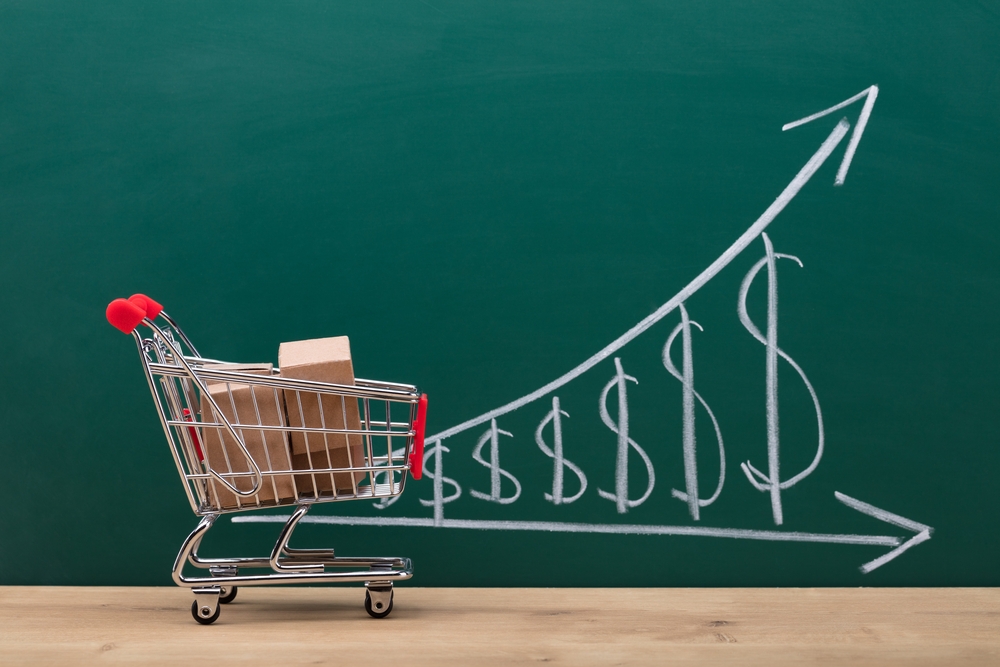
What Causes High Prices?
Walk into a grocery store after a central bank has spent a decade manufacturing money from nothing and you will hear the same exhausted sentence repeated with liturgical regularity: everything is getting expensive.
The phrase sounds harmless. Neutral. Meteorological. As though prices rise the way rain falls. No culprit. No mechanism. No human hand.
But prices do not emerge from the sky.
Every price in a market economy is a signal. A compressed piece of information. A ratio between scarcity and desire. When prices rise persistently across an entire economy, something profound has changed underneath the monetary and productive structure of society. And yet modern discourse treats high prices as if they were caused by abstract spirits: “greed,” “consumer confidence,” “expectations,” or the favorite euphemism of bureaucrats everywhere, “economic overheating.”
An economy does not overheat. A furnace overheats. A machine overheats. Human beings exchange goods and services according to incentives. When those incentives are distorted, prices become distorted too.
That distinction matters.
Because once you understand what causes high prices, you begin to see that inflation is not merely an economic inconvenience. It is a transfer mechanism. A political technology. A method for reallocating wealth invisibly from savers and wage earners toward those closest to monetary creation.
And that realization changes the way you see nearly everything.
Prices Are Signals, Not Moral Judgments
A high price is not inherently bad.
This is the first thing most economic discussions get wrong.
If oil becomes scarce during a war, higher oil prices communicate urgency. Consumers reduce unnecessary consumption. Producers search for alternatives. Entrepreneurs invest in new extraction technologies. The price system coordinates millions of decisions without central direction.
This is the miracle of markets. Not perfection, but communication.
When governments interfere with price signals, they often destroy the very mechanism that allocates resources rationally. Price ceilings create shortages. Subsidies create overproduction. Artificially cheap credit creates speculative bubbles.
The irony is that politicians routinely condemn high prices while simultaneously engineering the conditions that create them.
Consider housing.
For years, central banks suppress interest rates below their market level. Commercial banks expand mortgage credit aggressively. Asset prices surge. Real estate speculation becomes indistinguishable from prudent financial planning. Then, after the inevitable explosion in home prices, the same political class announces emergency affordability programs.
One first manufactures the disease. Then one campaigns against the symptoms.
The Three Primary Causes of High Prices
Though economists love complexity, the broad causes of persistently high prices can usually be reduced to three forces:
-
Monetary expansion
-
Supply destruction
-
Artificial demand stimulation
Everything else is commentary.
1. Monetary Expansion: More Money Chasing the Same Goods
The oldest cause of high prices is also the most politically inconvenient.
When governments expand the money supply faster than the production of real goods and services, purchasing power declines. The currency unit itself weakens.
This is not ideology. It is arithmetic.
If a society produces 100 loaves of bread and possesses $100, each loaf averages $1. Double the money supply to $200 while bread production remains unchanged, and the purchasing power of each dollar falls.
Of course, reality is messier than textbook examples. New money does not enter society evenly. It enters through banking systems, government spending, and financial markets. Those closest to the source spend first, before prices fully adjust. Wage earners and savers receive the new money last, after purchasing power has already deteriorated.
This phenomenon, identified centuries ago by the economist Richard Cantillon, explains why inflation benefits some groups while impoverishing others.
The banker experiences asset appreciation.
The salaried worker experiences higher grocery bills.
These are not separate events. They are the same event viewed from different social positions.
A Lesson I Learned Watching Currency Collapse
Years ago, I spent time speaking with people who had lived through monetary instability in developing economies. One conversation stayed with me.
A shop owner told me he stopped pricing imported goods permanently because replacement costs changed weekly. Customers accused him of greed whenever he updated prices. Yet he was not becoming richer. He was scrambling merely to preserve inventory.
That distinction is essential.
In inflationary systems, rising prices are often mistaken for rising prosperity. Asset values soar. Stock markets climb. Real estate appreciates dramatically. But beneath the illusion lies monetary dilution.
People feel wealthier because nominal numbers rise.
Then they discover their purchasing power has quietly vanished.
The lesson was simple: when money itself becomes unstable, economic calculation deteriorates. Long-term planning becomes speculation. Savings become liabilities. Consumption accelerates because holding cash becomes irrational.
Civilization depends on stable money more than modern economists are willing to admit.
2. Supply Destruction Makes Everything Scarcer
High prices also emerge when societies destroy productive capacity.
This should be obvious. Yet modern policymaking repeatedly ignores it.
You cannot reduce energy investment for a decade and expect cheap fuel. You cannot regulate farming aggressively and expect abundant food. You cannot outsource manufacturing capacity overseas and then act surprised when supply chains fracture.
Production precedes consumption.
Every civilization ultimately lives according to what it can produce efficiently. When production weakens, prices rise because scarcity rises.
The pandemic period illustrated this brutally. Governments around the world halted production, restricted logistics, interrupted labor markets, and fractured transportation networks. Then policymakers expressed astonishment when prices surged afterward.
This was portrayed as an unpredictable shock.
It was not unpredictable at all.
If fewer goods are produced while monetary supply expands simultaneously, higher prices become mathematically unavoidable.
The Political Temptation to Blame “Greed”
Whenever prices rise sharply, governments search desperately for villains.
Oil companies. Grocery stores. Landlords. Speculators.
The accusation is almost always identical: corporations suddenly became greedy.
But corporations were greedy before inflation. Human beings did not awaken morally transformed in a particular fiscal quarter. Profit-seeking behavior is constant. What changes are monetary conditions and production constraints.
A bakery cannot charge $20 for bread unless customers possess enough currency to pay it.
Greed alone explains nothing.
More importantly, the “greed” narrative conveniently absolves monetary authorities from responsibility. If inflation results from corporate malice rather than currency debasement, then central banks remain heroic guardians instead of architects of purchasing-power destruction.
The story survives because it is politically useful.
Not because it is economically coherent.
3. Artificial Demand Creates Distorted Prices
Governments frequently attempt to stimulate consumption without increasing production.
This produces the illusion of prosperity temporarily. Consumers spend more. Businesses report stronger revenues. Asset markets rise.
Then reality arrives.
If stimulus increases demand faster than supply can respond, prices rise. The economy has not become richer. Currency has merely been redistributed into current spending.
Student loans provide a revealing example.
When governments subsidize nearly unlimited educational borrowing, universities respond predictably: tuition rises. Colleges capture the additional purchasing power. The subsidy intended to improve affordability instead destroys affordability.
The same mechanism appears in healthcare, housing, and finance repeatedly.
Artificial credit expansion inflates prices wherever it flows.
A Comparison of Major Causes of High Prices
| Cause | Mechanism | Immediate Effect | Long-Term Consequence |
|---|---|---|---|
| Monetary Expansion | Increase in money supply without corresponding production | Currency purchasing power declines | Savings erosion and asset bubbles |
| Supply Destruction | Reduced production capacity or logistics disruption | Scarcity of goods | Persistent shortages and lower living standards |
| Artificial Demand Stimulation | Credit expansion and government subsidies | Consumption rises faster than output | Structural inflation and debt dependency |
| Energy Constraints | Reduced energy investment or supply shocks | Higher transportation and production costs | Economy-wide price increases |
| Regulatory Burden | Excessive compliance costs on businesses | Reduced competition and efficiency | Higher consumer prices |
| Currency Devaluation | Weakening exchange rate against foreign currencies | Imports become more expensive | Imported inflation across sectors |
Why Asset Prices Rise First
One of the most misunderstood features of inflation is timing.
Consumer prices often rise after financial asset prices.
When central banks create money, it usually enters through banking systems and capital markets first. Investors receive cheap credit. Stocks rise. Bonds rise. Real estate rises. Luxury assets appreciate dramatically.
At this stage, policymakers celebrate.
The public is told the economy is strong because portfolios are expanding.
But no civilization ever became wealthier by bidding up existing assets indefinitely. Real prosperity emerges from production, innovation, savings, and capital accumulation. Financial inflation merely rearranges ownership claims.
Eventually, the new money diffuses outward into wages, commodities, and consumer goods.
Only then does the average citizen notice inflation directly.
By that point, the transfer has largely already occurred.
Why High Prices Hurt the Poor Most
Inflation functions as a regressive tax.
The wealthy own appreciating assets. The poor hold depreciating cash.
A billionaire with real estate, equities, and productive businesses may actually benefit from inflationary environments. Meanwhile, wage earners experience shrinking purchasing power in food, rent, fuel, and healthcare simultaneously.
This is why inflation repeatedly widens inequality despite endless rhetoric about social justice.
The mechanism is subtle enough that many people fail to identify the cause. They blame retailers, immigrants, technology, foreign countries, or vague conspiracies while the monetary architecture itself quietly redistributes wealth upward.
Historically, societies that destroyed their currency systems also destroyed their middle classes.
This pattern is astonishingly consistent.
The Dangerous Fantasy of Endless Cheap Money
Modern economies have become addicted to low interest rates and perpetual liquidity injections.
The addiction resembles narcotics more than economics.
Each crisis produces the same response:
-
Lower rates
-
Expand deficits
-
Inject liquidity
-
Stabilize asset markets
The immediate pain subsides temporarily. But the underlying distortions compound. Debt accumulates faster than productive output. Savings become less valuable. Speculation becomes more rewarding than production.
Eventually, the economy evolves into a system where financial engineering outperforms real entrepreneurship.
This is not capitalism in any meaningful sense.
It is monetary central planning disguised as market activity.
The Real Cure for High Prices
There is no politically painless solution to persistent inflation.
Stable prices require:
-
Stable money
-
Productive investment
-
Energy abundance
-
Fiscal discipline
-
Savings formation
-
Limited monetary manipulation
Notice how unfashionable these ideas have become.
Modern politics rewards immediate consumption, not deferred gratification. Governments prefer stimulus over austerity because voters experience pleasure instantly while consequences arrive later.
But economic law does not disappear because politicians dislike it.
A society cannot consume what it has not produced indefinitely.
At some point, arithmetic reasserts itself.
Always.
Conclusion: High Prices Are a Mirror
High prices are not random. They are diagnostic.
They reveal whether a society produces more than it consumes. Whether its money retains integrity. Whether its institutions reward productivity or speculation.
And perhaps most importantly, they reveal whether political systems are willing to tell uncomfortable truths.
It is easier to blame corporations than central banking. Easier to attack merchants than fiscal recklessness. Easier to subsidize consumption than rebuild productive capacity.
But reality remains stubborn.
When money is debased, prices rise.
When production falls, prices rise.
When governments manufacture artificial demand, prices rise.
The tragedy is not merely economic. It is civilizational.
Because once a population loses trust in money, it eventually loses trust in institutions themselves. Contracts weaken. Savings disappear. Time horizons collapse. Society becomes more short-term, more fragile, more political.
Stable money is not merely an economic tool.
It is the hidden infrastructure of cooperation between strangers.
- Arts
- Business
- Computers
- Spellen
- Health
- Home
- Kids and Teens
- Money
- News
- Personal Development
- Recreation
- Regional
- Reference
- Science
- Shopping
- Society
- Sports
- Бизнес
- Деньги
- Дом
- Досуг
- Здоровье
- Игры
- Искусство
- Источники информации
- Компьютеры
- Личное развитие
- Наука
- Новости и СМИ
- Общество
- Покупки
- Спорт
- Страны и регионы
- World

 English
 Russian
 French
 Spanish
 Portuguese
 Deutsch
 Turkish
 Italiano
 Arabic
 Romaian
 Portuguese (Brazil)
 Greek
Greek
