
How to make habits stick?
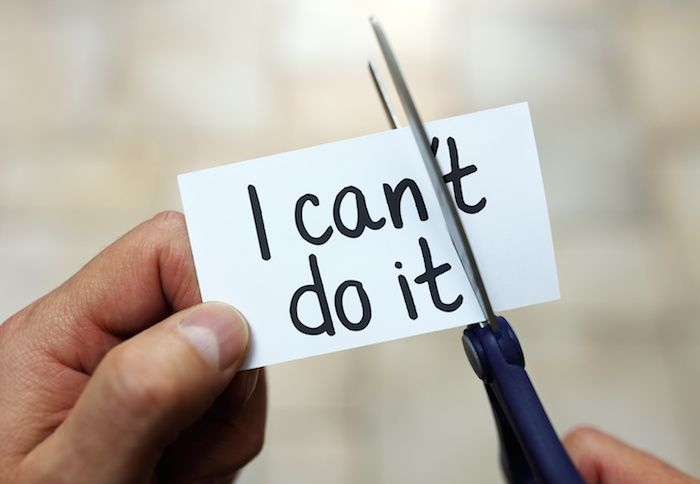
How to Make Habits Stick
Most habits don’t fail because people don’t care.
They fail because the system around the behavior collapses quietly—long before willpower ever gets tested.
At first, everything looks promising. New routine. Fresh motivation. A clear intention written somewhere between urgency and optimism.
Then reality returns.
A missed day. A disrupted schedule. A small lapse that feels insignificant in the moment but quietly resets the trajectory.
And suddenly, the habit is gone—not because it was impossible, but because it was never stabilized.
The question is not how to start habits.
It’s how to make them stay after the novelty wears off.
That is where most systems break.
The Real Problem: Habits Don’t Disappear, They Drift
People often imagine habit failure as a single event.
It is not.
Habits usually decay through accumulation:
-
one skipped day becomes two
-
two becomes a week
-
a week becomes “I used to do that”
The behavior doesn’t vanish. It loses anchoring.
There is a difference.
A broken habit suggests interruption.
A drifting habit suggests absence of reinforcement.
That distinction matters because what drifts can be rebuilt—but only if the underlying structure is understood.
Why Motivation Is a Weak Foundation
Motivation is loud at the beginning of a habit.
It creates urgency, clarity, even identity shifts:
-
“This time will be different.”
-
“I’m going to stick with this.”
-
“I finally figured it out.”
But motivation is a state, not a system.
It fluctuates based on:
-
energy
-
stress
-
environment
-
sleep
-
emotional load
Habits that depend on motivation behave like structures built on weather patterns.
They look strong in good conditions. They collapse in normal ones.
Sustainable habits require something more stable:
systems that function regardless of mood.
The Core Mechanism: Reinforcement Over Time
A habit sticks when it passes a threshold of repetition where the brain stops evaluating it as new.
At that point, the behavior transitions from deliberate to expected.
\text{Repeated Behavior} \rightarrow \text{Expected Behavior} \rightarrow \text{Automatic Behavior}
This shift is subtle but decisive.
Expected behavior is the bridge between intention and automation.
If a behavior never reaches “expected,” it remains fragile. It requires constant re-approval from motivation.
Making habits stick means accelerating the transition into expectation.
The Four Forces That Determine Whether a Habit Sticks
Every habit is shaped by four interacting forces:
1. Cue stability
2. Friction level
3. Reward clarity
4. Identity alignment
When these align, habits stabilize. When they don’t, they decay.
Let’s examine each one.
1. Cue Stability: The Habit Must Know When to Start
A habit without a reliable cue is a habit without a trigger.
Most failures begin here.
People attempt to build habits with vague initiation conditions:
-
“I’ll exercise more.”
-
“I’ll read daily.”
-
“I’ll be more focused.”
But the brain does not respond to intention alone. It responds to context.
A cue must be:
-
consistent
-
visible
-
tied to existing behavior or environment
Without this, the habit has to be “remembered,” which makes it dependent on attention.
And attention is unreliable.
Stable cues reduce cognitive load at the exact moment the habit needs to begin.
2. Friction Level: The Invisible Barrier That Decides Everything
Friction determines whether a behavior actually occurs when the cue appears.
Friction includes:
-
setup effort
-
time delay
-
decision complexity
-
physical distance
-
mental resistance
Small increases in friction produce disproportionately large decreases in execution.
This is why habits often fail not at the level of intent—but at the level of initiation.
The brain follows the path of least resistance by default.
So making habits stick requires something counterintuitive:
You don’t strengthen discipline first. You remove resistance first.
If a habit is difficult to start, it will not survive stress.
3. Reward Clarity: The Brain Needs to Notice the Payoff
The brain does not reinforce what it does not clearly register.
If the reward is:
-
delayed
-
abstract
-
unclear
-
inconsistent
then the habit loop weakens.
\text{Cue} \rightarrow \text{Action} \rightarrow \text{Clear Reward} \rightarrow \text{Reinforcement}
This is why early habit formation often fails silently. The behavior may be useful, but the brain never fully connects action to outcome.
Making habits stick requires making progress visible.
Not necessarily large progress—just unmistakable progress.
The brain reinforces what it can perceive.
4. Identity Alignment: The Deepest Layer of Habit Stability
Habits become durable when they stop being “things you do” and start becoming “things you are.”
Identity does not replace behavior. It stabilizes it.
There is a difference between:
-
“I’m trying to run”
-
“I’m a runner”
The second version carries behavioral expectations.
Identity creates consistency pressure. Once a behavior aligns with self-perception, abandoning it introduces psychological friction.
But identity is not declared.
It is accumulated through evidence:
-
repeated action
-
consistent follow-through
-
small wins over time
Habits stick when identity and behavior stop conflicting.
A Comparison of Habit Stability Factors
| Factor | Weak Habit Design | Strong Habit Design |
|---|---|---|
| Cue | Vague or inconsistent | Stable and context-linked |
| Friction | Requires effort to start | Minimal initiation cost |
| Reward | Delayed or unclear | Immediate or visible |
| Identity | Not connected | Reinforced through repetition |
| Environment | Neutral or conflicting | Supportive and structured |
| Tracking | Complex or inconsistent | Simple and immediate |
The difference between habits that fade and habits that stick is rarely motivation.
It is structure.
Why Early Momentum Matters More Than Perfection
The beginning of a habit is not about optimization.
It is about continuity.
The brain is not yet convinced the behavior is meaningful. It is testing:
-
consistency
-
predictability
-
repetition reliability
Early repetition acts as evidence.
This is why missing early sessions has outsized impact. It interrupts the signal the brain is trying to evaluate.
But consistency does not require perfection.
A habit can survive imperfect execution. It cannot survive irregular absence without recovery.
The goal is not flawless behavior.
The goal is uninterrupted pattern formation.
The Role of Environment: The Hidden Architect of Habit Stability
Habits do not exist in isolation. They exist inside environments that either support or resist them.
Environment determines:
-
what is visible
-
what is accessible
-
what is easy to start
-
what is easy to avoid
Small environmental changes often outperform large motivational efforts.
Examples:
-
placing a book on your desk increases reading likelihood
-
leaving gym clothes visible reduces friction
-
removing distractions increases focus probability
Environment is silent, but decisive.
Most habits fail not because people stop trying, but because the environment stops supporting execution.
A First-Person Lesson About Habit Fragility
There was a period where I believed consistency was primarily a discipline problem.
I would design habits with strong intentions:
-
fixed schedules
-
strict goals
-
detailed plans
The system looked solid on paper.
But in practice, it was fragile.
The breaking point was always the same: disruption.
A change in schedule. A stressful week. A small deviation from routine.
Once disruption occurred, the habit rarely recovered.
What I eventually noticed was uncomfortable but clarifying: the habits that survived were not the ones I cared about most. They were the ones that required the least negotiation to begin.
They didn’t depend on ideal conditions. They survived imperfect ones.
That changed the entire approach.
The goal stopped being intensity. It became resilience under disruption.
Why Habits Collapse After Missed Days
A missed day is rarely just a missed day.
It often introduces a narrative shift:
-
“I broke the streak.”
-
“I’ll restart next week.”
-
“I lost momentum.”
But the real issue is not the missed action. It is the meaning attached to it.
When a habit is framed as a streak, missing a day feels like failure. When it is framed as a system, missing a day becomes noise.
The difference determines whether the behavior resumes quickly or dissolves entirely.
Habits that stick are designed to recover, not just perform.
The Compound Effect of Small Behaviors
Habits are not evaluated in single instances.
They are evaluated across time.
\text{Small Actions} \times \text{Repetition} \rightarrow \text{Large Outcomes}
What matters is not the size of the action, but its repeatability.
A small habit that survives daily variability will outperform an ambitious habit that requires perfect conditions.
This is why small habits are not weak versions of big habits.
They are more stable versions of them.
Why “Sticking” Is Mostly About Recovery Speed
A habit that sticks is not one that is never interrupted.
It is one that resumes quickly after interruption.
The key variable is not:
-
“Did I break it?”
But:
-
“How quickly did I return?”
This reframes habit stability entirely.
Long-term success depends less on avoiding failure and more on minimizing recovery time.
Systems that recover fast tend to persist indefinitely.
Systems that require emotional restart tend to fade.
The Hidden Role of Simplicity
Complex habits fail more often than simple ones not because people lack intelligence, but because complexity increases initiation friction.
Each added step introduces:
-
decision points
-
potential delays
-
cognitive overhead
Simplification increases stability.
If a habit requires explanation before execution, it is too complex to survive variability.
Simple habits are not primitive. They are resilient.
The Real Answer: Habits Stick When They Become Easier Than Alternatives
At the structural level, a habit sticks when it becomes the path of least resistance.
Not through force. Not through repetition alone.
But through design:
-
cues that trigger automatically
-
friction that is minimized
-
rewards that are visible
-
identity that is reinforced
When these conditions align, the habit does not require ongoing persuasion.
It simply happens.
And that is the point at which behavior stops being a project and starts becoming a default.
Conclusion: Stability Is the Real Measure of Success
Most people evaluate habits in terms of initiation:
-
Did I start?
-
Did I complete?
-
Did I stay consistent?
But the deeper question is structural:
-
Does this behavior survive real life conditions?
Making habits stick is not about eliminating failure. It is about designing systems that absorb disruption without collapse.
Because life will interrupt behavior. The question is whether the habit can continue afterward without needing to be rebuilt from zero.
Sustainable habits are not the result of perfect discipline.
They are the result of imperfect systems that continue operating anyway.
And once a habit reaches that level of stability, it no longer depends on motivation, reminders, or effort spikes.
It simply becomes what happens next.
- Arts
- Business
- Computers
- Παιχνίδια
- Health
- Κεντρική Σελίδα
- Kids and Teens
- Money
- News
- Personal Development
- Recreation
- Regional
- Reference
- Science
- Shopping
- Society
- Sports
- Бизнес
- Деньги
- Дом
- Досуг
- Здоровье
- Игры
- Искусство
- Источники информации
- Компьютеры
- Личное развитие
- Наука
- Новости и СМИ
- Общество
- Покупки
- Спорт
- Страны и регионы
- World

 English
 Russian
 French
 Spanish
 Portuguese
 Deutsch
 Turkish
 Dutch
Dutch
 Italiano
 Arabic
 Romaian
 Portuguese (Brazil)
