
What is pollution in economic terms?
What Is Pollution in Economic Terms?
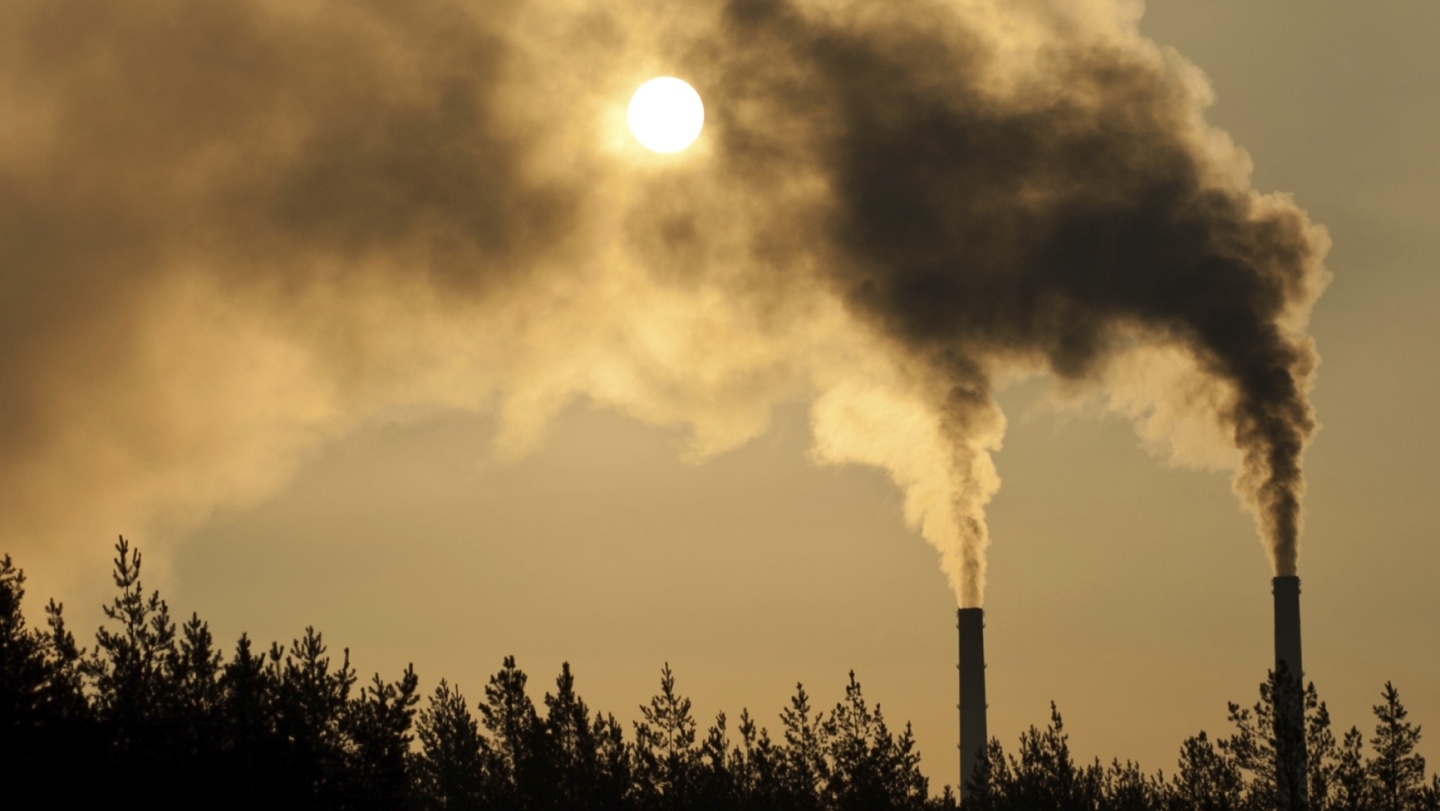
There is a habit in modern economics of describing the living world as though it were a rounding error. A forest becomes “timber inventory.” A river becomes a “resource input.” A child with asthma near a refinery becomes an “externality.” The language itself performs a kind of laundering. Smoke leaves a stack, enters lungs, acidifies rain, erodes stone cathedrals, sterilizes streams, alters climate systems older than memory—and by the time it arrives in an economics textbook, it has become a footnote.
Pollution, in economic terms, is the transfer of costs from the producer to everyone else.
That is the cleanest definition I know. Not elegant. Not bloodless. Simply accurate.
A factory manufactures paint, fertilizer, steel, plastic toys, or lithium batteries. The balance sheet records labor, machinery, electricity, transportation, debt. Yet the poisoned aquifer downstream is absent from the ledger. The migraines in the nearby neighborhood do not appear in quarterly earnings. Neither do collapsing fisheries, mercury in soil, or the long grief of a burned forest. The company privatizes profit and socializes damage. Economics calls this an external cost. Nature calls it accumulation.
The atmosphere keeps perfect books.
Pollution Is a Market Failure Wearing a Tie
Conventional economic theory treats pollution as a side effect. An unfortunate spillover. Something incidental to production. But pollution is often not accidental at all. It is structurally rewarded.
Imagine two manufacturers producing identical shirts.
The first company pays to filter wastewater, reduce emissions, recycle solvents, and redesign packaging. The second dumps untreated dye into a river at night.
In a distorted market, the second company may appear “more efficient.” Lower operating costs. Higher margins. Better quarterly performance. Investors applaud. Analysts upgrade the stock. Meanwhile, the river turns the color of bruised metal.
This is not efficiency. It is theft concealed by accounting conventions.
Economists refer to this dynamic as a negative externality—a cost imposed on third parties who never consented to the transaction. Pollution exists because markets often fail to price ecological damage into the cost of goods and services.
The product looks inexpensive because someone else is paying invisibly.
Usually everyone else.
The Great Subsidy Nobody Mentions
Industrial civilization rests atop an enormous unpriced subsidy: free waste disposal into air, water, and soil.
For more than a century, businesses have operated under the assumption that the biosphere is both infinite warehouse and infinite sewer. Extract. Manufacture. Discard. Repeat.
The absurdity becomes obvious when translated into household terms.
No family would pour motor oil into their drinking water and call it productivity. No restaurant would dump garbage across its dining room floor and congratulate itself on operational efficiency. Yet entire economies behave this way at continental scale.
Pollution persists because ecosystems have historically been treated as economically invisible.
A wetland purifies water more effectively than many industrial facilities, but because it issues no invoices, economists once labeled it “undeveloped land.” A forest moderates rainfall, stores carbon, builds soil, regulates temperature, and stabilizes biodiversity, yet traditional GDP accounting registers greater economic activity when the forest is cut down and sold.
Destruction becomes measurable. Preservation becomes silent.
That asymmetry has shaped modern wealth.
A Brief Lesson I Learned Near a River
Years ago, I visited an industrial corridor in the American Midwest where manufacturing plants lined a river like iron teeth. The water moved sluggishly, carrying a faint petroleum sheen that fractured sunlight into rainbow streaks. Residents spoke casually about illnesses the way farmers discuss weather patterns. Everyone knew someone with respiratory disease. Everyone had theories. Few had power.
One local fisherman told me he no longer ate what he caught.
“I fish for memory now,” he said.
That sentence stayed with me because it revealed something economists rarely quantify: pollution degrades culture alongside ecology. It dissolves trust in place. A contaminated river is not merely impaired water quality. It is interrupted inheritance. Grandparents stop teaching grandchildren to swim there. Rituals disappear. Communities shrink psychologically before they decline economically.
The ledger misses this almost entirely.
Pollution and the Logic of Cheapness
Modern economies worship low prices with near-religious intensity. Cheap fuel. Cheap food. Cheap clothing. Cheap electronics delivered overnight in cardboard boxes the size of coffins.
But low prices often conceal high consequences.
The economist E.F. Schumacher once observed that modern industry treats natural capital as income. That distinction matters profoundly. Income can be spent. Capital must be maintained if future prosperity is to exist at all.
Pollution is what happens when an economy consumes its ecological capital while pretending it is earning interest.
The arithmetic eventually turns vicious.
The Hidden Economics of Pollution
| Economic Activity | Immediate Market Benefit | Hidden Environmental Cost | Long-Term Economic Consequence |
|---|---|---|---|
| Coal-fired electricity | Cheap energy production | Air pollution, carbon emissions, respiratory illness | Healthcare costs, climate instability, infrastructure damage |
| Industrial agriculture | High crop yields | Soil depletion, fertilizer runoff, biodiversity collapse | Reduced fertility, water contamination, declining resilience |
| Fast fashion manufacturing | Low consumer prices | Toxic dye discharge, textile waste, carbon emissions | Waste management burdens, polluted waterways, labor instability |
| Plastic production | Inexpensive packaging | Ocean pollution, microplastics, landfill expansion | Cleanup costs, fisheries decline, public health uncertainty |
| Industrial fishing | Short-term profit maximization | Fish stock depletion, marine ecosystem disruption | Economic collapse of coastal communities |
The table tells a story economists increasingly acknowledge: pollution is deferred payment.
The bill arrives later, often with compound interest.
GDP and the Strange Mathematics of Disaster
One of the more surreal characteristics of conventional economics is that pollution can increase GDP.
Oil spills create cleanup jobs. Cancer treatment expands medical spending. Hurricanes stimulate reconstruction contracts. Wildfires generate demand for timber removal, insurance litigation, and rebuilding materials.
Economic activity rises.
A civilization can poison itself while statistically appearing prosperous.
GDP measures velocity of money, not quality of life. It cannot distinguish between healing and harm. If a city doubles asthma rates while increasing pharmaceutical sales, national accounts may record growth.
The metric itself is morally mute.
This does not mean economics is useless. Far from it. Economics is an extraordinarily powerful language for understanding incentives, allocation, scarcity, and behavior. But when stripped from ecological reality, it becomes dangerous in the same way a compass becomes dangerous near a magnet. The instrument still points somewhere. It simply no longer points north.
Pollution as Information Failure
There is another dimension to pollution rarely discussed: ignorance.
Consumers often do not know the ecological cost embedded within products. A smartphone contains rare earth minerals extracted through energy-intensive mining. A hamburger may embody deforestation, methane emissions, groundwater depletion, and antibiotic overuse. A polyester jacket carries the fossil fuel lineage of synthetic fibers.
Markets function poorly when information is hidden.
Imagine entering a grocery store where none of the products carried prices. You would wander confused, unable to compare value. Yet environmental costs remain largely invisible in precisely this manner.
Pollution survives partly because it is disguised.
Smoke leaves the factory far from the shopping mall. Wastewater disappears underground. Carbon dioxide is odorless. Microplastics are microscopic. Distance anesthetizes responsibility.
The consumer sees convenience. The atmosphere sees chemistry.
Why Economists Started Rethinking Pollution
During the twentieth century, a profound shift occurred inside economics itself. Thinkers began challenging the fantasy that the economy exists separately from ecology.
Ecological economists argued something almost embarrassingly obvious: the economy is a subsystem of the biosphere, not the reverse.
A stock market cannot negotiate with drought. Bond yields do not photosynthesize. No amount of financial engineering can repeal thermodynamics.
This emerging field questioned assumptions that had governed industrial growth for generations:
-
Can endless expansion occur on a finite planet?
-
Should natural systems be valued only when monetized?
-
What happens when pollution exceeds ecological absorption capacity?
-
How do we measure prosperity without destroying the foundations that support it?
These questions are no longer academic. Climate instability, collapsing fisheries, freshwater scarcity, and mass extinction have dragged them from seminar rooms into everyday life.
Pollution is no longer a peripheral economic concern. It is becoming the central economic variable of the century.
The Psychology Beneath Pollution
Pollution also reveals something intimate about human behavior.
Most pollution is delayed consequence. The reward arrives immediately; the damage arrives gradually. Humans are notoriously vulnerable to this asymmetry.
We overfish because tomorrow feels abstract.
We overconsume because disposal feels distant.
We burn fossil fuels because the atmosphere appears empty.
Economic systems amplify this tendency through quarterly reporting cycles, election calendars, and shareholder pressure. Short-term gain overwhelms long-term stewardship.
Yet there are signs of change.
Investors increasingly examine environmental risk. Cities are redesigning infrastructure around resilience. Companies once dismissive of sustainability now confront supply chain fragility caused by climate disruption itself. Insurance markets are recalculating coastal exposure. Agriculture is rediscovering soil biology after decades of chemical dependency.
Reality has entered the room.
Pollution and Moral Imagination
At its deepest level, pollution is not merely an engineering problem or market distortion. It is a failure of relationship.
A culture that sees rivers as waste channels will behave differently from one that sees rivers as living systems. Economics emerges from worldview. The numbers do not float independently above civilization like sacred equations. They reflect assumptions about value, ownership, time, and responsibility.
For decades, industrial economies behaved as though nature were external to commerce. But there is no “away.” Waste does not vanish. Carbon does not disappear because accountants ignore it. The atmosphere is not a legal fiction.
Every economy is nested within ecology.
Always was.
Toward an Economy That Can Count Properly
An intelligent economy would price pollution honestly.
Not to punish industry, but to reveal reality.
If a product destroys soil, contaminates water, or destabilizes climate systems, those costs belong within its price structure. Once pollution becomes economically visible, innovation accelerates. Cleaner technologies gain competitive advantage. Waste reduction becomes profitable. Design improves. Regeneration enters the conversation.
Markets are capable of extraordinary adaptation when incentives align with physical truth.
The future economy may ultimately distinguish itself not by how much it produces, but by how little damage accompanies production.
That is a radically different definition of wealth.
Conclusion: The Ledger Beneath the Ledger
Pollution, in economic terms, is often described with antiseptic phrases: externalities, inefficiencies, market failures. Useful terminology, certainly. But language can either illuminate reality or hide from it.
Here is the uncomfortable truth beneath the vocabulary:
Pollution is evidence that an economy has confused extraction with prosperity.
A society dumping toxins into rivers while calling itself wealthy resembles a corporation selling its factory roof for quarterly profit. The books may look impressive briefly. Rain eventually enters the building.
The remarkable thing is not that pollution exists. Any organism produces waste. Forests do. Oceans do. Human bodies do. The remarkable thing is the scale at which industrial civilization separated waste from responsibility.
Nature, however, remains stubbornly non-negotiable. Chemistry does not care about ideology. Physics does not respond to lobbying. The atmosphere has never attended an economic summit and never will.
Which leaves us with a final question, one far more provocative than whether pollution is economically efficient:
What kind of economy counts a living planet as disposable input and still calls itself rational?
- Arts
- Business
- Computers
- Spellen
- Health
- Home
- Kids and Teens
- Money
- News
- Personal Development
- Recreation
- Regional
- Reference
- Science
- Shopping
- Society
- Sports
- Бизнес
- Деньги
- Дом
- Досуг
- Здоровье
- Игры
- Искусство
- Источники информации
- Компьютеры
- Личное развитие
- Наука
- Новости и СМИ
- Общество
- Покупки
- Спорт
- Страны и регионы
- World

 English
 Russian
 French
 Spanish
 Portuguese
 Deutsch
 Turkish
 Italiano
 Arabic
 Romaian
 Portuguese (Brazil)
 Greek
Greek