
What are the economic benefits of renewable energy?
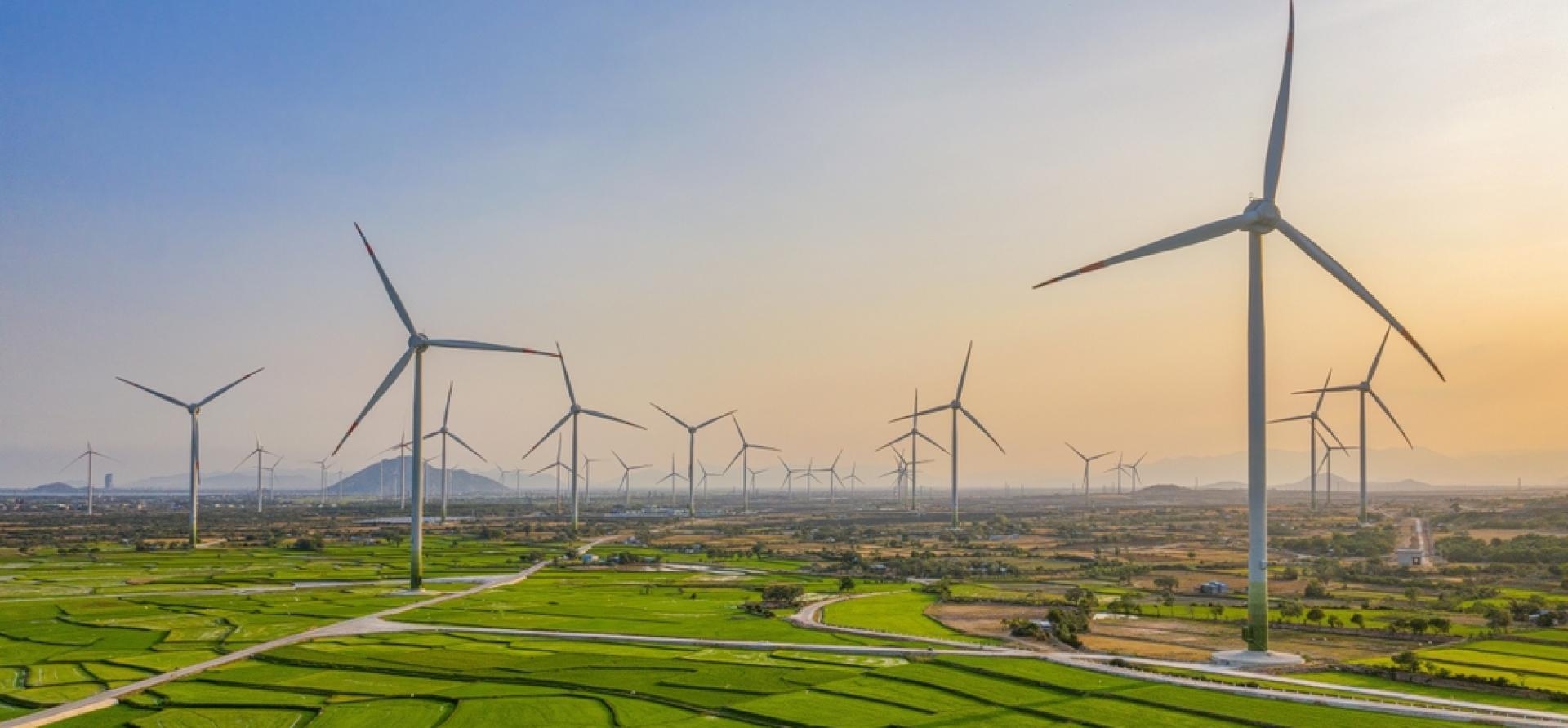
What Are the Economic Benefits of Renewable Energy?
There is a peculiar sound a coal plant makes before dawn. I heard it years ago while standing outside a generating station near Delta, Utah, waiting for a maintenance supervisor who was late because a conveyor belt had jammed. The sound was not mechanical, exactly. It was respiratory. A metallic inhalation. The plant breathed in pulverized rock from Wyoming and exhaled a weather system.
I remember the ash. It coated the trucks, the fences, the lunch pails. One worker brushed gray dust from his jacket with the resignation of a man dusting snow from boots in January. Necessary. Ordinary. I asked him what the plant produced besides electricity. He looked at me strangely and said, “Paychecks.”
That answer has stayed with me for decades because it revealed the enduring mythology of fossil fuels: that they alone sustain economies, employ workers, stabilize nations, and animate prosperity. Renewable energy, by contrast, has often been treated as decorative morality—a wind turbine as civic sculpture, a solar panel as a gesture toward guilt.
But economics, unlike ideology, eventually submits to arithmetic.
And the arithmetic has changed.
Renewable energy is no longer an environmental alternative. It is increasingly the least expensive way to generate power, the fastest-growing source of employment in the energy sector, and one of the most significant redistributions of economic agency in modern history. Sunlight arrives debt-free. Wind has no cartel. Rivers do not invoice humanity for momentum.
The economic benefits of renewable energy extend far beyond lower utility bills. They reshape labor markets, national security, public health expenditures, agricultural resilience, manufacturing systems, and the geography of wealth itself.
What follows is not a utopian forecast. It is an inventory of observable shifts already underway.
Energy Without Extraction
Fossil fuel economies are extractive by design. Wealth accumulates where carbon deposits happen to exist. Nations drill, mine, fracture, transport, insure, refine, and defend combustible geology. Every stage introduces volatility. Pipelines rupture. Tankers stall. Prices swing like weather vanes in a storm.
Renewable energy alters this equation because it transforms energy from a fuel-based system into an infrastructure-based system.
That distinction matters enormously.
A gas plant requires continuous purchases of fuel. A solar farm requires sunlight, which remains stubbornly free despite humanity’s best attempts to monetize existence. Once built, renewable systems operate with remarkably low marginal costs. There is no equivalent of a coal train arriving every Tuesday.
This changes the economics of energy in three profound ways:
1. Lower Operating Costs
Wind and solar facilities are expensive upfront but inexpensive to maintain relative to fossil infrastructure. Once installed, their fuel cost is effectively zero.
The implications ripple outward. Utilities gain predictable pricing. Businesses face fewer energy shocks. Consumers experience greater stability. Entire economies become less vulnerable to geopolitical disruptions involving oil-producing states.
2. Reduced Exposure to Commodity Volatility
Oil markets are emotional ecosystems masquerading as rational ones. Wars, rumors, sanctions, shipping delays, speculative trading—all influence price.
Renewables are different. Sunshine does not panic.
A nation powered increasingly by renewables insulates itself from fuel-price turbulence. That stability becomes economically valuable in ways spreadsheets often underestimate.
3. Decentralized Wealth Creation
Fossil fuels concentrate wealth geographically. Renewable energy disperses it.
Every rooftop becomes a potential power plant. Rural communities can host wind farms. Municipalities can own solar arrays. Farmers can lease land for turbines while continuing agricultural production beneath them.
Energy ceases to be solely something purchased from afar. It becomes participatory.
The Employment Paradox
Critics often claim renewable energy destroys jobs. This argument contains a partial truth wrapped around a larger falsehood.
Yes, transitions disrupt labor markets. Coal communities, in particular, have experienced painful economic abandonment, often compounded by political negligence. One cannot discuss renewable energy honestly without acknowledging this human cost.
But the broader employment data tell a different story.
Renewable energy industries create more jobs per unit of electricity generated than fossil fuels because they are more labor-intensive during manufacturing, installation, grid modernization, and maintenance phases.
Consider the contrast:
| Sector | Typical Economic Pattern | Labor Intensity | Fuel Costs | Long-Term Employment Trend |
|---|---|---|---|---|
| Coal | Extraction-heavy centralized industry | Declining due to automation | High | Shrinking |
| Oil & Gas | Capital-intensive commodity sector | Moderate | High | Volatile |
| Solar | Distributed installation economy | High | None | Rapid growth |
| Wind | Manufacturing + maintenance ecosystem | High | None | Strong growth |
| Energy Efficiency | Building retrofits and local services | Very high | Reduced demand | Expanding |
The important distinction is not merely quantity of jobs, but geography.
A coal mine employs workers where coal exists. Energy-efficiency retrofits employ electricians, engineers, roofers, HVAC technicians, and contractors in nearly every community.
The labor cannot easily be outsourced because buildings exist physically where people live.
I once visited a solar training facility in Oakland housed in a former warehouse. Many students had backgrounds in construction or logistics. One man told me he previously drove diesel generators to telecom sites during wildfire outages. “I spent ten years delivering temporary power,” he said. “Now I install permanent power.”
That sentence contained an entire economic transition.
Public Health as Economic Infrastructure
Economists often treat pollution as an “externality,” a term so antiseptic it borders on moral evasion.
External to whom?
Asthma is not external to a child breathing near a refinery. Stroke is not external to a retiree living downwind of particulate emissions. Lost workdays, emergency room visits, cardiovascular disease, neurological damage from airborne toxins—these are economic events.
Fossil fuels are often artificially cheap because societies socialize the medical costs.
Renewable energy changes this ledger.
The Hidden Savings
Cleaner air produces measurable economic benefits:
-
Lower healthcare expenditures
-
Increased worker productivity
-
Reduced absenteeism
-
Fewer premature deaths
-
Lower insurance burdens
-
Improved cognitive outcomes in children
A coal plant may appear profitable on paper while simultaneously imposing billions in dispersed medical costs across a population.
Solar panels do not emit sulfur dioxide.
This sounds obvious until one realizes modern economies routinely spend extraordinary sums treating illnesses caused by systems considered economically efficient.
There is something almost theological about it: we poison the air, then monetize the cure.
Renewables interrupt that cycle.
Energy Independence and National Stability
The phrase “energy independence” has historically meant increasing domestic drilling. Yet true independence is not merely producing fuel locally; it is reducing dependence on fuel altogether.
Renewables offer nations a peculiar strategic advantage: resilience.
A country powered substantially by distributed renewable systems becomes harder to destabilize economically. Centralized fossil infrastructure is vulnerable by nature. Pipelines can be sabotaged. Shipping routes can close. Refineries can fail catastrophically.
Distributed energy networks behave differently.
Thousands of rooftop solar systems, community batteries, microgrids, and regional wind installations create redundancy. Redundancy is expensive in spreadsheets but invaluable in crises.
After major hurricanes and wildfires, communities with localized renewable systems often restore essential services faster than regions dependent solely on centralized grids.
Resilience is an economic asset.
Not glamorous. Not cinematic. But extraordinarily valuable.
Rural Economies and the Reversal of Extraction
For generations, rural regions have often served as sacrifice zones for urban consumption. Timber, minerals, oil, gas, water, industrial agriculture—resources extracted outward while wealth accumulated elsewhere.
Renewable energy complicates that pattern.
Farmers now lease portions of land for wind turbines that coexist with crops and grazing. Rural counties receive tax revenue from renewable installations. Communities once bypassed by investment become energy producers.
The economics are particularly important in agricultural regions facing climate instability. Renewable income can stabilize farms during drought years or commodity-price collapses.
A rancher in western Kansas once told me the turbines on his property represented “rain that arrives every month.”
There was poetry in that observation, but also accounting.
Manufacturing, Innovation, and Industrial Renewal
One of the least discussed economic benefits of renewable energy is its capacity to revive manufacturing ecosystems.
Renewable technologies require:
-
Steel
-
Copper
-
Advanced electronics
-
Glass
-
Batteries
-
Grid equipment
-
Software systems
-
Precision engineering
This creates industrial demand across multiple sectors simultaneously.
Critics sometimes point to foreign manufacturing dominance in solar panels or batteries as evidence of weakness. Yet this concern actually underscores the scale of the opportunity. Nations increasingly recognize renewable manufacturing as strategic infrastructure akin to railroads or semiconductors.
Industrial leadership follows technological transitions.
The countries that master renewable manufacturing are not merely exporting products; they are shaping future trade systems.
History rarely announces transformation politely. It arrives disguised as supply chains.
The Financial Markets Have Already Voted
Investors, unlike politicians, tend to abandon sentiment quickly when profits evaporate.
Over the past decade, capital has increasingly flowed toward renewable energy because the returns have become compelling relative to fossil infrastructure burdened by regulatory risk, fuel-price volatility, and stranded-asset concerns.
A stranded asset is an elegant phrase for something civilization no longer wants but still owes money on.
Coal plants, pipelines, and oil reserves increasingly carry this risk.
Meanwhile, institutional investors—from pension funds to sovereign wealth funds—have expanded renewable portfolios because long-term revenue streams from wind and solar projects are comparatively stable.
Financial markets are imperfect moral instruments. But they are highly sensitive thermometers.
And the temperature has changed.
The Lesson I Learned Too Late
Years ago, I believed environmental arguments alone would accelerate renewable adoption. If people understood ecological destruction clearly enough, I assumed, transformation would follow naturally.
I was wrong.
Systems rarely change because of moral persuasion alone. They change when economics and imagination converge.
People need cleaner air, yes. They also need mortgages, wages, stability, and affordable electricity.
Renewable energy succeeds not because it asks humanity to sacrifice prosperity, but because it increasingly redefines prosperity itself.
That distinction matters.
The transition underway is not fundamentally about replacing one machine with another. It is about redesigning the relationship between energy and civilization—from extraction to regeneration, from concentration to participation, from volatility to resilience.
The shift is uneven. Imperfect. Politically contested. At times deeply unjust. Mining for critical minerals raises serious ethical questions. Grid modernization remains expensive. Workers displaced from fossil industries deserve far more support than they currently receive.
But complexity does not invalidate direction.
It clarifies responsibility.
The Real Economic Question
The central economic question is no longer whether renewable energy works.
It does.
The real question is who benefits from the transition—and whether societies possess the wisdom to distribute those benefits equitably.
Because every energy system tells a story about power beyond electricity.
Fossil fuels centralized wealth, rewarded extraction, and treated atmosphere as waste storage. Renewable energy offers another possibility: distributed generation, lower operating costs, localized employment, cleaner public health outcomes, and infrastructure that aligns more closely with ecological reality.
No energy system is innocent. Every technology leaves fingerprints on the world.
But some fingerprints heal faster than others.
The old coal worker in Utah was correct. Energy systems do produce paychecks. They always have. The deeper question is what else they produce alongside them—illness or vitality, dependency or resilience, scarcity or participation.
Economics, at its root, concerns household management. The Greek origin of the word, oikonomia, referred to stewardship of the home.
Earth is not a marketplace floating in space. It is the home.
And any energy system that destabilizes the conditions necessary for habitation is not economically rational, regardless of quarterly earnings reports or temporary GDP gains.
Renewable energy is often discussed as though it were a technological upgrade. It is something larger.
It is the slow realization that prosperity built on depletion eventually inherits the cost of its own premises.
- Arts
- Business
- Computers
- Giochi
- Health
- Home
- Kids and Teens
- Money
- News
- Personal Development
- Recreation
- Regional
- Reference
- Science
- Shopping
- Society
- Sports
- Бизнес
- Деньги
- Дом
- Досуг
- Здоровье
- Игры
- Искусство
- Источники информации
- Компьютеры
- Личное развитие
- Наука
- Новости и СМИ
- Общество
- Покупки
- Спорт
- Страны и регионы
- World

 English
 Russian
 French
 Spanish
 Portuguese
 Deutsch
 Turkish
 Dutch
Dutch
 Arabic
 Romaian
 Portuguese (Brazil)
 Greek
Greek
