
How do countries balance growth and conservation?
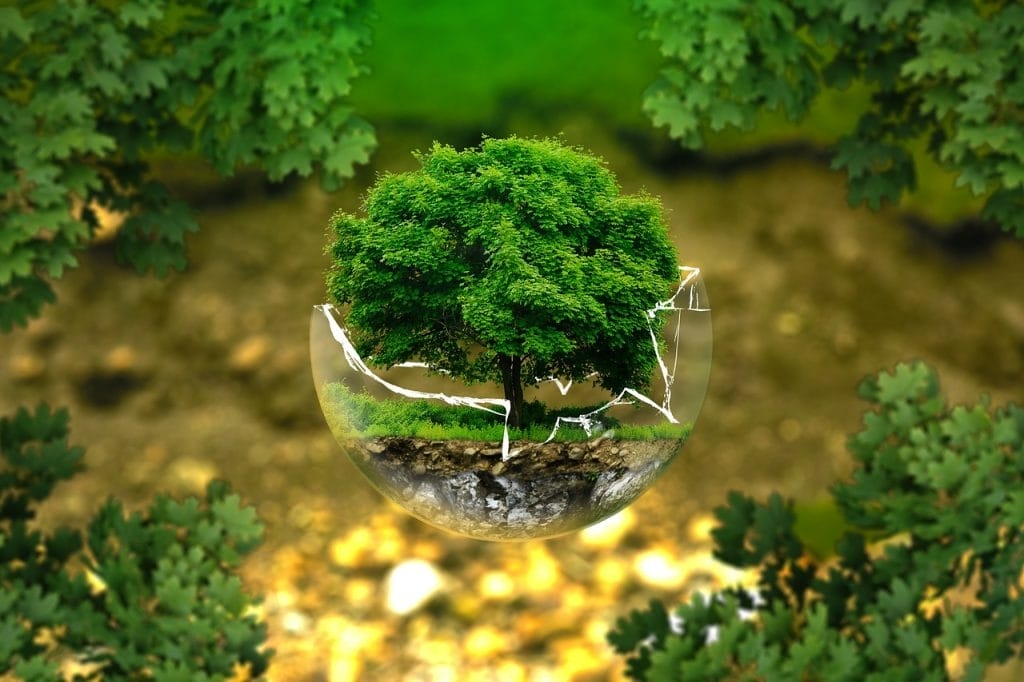
How Do Countries Balance Growth and Conservation?
There is a photograph I return to every few years. It was taken from orbit at night. The Korean Peninsula glows unevenly, a neural map of civilization. South Korea burns with electric density, while the North appears as a darkened coastline interrupted by faint municipal embers. Economists see GDP. Ecologists see energy throughput. Politicians see ideology. I see appetite made visible.
Every nation, regardless of creed or anthem, confronts the same difficult arithmetic: how to improve material life without dismantling the biological systems that permit life at all.
Growth is tangible. Forests are patient.
A government can inaugurate a steel mill in one afternoon. A watershed may require fifty years to recover from what that mill releases into the river. Cabinet ministers campaign on employment numbers because employment is immediate and measurable. No leader wins office by announcing that migratory birds successfully returned to a wetland after three decades of absence.
And yet nations continue trying to solve this paradox. Some fail magnificently. Others improvise. A few discover that conservation, when understood correctly, is not the enemy of prosperity but its prerequisite. The story is not linear. It never was. Countries stumble forward carrying contradictory ambitions: more roads, fewer emissions; rising consumption, shrinking waste; industrial expansion paired with ecological restraint.
Civilization behaves like a species that has mistaken acceleration for wisdom.
The False Choice Between Prosperity and Preservation
The modern economy inherited a flawed metaphor from the Industrial Revolution. Nature was framed as inventory. Forests became “timber reserves.” Rivers transformed into “water resources.” Soil was reduced to “productive acreage.” Language flattened living systems into accounting categories, and once that occurred, extraction became psychologically frictionless.
The consequence is visible everywhere.
According to the United Nations Environment Programme, humanity extracts more than 100 billion tons of raw materials annually, triple the amount used in 1970. Meanwhile, wildlife populations monitored by the World Wildlife Fund have declined dramatically over the past half-century. Economic growth succeeded at generating wealth while simultaneously liquidating ecological stability.
But the relationship is not fixed.
Countries do not destroy ecosystems because growth inherently requires destruction. They destroy ecosystems because they measure success too narrowly. GDP counts the sale of chainsaws yet ignores the disappearance of old-growth forests. It registers coastal real-estate development but not the wetlands that once buffered hurricanes. Economists call these “externalities,” a bloodless term suggesting inconvenience rather than collapse.
The real question is not whether nations should grow. Human beings need housing, mobility, medicine, electricity, sanitation, education. The question is what kind of growth deserves the name.
Costa Rica and the Economics of Reversal
In the 1980s, Costa Rica looked like a cautionary tale. Forests were disappearing rapidly, sacrificed to cattle ranching and agricultural exports. The country lost nearly half its tree cover within decades. Conventional development logic predicted continuation: cut more forests, generate more income.
Instead, the country reversed course.
Today, more than half of Costa Rica is forested again. Ecotourism became a major economic engine. The government paid landowners to preserve forests through programs recognizing the economic value of ecosystems: carbon storage, biodiversity, watershed protection.
The lesson is profound because it alters the moral geometry of conservation. Nature no longer survives merely through sentiment. It acquires recognized economic legitimacy.
Still, I remember speaking with a conservation researcher years ago who warned me against romanticizing the story. “Tourism,” she said quietly, “can become another extraction industry if it scales carelessly.” She was right. Even green economies possess shadows: rising land prices, crowded ecosystems, dependence on international travel emissions.
There are no immaculate solutions. Only better approximations.
China: Industrial Velocity Meets Ecological Limits
No country embodies the tension between growth and conservation more dramatically than China.
For forty years, China achieved one of history’s fastest economic expansions, lifting hundreds of millions from poverty. Entire skylines emerged almost overnight. Concrete production alone surpassed that of many nations combined. The achievement was extraordinary. So was the ecological cost.
Rivers became chemically altered. Urban air grew hazardous. Desertification expanded across northern regions. Industrialization compressed into decades what other nations experienced over a century.
Then something shifted.
China began investing heavily in renewable energy, electric transportation, and reforestation. It became the world’s largest producer of solar panels and electric vehicles. The state launched massive afforestation projects, including the so-called “Great Green Wall” intended to slow desert expansion.
Critics correctly note contradictions. Coal consumption remains immense. Some reforestation relies on monoculture plantations with limited biodiversity value. Yet China illustrates a reality often ignored in Western environmental discourse: developing nations rarely pause growth simply because affluent countries request restraint after having already industrialized themselves.
That moral asymmetry matters.
A farmer in rural Asia does not experience climate policy as an abstract ethical framework. He experiences it as fuel prices, crop yields, and whether his children can attend university.
Environmental policy succeeds only when it understands human aspiration rather than condemning it.
The Scandinavian Experiment
Countries like Sweden and Norway approached the problem differently. Their model rests on aggressive taxation, public trust, and long-term institutional planning.
Carbon taxes in Sweden helped reduce emissions while the economy continued growing. Norway invested oil revenues into a sovereign wealth fund exceeding a trillion dollars while simultaneously accelerating electric vehicle adoption. Citizens accepted higher taxes partly because public services remained visible and functional.
But even here the story resists purity.
Norway’s environmental reputation coexists with continued oil exports. Scandinavian sustainability often depends upon imported materials and outsourced manufacturing emissions elsewhere. Consumption has simply become geographically displaced.
This is the hidden choreography of globalization. Wealthy nations sometimes preserve domestic landscapes by externalizing ecological damage abroad.
A river polluted in Indonesia may power a clean-energy transition in Europe through nickel extraction for batteries. The atmosphere does not recognize these accounting distinctions.
Comparison: Different National Strategies
| Country | Primary Growth Strategy | Conservation Mechanism | Key Tension |
|---|---|---|---|
| Costa Rica | Ecotourism and services | Payments for ecosystem preservation | Tourism pressure on ecosystems |
| China | Industrial and technological expansion | Renewable energy and reforestation | Coal dependence remains high |
| Norway | Resource wealth and public investment | Electrification and carbon-conscious policy | Oil exports finance green transition |
| Brazil | Agriculture and commodity exports | Amazon protections and Indigenous reserves | Deforestation incentives persist |
| Bhutan | Low-impact development | Constitutional forest protections | Economic limitations and youth migration |
| Germany | Manufacturing and innovation | Energy transition policies | Industrial competitiveness versus energy costs |
Indigenous Knowledge and the Memory of Land
One of the most overlooked conservation strategies does not originate in ministries or think tanks. It comes from Indigenous communities whose relationship to land predates modern states.
In Brazil, territories managed by Indigenous peoples frequently demonstrate lower deforestation rates than surrounding regions. Similar patterns appear in Canada, Australia, and parts of the Amazon basin. These communities often understand forests not as commodities but as living relatives embedded in cultural continuity.
The distinction sounds philosophical until one notices the measurable outcomes.
A society protects what it perceives as sacred.
Modern economies, by contrast, specialize in abstraction. We buy strawberries in winter without knowing the aquifer depletion required to irrigate them. Electricity arrives through invisible infrastructure detached from the mountains removed to produce it. Convenience anesthetizes consequence.
Several years ago, I visited a coastal restoration project where local fishermen participated in mangrove rehabilitation. One elder told me something I have never forgotten: “When the mangroves disappeared, the fish disappeared first. Then the money disappeared. Then the young people disappeared.”
That is conservation stripped of ideology. Ecology and economy sharing the same root meaning: home.
Technology Will Help, But It Will Not Save Us Alone
There is tremendous enthusiasm around green technology, much of it justified. Renewable energy prices have fallen sharply. Battery efficiency improves yearly. Precision agriculture can reduce water and fertilizer use. Artificial intelligence increasingly optimizes energy systems and logistics.
Yet technology alone cannot resolve a civilization organized around infinite consumption.
Efficiency frequently produces rebound effects. Cars become more fuel-efficient, and people drive farther. Appliances consume less electricity, and households purchase more devices. Economic systems reward expansion because expansion fuels employment, investment, and political stability.
This creates a difficult cultural contradiction. Nations seek sustainability while simultaneously depending on perpetual increases in consumption to sustain growth metrics.
The atmosphere does not negotiate with quarterly earnings reports.
Why Some Countries Fail
Environmental collapse rarely occurs because leaders wake up intending destruction. More often, it emerges from fragmented incentives.
A finance ministry prioritizes exports. An agriculture ministry seeks higher yields. An energy ministry wants lower prices. Each decision appears rational individually while collectively degrading ecological resilience.
Short election cycles worsen the problem. Forest restoration may require twenty years. Politicians operate on four-year calendars. Democracies excel at responsiveness yet often struggle with long-duration stewardship.
Authoritarian systems can theoretically impose large-scale environmental reforms rapidly, but they may also suppress public accountability and ecological transparency. No governance model possesses immunity from failure.
The deeper issue is psychological.
Human beings evolved responding to immediate threats: predators, storms, famine. Climate destabilization unfolds statistically, incrementally, diffusely. Carbon dioxide is odorless. Species extinction often occurs silently. The mind discounts what accumulates gradually.
Meanwhile, markets accelerate extraction with astonishing efficiency.
Rethinking Wealth Itself
Perhaps the most radical shift underway is conceptual rather than technological. Some nations and economists are beginning to question whether GDP alone adequately measures national success.
Bhutan famously introduced Gross National Happiness as a complementary framework emphasizing ecological health and social well-being. New Zealand incorporated well-being metrics into budget planning. Discussions around “doughnut economics” and circular economies continue expanding internationally.
These experiments remain imperfect and politically contested. Yet they indicate a civilization slowly recognizing that wealth detached from ecological stability is ultimately fictitious.
A nation can post impressive economic growth while exhausting groundwater, eroding topsoil, acidifying oceans, and destabilizing climate systems. That is not prosperity. It is liquidation disguised as progress.
Nature always keeps the original ledger.
Conclusion: The Century’s Quiet Negotiation
The balance between growth and conservation will not emerge through a single treaty or technological miracle. It will be negotiated continuously — in fisheries policy, urban zoning, mining permits, transportation systems, dietary habits, and energy grids.
Quiet decisions repeated millions of times.
Some countries will continue believing they can consume without limit inside finite ecological systems. Others will discover that restraint is not anti-growth but a form of intelligence. The future likely belongs not to nations with the largest economies alone, but to those capable of maintaining forests, water, biodiversity, soil fertility, and social cohesion simultaneously.
Because civilization is beginning to confront an unsettling realization: the economy is not separate from nature. It is nested inside it, wholly dependent upon atmospheric chemistry, pollinating insects, microbial life, ocean currents, and stable seasons.
We have behaved like heirs spending ecological principal while calling it income.
The extraordinary thing is that many solutions already exist. Regenerative agriculture. Circular manufacturing. Renewable energy. Wetland restoration. Indigenous land stewardship. Smarter urban density. None are fantasies. The obstacle is not invention. It is willingness.
History may eventually describe this century not as the age humanity conquered nature, but as the period when it finally understood that conquest was never possible to begin with.
- Arts
- Business
- Computers
- Giochi
- Health
- Home
- Kids and Teens
- Money
- News
- Personal Development
- Recreation
- Regional
- Reference
- Science
- Shopping
- Society
- Sports
- Бизнес
- Деньги
- Дом
- Досуг
- Здоровье
- Игры
- Искусство
- Источники информации
- Компьютеры
- Личное развитие
- Наука
- Новости и СМИ
- Общество
- Покупки
- Спорт
- Страны и регионы
- World

 English
 Russian
 French
 Spanish
 Portuguese
 Deutsch
 Turkish
 Dutch
Dutch
 Arabic
 Romaian
 Portuguese (Brazil)
 Greek
Greek
