
What Is the Difference Between a Franchise and an Independent Business?
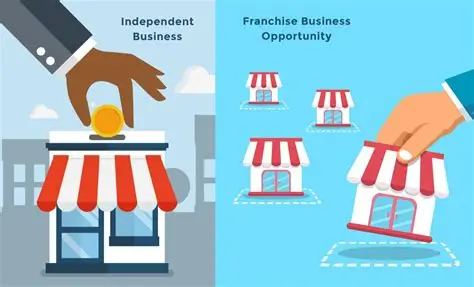
Two coffee shops once sat across the street from each other near my old office.
One belonged to a national franchise chain. The other was independently owned by a man who wore linen shirts year-round and appeared personally offended whenever someone ordered flavored syrup.
The franchise café operated with surgical consistency. Drinks arrived quickly. Prices rarely changed. The furniture looked as though it had been selected by a committee determined to avoid causing emotional reactions.
Across the street, the independent café felt gloriously unstable.
The playlist changed according to the owner’s mood. Opening hours drifted unpredictably. Some mornings the coffee tasted transcendent. Other mornings it tasted like existential regret filtered through expensive machinery.
And yet both businesses survived.
That fascinated me.
Because the difference between a franchise and an independent business is not simply corporate ownership versus entrepreneurship. The deeper distinction involves philosophy. Structure. Risk tolerance. Control. Psychological preference.
One model prioritizes consistency.
The other prioritizes autonomy.
Everything else grows from that divide.
A Franchise Borrows Trust. An Independent Business Builds It.
This is the clearest starting point.
A franchise business operates under an established brand owned by another company — the franchisor. The individual running the location, called the franchisee, pays for the right to use that brand, along with its systems, training, and operational support.
An independent business starts with nothing except whatever credibility the owner manages to create personally.
No inherited recognition.
No national advertising.
No built-in customer expectations.
That difference changes everything operationally and emotionally.
Consumers entering a franchise already carry assumptions:
- The food will taste familiar
- The service process will feel recognizable
- The pricing structure will make sense
- The experience will remain relatively predictable
An independent business must earn those assumptions manually.
That process can produce extraordinary originality.
It can also produce exhaustion.
I once interviewed a bakery owner who summarized independent entrepreneurship with painful accuracy:
“Every day feels like proving you deserve to exist.”
Franchise operators rarely describe their businesses that way because legitimacy arrives partially pre-installed.
Franchises Operate Through Systems
Independent businesses operate through judgment.
That distinction sounds subtle until you watch both models function in practice.
Franchises thrive on repeatable procedures:
- Standardized menus
- Uniform branding
- Operational manuals
- Approved suppliers
- Corporate marketing campaigns
- Structured employee training
Consistency becomes the product.
Independent businesses possess greater flexibility. Owners can change suppliers overnight, redesign menus impulsively, alter branding quickly, or experiment with customer experience without seeking corporate approval.
That freedom creates both opportunity and danger.
A brilliant independent owner can evolve rapidly.
A disorganized one can collapse spectacularly.
Franchise systems reduce improvisation intentionally because improvisation threatens consistency.
And consistency is what customers are paying for whether they realize it or not.
| Business Element | Franchise Business | Independent Business |
|---|---|---|
| Brand recognition | Established immediately | Must be built from scratch |
| Operational freedom | Limited by franchisor rules | Full owner control |
| Marketing support | National and regional campaigns | Self-funded and self-created |
| Supplier flexibility | Often restricted | Fully customizable |
| Startup risk | Reduced uncertainty | Higher unpredictability |
| Innovation speed | Slower, system-dependent | Faster and owner-driven |
| Customer expectations | Predefined | Created locally |
| Profit sharing | Royalties paid to franchisor | Owner keeps profits fully |
Neither model is automatically superior.
That’s the uncomfortable answer people often dislike hearing.
Because the better choice depends heavily on personality.
Independent Businesses Require Emotional Stamina
This is the part entrepreneurship culture tends to romanticize selectively.
Starting independently demands extraordinary psychological resilience because uncertainty surrounds nearly every decision.
You must determine:
- Pricing
- Branding
- Marketing
- Hiring systems
- Operational processes
- Customer acquisition strategies
- Supplier relationships
Simultaneously.
There is no inherited roadmap.
No corporate support hotline.
No established reputation carrying you through difficult early months.
I remember helping a friend launch an independent retail concept years ago. What struck me wasn’t the workload itself — though the workload was relentless — but the cognitive exhaustion.
Every decision felt existential.
Should the logo change?
Are customers confused?
Is the pricing wrong?
Should the opening hours shift?
Independent ownership requires constant interpretation because no broader system exists to absorb uncertainty.
For some entrepreneurs, this autonomy feels intoxicating.
For others, destabilizing.
Franchises Trade Freedom for Structure
Franchise businesses simplify certain decisions precisely because they restrict them.
That restriction is the bargain.
A franchisee gains:
- Established systems
- Training support
- Operational guidance
- Brand familiarity
- Customer recognition
In exchange, they surrender varying degrees of control.
This surprises many first-time franchise owners.
People often imagine franchises as entrepreneurship with reduced risk. In reality, franchising frequently resembles structured business management inside predefined boundaries.
You own the operation.
You do not fully own the system.
Franchisors may regulate:
- Store design
- Product offerings
- Marketing language
- Approved vendors
- Pricing structures
- Operational procedures
- Customer service expectations
One franchise owner told me he needed approval to change outdoor signage colors by a few shades.
That level of oversight sounds excessive until you understand the larger economic logic.
Franchises sell predictability.
Predictability requires control.
Customers Behave Differently Toward Each Model
This is where consumer psychology becomes fascinating.
People approach franchises and independent businesses with entirely different emotional expectations.
Franchises are judged against consistency.
Independent businesses are judged against personality.
Consumers entering a franchise want reassurance. Familiarity. Operational smoothness.
Consumers entering independent businesses often tolerate more unpredictability because they expect individuality.
Oddly enough, customers sometimes forgive flaws in independent businesses that would devastate franchise reputations.
A slow service experience at an independent café may feel charmingly human.
The same delay inside a franchise can feel operationally unacceptable.
Expectations shape perception profoundly.
That’s one reason franchises invest so heavily in standardization. Their customers are purchasing emotional certainty as much as physical products.
Independent Businesses Can Adapt Faster
One enormous advantage independent businesses possess is agility.
No corporate approval chains.
No franchise compliance procedures.
No national brand considerations slowing decisions.
Independent owners can pivot rapidly when markets shift.
Change menus overnight.
Adjust pricing instantly.
Experiment with branding freely.
Respond to local customer behavior directly.
Franchise systems move more cautiously because changes affect entire networks simultaneously.
A corporate adjustment introduced nationally carries massive operational implications:
- Retraining staff
- Updating suppliers
- Revising systems
- Maintaining consistency across locations
This makes franchises structurally slower but operationally steadier.
Independent businesses behave more like speedboats.
Franchises resemble cargo ships.
Both have advantages depending on conditions.
Money Works Differently in Each Model
Financial structures differ significantly too.
Franchisees typically pay:
- Initial franchise fees
- Ongoing royalties
- Marketing contributions
- Technology fees
Independent owners avoid these recurring corporate obligations.
But independent businesses often spend more building visibility from zero:
- Marketing development
- Brand awareness campaigns
- Customer trust-building
- Operational experimentation
Franchisees buy infrastructure.
Independent owners build it manually.
Neither route guarantees profitability.
And this is important because people often assume franchises are inherently safer investments.
They aren’t necessarily.
Poor locations fail regardless of branding. Weak management still destroys businesses. Economic downturns affect both systems.
Franchises reduce some uncertainty.
They do not eliminate commercial reality.
Creativity Lives Differently Inside Each Structure
Independent businesses often reflect owner personality intensely.
The atmosphere.
The branding.
The customer interactions.
The operational quirks.
All become extensions of individual vision.
This creates emotional distinctiveness difficult for franchises to replicate authentically.
Some of the most memorable businesses I’ve encountered were deeply imperfect independent operations carrying unmistakable human fingerprints.
Franchises prioritize scalability over individuality.
And honestly, that makes sense.
Scalable systems require consistency stronger than personal expression.
But this creates an interesting trade-off:
- Franchises scale reliability.
- Independent businesses scale personality.
Consumers choose between those experiences constantly, sometimes without consciously realizing it.
The Hidden Psychological Difference
Here’s what fascinated me most after spending years observing both models.
The real difference between franchises and independent businesses is not operational.
It’s emotional.
Franchises appeal to people seeking structured opportunity.
Independent businesses attract people willing to tolerate uncertainty for autonomy.
That distinction shapes nearly every business decision afterward.
One franchise owner once described his role as “executing a proven model carefully.”
An independent restaurant owner described hers as “building something personal enough that people remember it.”
Neither philosophy was wrong.
They were simply solving different emotional problems.
The Final Question Most Entrepreneurs Avoid
Would you rather inherit a map or draw one yourself?
That’s essentially the decision.
Franchises offer systems, familiarity, and reduced ambiguity — but within controlled boundaries.
Independent businesses offer freedom, flexibility, and originality — alongside relentless uncertainty.
And perhaps the provocative truth hiding underneath all of this is that many entrepreneurs are not actually choosing between two business structures.
They are choosing between two psychological identities.
The franchise owner often values operational confidence over creative control.
The independent owner often values autonomy over predictability.
One model minimizes uncertainty.
The other maximizes possibility.
Both contain risk.
Both contain compromise.
Both can produce extraordinary success or spectacular failure depending on the person operating them.
But if there’s one lesson I’ve learned from watching businesses survive and collapse across both systems, it’s this:
Consumers rarely remember whether a company was franchised or independent.
They remember how reliably the business made them feel something worth returning for.
And strangely enough, that emotional outcome matters far more than the ownership structure behind the counter.
- Arts
- Business
- Computers
- Παιχνίδια
- Health
- Κεντρική Σελίδα
- Kids and Teens
- Money
- News
- Personal Development
- Recreation
- Regional
- Reference
- Science
- Shopping
- Society
- Sports
- Бизнес
- Деньги
- Дом
- Досуг
- Здоровье
- Игры
- Искусство
- Источники информации
- Компьютеры
- Личное развитие
- Наука
- Новости и СМИ
- Общество
- Покупки
- Спорт
- Страны и регионы
- World

 English
 Russian
 French
 Spanish
 Portuguese
 Deutsch
 Turkish
 Dutch
Dutch
 Italiano
 Arabic
 Romaian
 Portuguese (Brazil)
