
What Are Examples of Franchises?
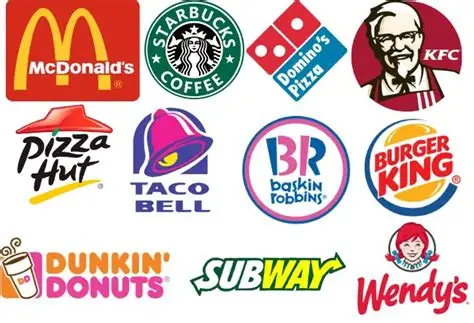
A child can recognize certain brands before learning long division.
That fact alone says something extraordinary about franchising.
Drive through almost any American town and the symbols begin appearing like familiar landmarks in a shared commercial language: golden arches glowing beside highways, hotel signs promising standardized comfort, fitness chains lined with motivational typography and disinfectant optimism.
Consumers know what waits inside before the door even opens.
That is the real power of a franchise.
Not merely visibility.
Predictability.
And predictability, despite sounding emotionally flat, is one of the most profitable forces in modern business.
People often ask for examples of franchises as though they are requesting a simple list of recognizable companies. But franchises are more interesting than that. They reveal how businesses scale trust, routine, familiarity, and emotional reassurance across enormous geographic distances without directly owning every location themselves.
A franchise is not just a company.
It is a system for reproducing consistency.
And once you begin noticing franchise models, you realize they are quietly embedded almost everywhere in American life.
The Fast-Food Franchises Everyone Recognizes
This is usually where people first encounter franchising, even if they don’t realize it at the time.
Fast-food chains dominate public understanding of franchises because the model suits food service unusually well. Customers want reliability when they’re hungry, tired, rushed, traveling, or making decisions with minimal mental energy.
A recognizable logo solves that uncertainty immediately.
Some of the most famous franchise examples include:
- McDonald’s
- Subway
- KFC
- Burger King
- Taco Bell
- Domino’s Pizza
- Dunkin’
- Chick-fil-A
What makes these businesses powerful isn’t simply scale.
It’s operational repetition.
The fries should taste familiar whether purchased in Florida or Oregon. The ordering process should feel intuitive. The menu structure should require almost no cognitive adjustment.
I once stopped at a roadside McDonald’s after driving nearly nine hours through relentless rain. Across the highway sat a charming independent diner with handwritten chalkboard menus and locally sourced ingredients.
I still chose the franchise.
Not because I believed it would be better.
Because exhaustion changes consumer psychology. Familiarity begins feeling emotionally efficient.
That’s one reason fast-food franchising became commercially dominant: it transforms consistency into comfort.
Hotel Franchises Sell Predictability Disguised as Hospitality
Hotels may actually reveal the franchise model more clearly than restaurants do.
Chains like:
- Marriott
- Hilton
- Holiday Inn
- Hampton Inn
- Days Inn
- Super 8
often operate through franchise agreements rather than direct corporate ownership of every property.
This surprises many travelers.
Consumers assume the corporation owns the building itself. Frequently, independent operators own and manage locations while licensing the brand standards, systems, and customer experience framework from the parent company.
And honestly, this arrangement makes sense.
Hotels depend heavily on trust.
When people arrive in unfamiliar cities late at night carrying luggage and low patience, they rarely crave experimentation. They want clean sheets, functional air conditioning, predictable service, and minimal surprises.
Hotel franchises monetize emotional reassurance exceptionally well.
| Franchise Industry | Example Brands | What Customers Actually Buy |
|---|---|---|
| Fast Food | McDonald’s, Subway, KFC | Familiarity and speed |
| Hospitality | Hilton, Marriott, Holiday Inn | Predictable comfort |
| Fitness | Anytime Fitness, Orangetheory | Structured self-improvement |
| Retail | 7-Eleven, Ace Hardware | Convenience and accessibility |
| Cleaning Services | Molly Maid, JAN-PRO | Reliability and trust |
| Education | Kumon, The Goddard School | Structured learning systems |
| Automotive | Meineke, Midas | Mechanical reassurance |
| Coffee Chains | Dunkin’, The Coffee Bean & Tea Leaf | Routine and consistency |
Notice something important in that table.
Customers are rarely purchasing products alone.
They are purchasing emotional certainty.
Fitness Franchises Sell Aspiration Systematically
Fitness franchises exploded partly because they combine structure with emotional motivation.
Examples include:
- Anytime Fitness
- Planet Fitness
- Orangetheory Fitness
- F45 Training
- Gold’s Gym
What these businesses franchise successfully is not merely gym equipment.
It’s behavioral systems.
The branding, layouts, class structures, onboarding experiences, and motivational language all reinforce a repeatable emotional environment designed to reduce intimidation and encourage habit formation.
I once toured several gym franchises while researching consumer behavior patterns for a project. What fascinated me most wasn’t the equipment itself — treadmills eventually resemble other treadmills — but the emotional choreography.
Lighting.
Music.
Staff greetings.
Color schemes.
Even the phrasing inside locker rooms.
Everything was engineered toward psychological consistency.
That’s what strong franchise systems understand instinctively:
human beings return to environments that reduce emotional friction.
Retail Franchises Quietly Dominate Everyday Life
Retail franchises often receive less attention because they blend so seamlessly into daily routines.
Examples include:
- 7-Eleven
- Ace Hardware
- UPS Store
- GNC
- Batteries Plus
- Circle K
These businesses succeed partly because convenience itself has become one of the strongest purchasing motivators in modern commerce.
Customers rarely visit convenience franchises seeking inspiration.
They seek efficiency.
Which sounds unglamorous until you realize how commercially powerful reduced effort becomes.
One lesson I learned while analyzing customer loyalty behavior years ago: people consistently underestimate how emotionally valuable convenience feels during stressful periods.
Reliable accessibility creates attachment.
Consumers return to places simplifying life quietly.
Service-Based Franchises Are Bigger Than Most People Realize
Not all franchises involve storefronts.
Entire service industries operate through franchise models:
- Molly Maid
- SERVPRO
- JAN-PRO
- Chem-Dry
- Mr. Rooter Plumbing
This category fascinates me because it demonstrates how franchising extends beyond recognizable consumer branding into operational trust systems.
Consumers hiring cleaners, restoration companies, or repair technicians face uncertainty. They worry about competence, reliability, safety, pricing transparency, and professionalism.
Franchise branding reduces perceived risk.
The logo becomes shorthand for standardized procedures.
That perceived legitimacy matters enormously in service industries where customers cannot easily evaluate quality beforehand.
Education Franchises Monetize Structured Progress
Educational franchises reveal another side of the model entirely.
Examples include:
- Kumon
- Mathnasium
- Sylvan Learning
- The Goddard School
These businesses franchise systems of instruction rather than physical products.
Parents purchasing educational services are often buying emotional reassurance as much as academic support. They want frameworks, measurable progress, structure, and consistency.
The franchise model works here because learning systems appear more trustworthy when standardized.
Independent tutoring may feel personalized.
Franchise education centers feel organized.
And organization itself carries emotional weight in parenting decisions.
Automotive Franchises Thrive on Anxiety Reduction
Car trouble creates vulnerability instantly.
Which explains why automotive franchises remain powerful:
- Midas
- Meineke
- Jiffy Lube
- Precision Tune Auto Care
Consumers frequently lack technical expertise in automotive repair. They therefore rely heavily on trust indicators when choosing providers.
Recognizable franchises function as psychological safety mechanisms.
Not perfect ones, necessarily.
But familiar enough to reduce decision anxiety.
And again, we return to the same underlying principle:
franchises scale reassurance.
Why Certain Businesses Franchise Successfully
Not every business adapts naturally to franchising.
The strongest franchise models typically share several characteristics:
- Repeatable operations
- Strong branding
- Standardized customer expectations
- Scalable training systems
- Broad consumer demand
- Process consistency
Businesses relying heavily on one founder’s personality or highly customized creative work often struggle to franchise effectively because consistency becomes difficult to replicate.
Franchising rewards systems more than genius.
That distinction matters.
The Hidden Reason Franchises Feel “Safe”
Most franchise success stories ultimately connect back to one deeply human preference:
people like recognizable experiences.
Especially during moments of fatigue, uncertainty, stress, travel, or information overload.
Consumers publicly celebrate originality.
Privately, they often choose familiarity.
That contradiction powers enormous sections of the global economy.
Franchises succeed because they simplify decision-making.
The customer already knows:
- approximately what things cost
- approximately how service works
- approximately what quality feels like
- approximately what emotional experience awaits
That certainty reduces mental effort.
And reduced mental effort has extraordinary value.
The Final Irony of Franchises
Here’s the fascinating contradiction hiding underneath all of this:
Franchises are designed to feel personal while operating through replication.
The local restaurant owner may genuinely care about the community. The hotel manager may work tirelessly to improve guest experiences. The fitness franchise operator may deeply believe in helping members transform their health.
Real human ambition exists inside these businesses.
And yet the larger system depends on standardization powerful enough to make one location resemble another hundreds of miles away.
Individual ownership operating inside collective identity.
That’s the franchise model in its purest form.
The examples themselves — McDonald’s, Hilton, Anytime Fitness, Kumon, 7-Eleven — matter less than what they collectively reveal about human behavior.
Consumers return repeatedly to experiences that feel emotionally predictable.
Franchises industrialized that instinct.
And once you recognize that, you stop seeing franchises merely as chains of businesses.
You start seeing them as carefully engineered systems for scaling familiarity across modern life.
- Arts
- Business
- Computers
- Giochi
- Health
- Home
- Kids and Teens
- Money
- News
- Personal Development
- Recreation
- Regional
- Reference
- Science
- Shopping
- Society
- Sports
- Бизнес
- Деньги
- Дом
- Досуг
- Здоровье
- Игры
- Искусство
- Источники информации
- Компьютеры
- Личное развитие
- Наука
- Новости и СМИ
- Общество
- Покупки
- Спорт
- Страны и регионы
- World

 English
 Russian
 French
 Spanish
 Portuguese
 Deutsch
 Turkish
 Dutch
Dutch
 Arabic
 Romaian
 Portuguese (Brazil)
 Greek
Greek
